Skip to content
PT

Hobbies

Simple:

“We should delicately and subtly undermine the idea that truth and facts are possible in the first place. Once the people have become doubtful about the truth of anything, all kinds of things will be open to us.”
― Philip Pullman

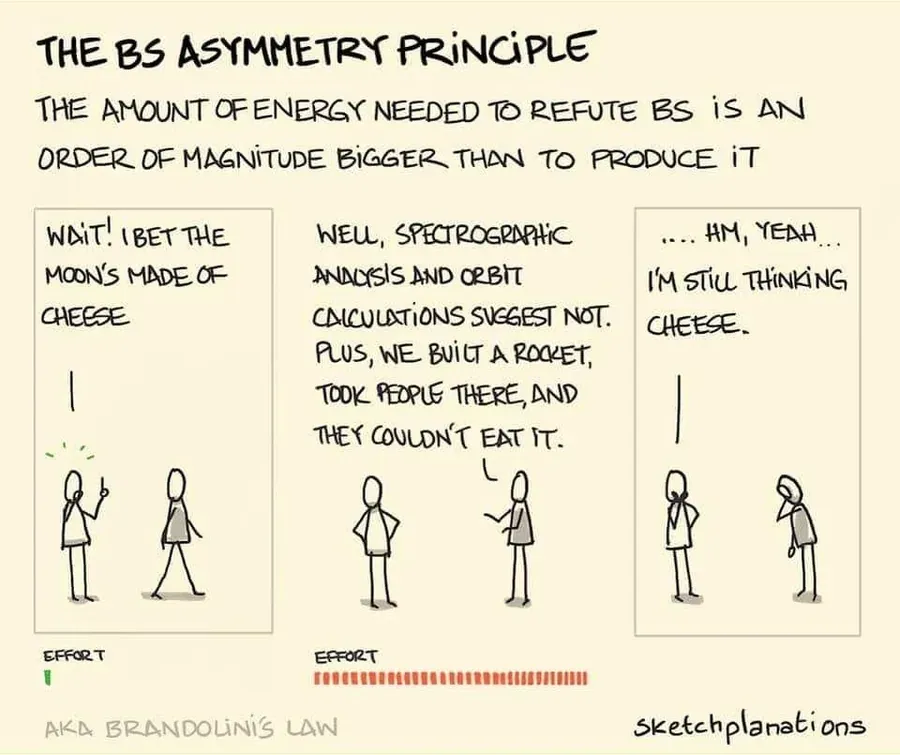
I refuse to accept that bullshit can spread untouched just because it takes more effort to fight it. You can quote me on that.

Sketchplanations comic "The BS asymmetry principle: the amount of energy needed to refute BS is an order of magnitude bigger than to produce it". One stick figure bets the Moon is made of cheese, with a tiny effort bar. The other answers with spectrographic analysis, orbit calculations and a rocket trip, with a huge effort bar. The first replies: "Hm, yeah… I'm still thinking cheese." Footnote: aka Brandolini's law.

Global Myths

Myth#01

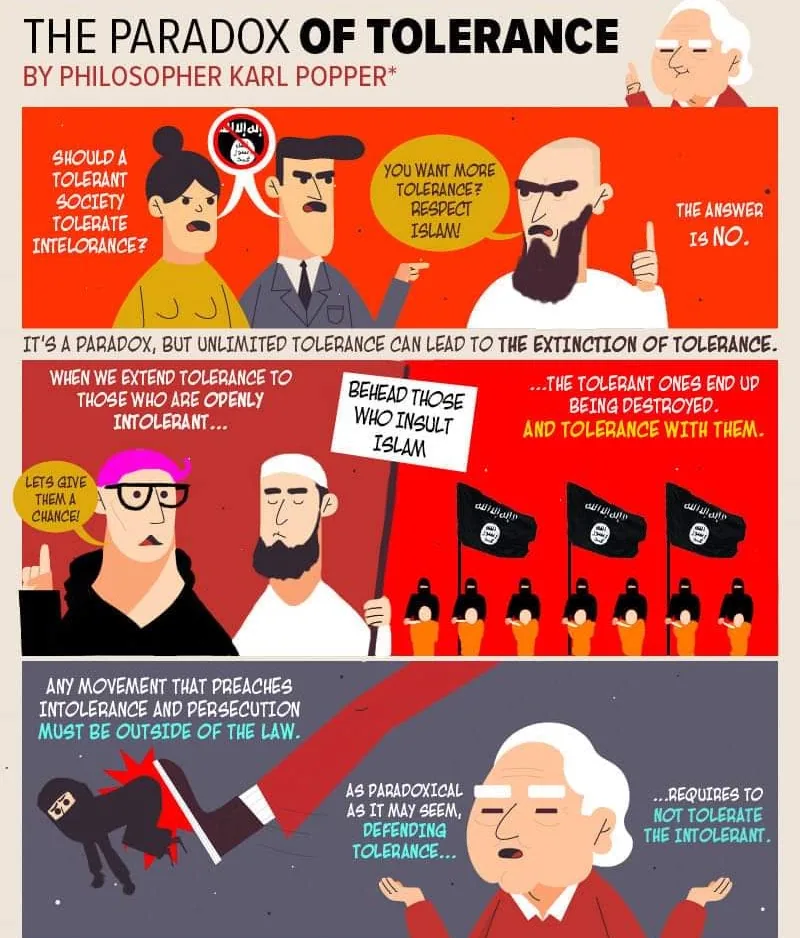
Popper never believed anything like what this implies.

He wrote:

“I do not imply, for instance, that we should always suppress the utterance of intolerant philosophies; as long as we can counter them by rational argument and keep them in check by public opinion, suppression would certainly be unwise.”

This is no warrant here for laws against hate speech. On the contrary, Popper appears to have called such laws “unwise.”

To Popper, intolerance is not to be deployed when the utterance of intolerant ideas might make you uncomfortable, or when those ideas seem impolite, or when they get you really mad. Intolerance – if that’s the right word for it – is only warranted when we are already facing “fists and pistols,” or, presumably, worse.

We know this not merely from a close reading of the passages I’ve quoted, but from a look at The Open Society and Its Enemies more broadly. The entire book is an exposition of intolerant ideas, a dissection of them, and a sustained, reasoned defense of pluralism. Here Popper proved himself liberal; his first resort was to make a rational argument. It was only in a footnote that he considered the possibility of using violence, and he did so with obvious disdain.

For an in-depth dive into this, please check this article.
Myth#02

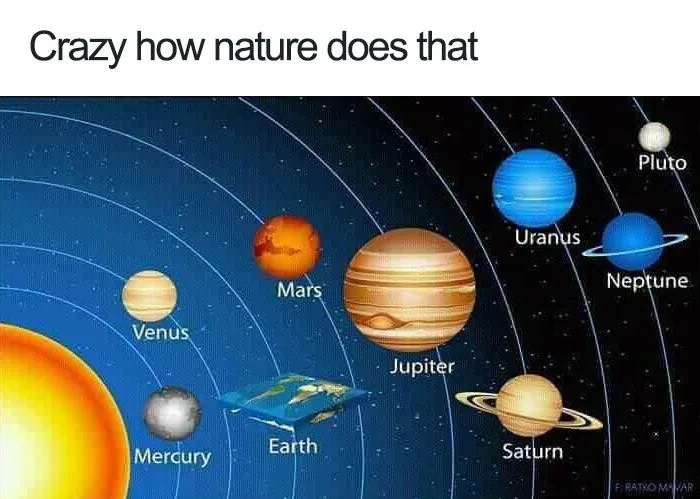
The stupidest one: flat Earth

I just dropped this one here, so I have a place to fetch this meme from when I need it.

Portuguese Myths

Myth#03

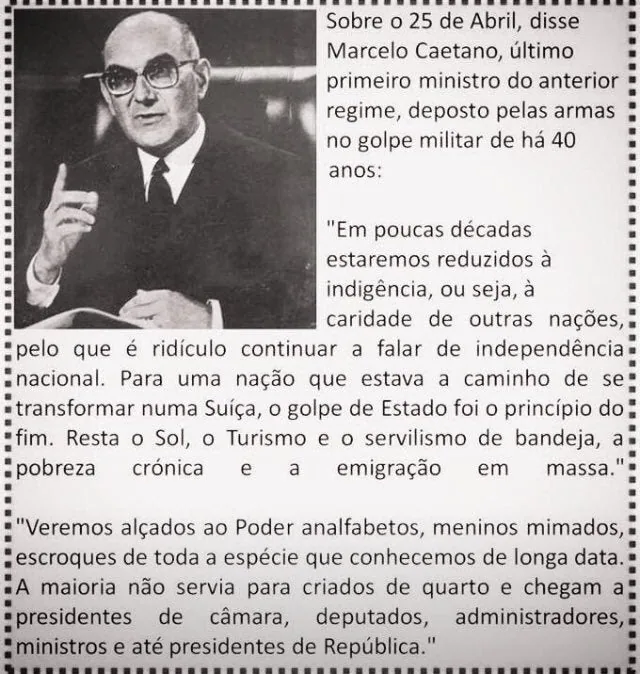
"Citação" enganadora

Esta citação não está correta, “curiosamente” a correta altera bastante a perceção de “visionário”:

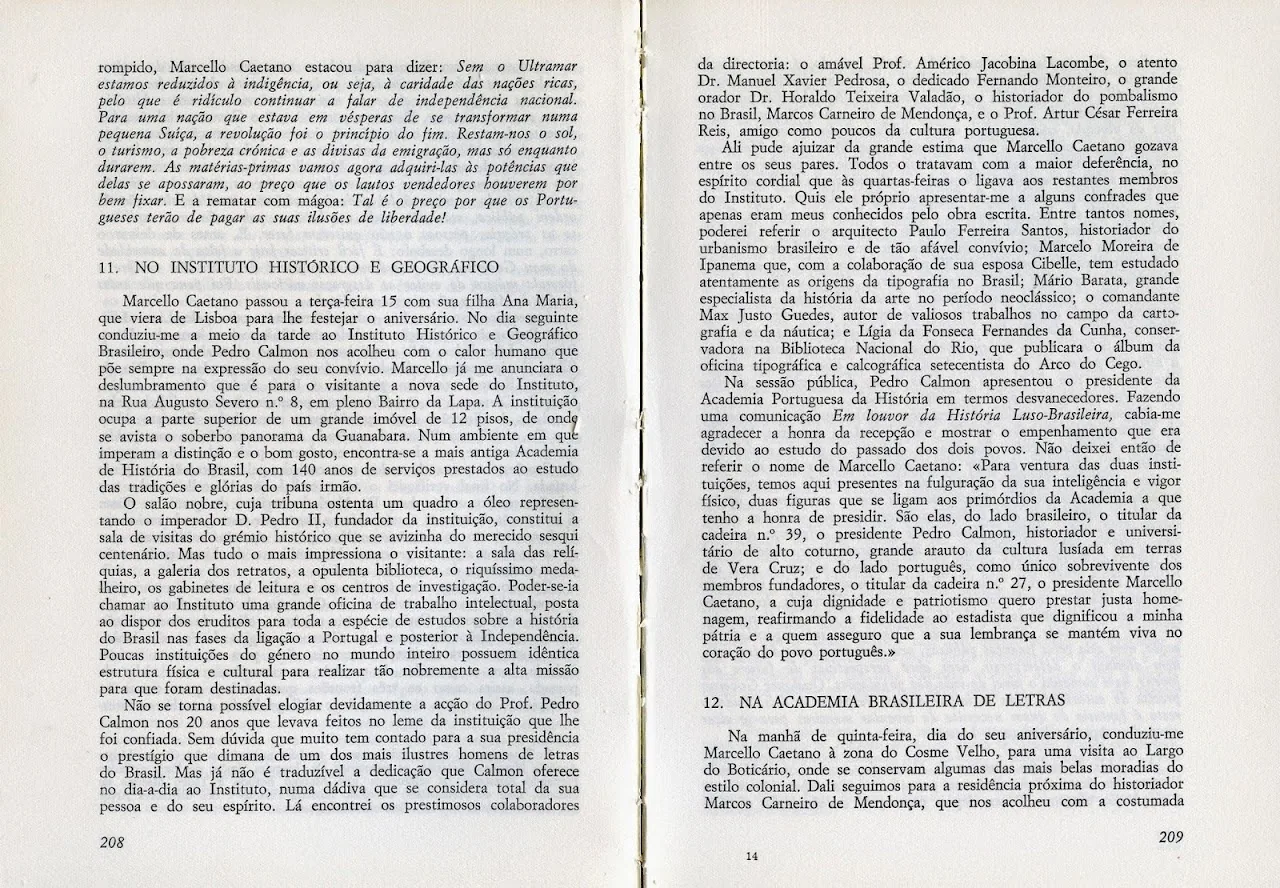
“Sem o Ultramar em poucas décadas estamos reduzidos à indigência, ou seja, à caridade das nações ricas, pelo que é ridículo continuar a falar de independência nacional. Para uma nação que estava em vésperas de se transformar numa pequena Suíça, a revolução foi o princípio do fim. Restam-nos o sol, o turismo, a pobreza crónica e as divisas da emigração, mas só enquanto durarem.

As matérias-primas vamos agora adquiri-las às potências que delas se apossaram, ao preço que os lautos vendedores houverem por bem fixar. Tal é o preço por que os Portugueses terão de pagar as suas ilusões de Liberdade!”

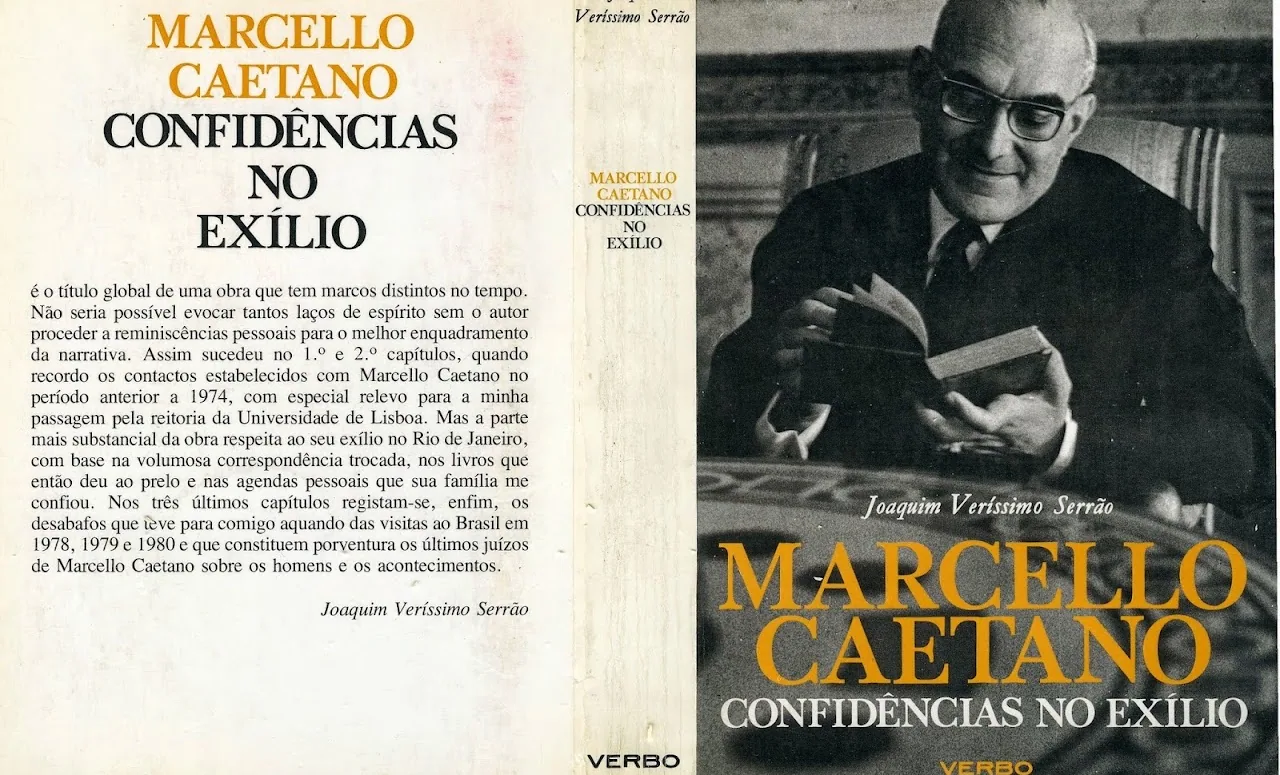
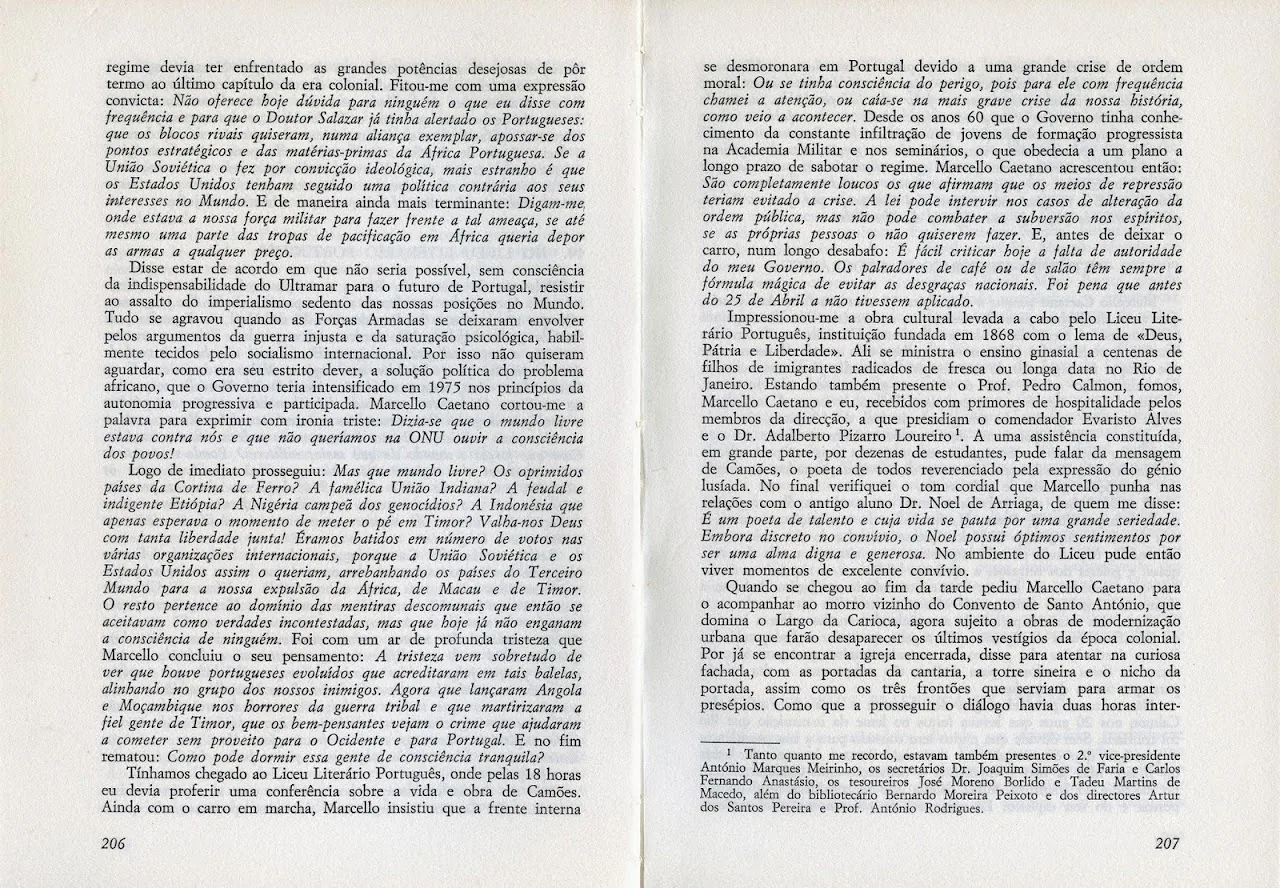
(conversa transcrita por Joaquim Veríssimo Serrão, em “Marcello Caetano - Confidências no Exílio”, Lisboa: Editorial Verbo, 1985, página 208 - ver imagens abaixo).

Sobre a parte “apócrifa” da citação, não há nenhuma referência real de que Marcello tenha dito isto. Pelo estilo, pouco consistente com o que escrevia, considera-se pouco provável. É provavelmente uma adição posterior. A maior parte de quem tenta “credibilizá-la” indica o livro “As minhas memórias de Salazar, 1977” como referência, mas não está lá essa frase.

  • Capa, lombada e contracapa do livro "Marcello Caetano – Confidências no Exílio", de Joaquim Veríssimo Serrão, edição Verbo.
  • Páginas 206 e 207 de "Confidências no Exílio".
  • Páginas 208 e 209 de "Confidências no Exílio"; no topo da página 208, a citação: "Sem o Ultramar estamos reduzidos à indigência, ou seja, à caridade das nações ricas…".