
Skip to content
PT

Games

365 games for parties, Christmas, camps, team building and bachelor parties.

Before you start

How to use this guide

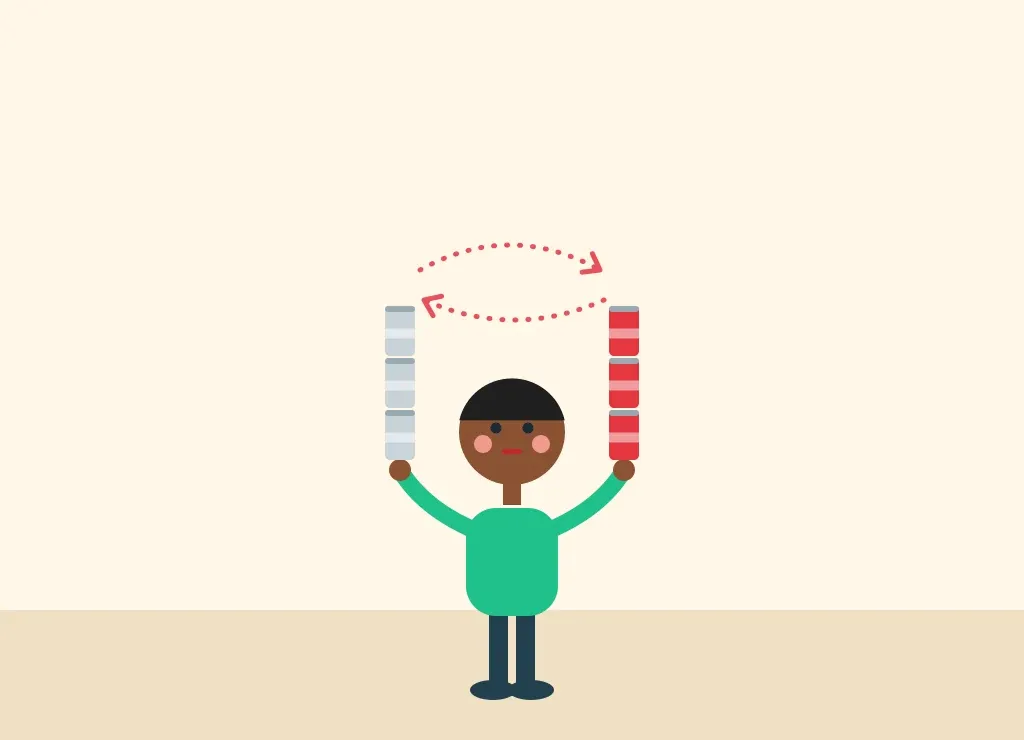
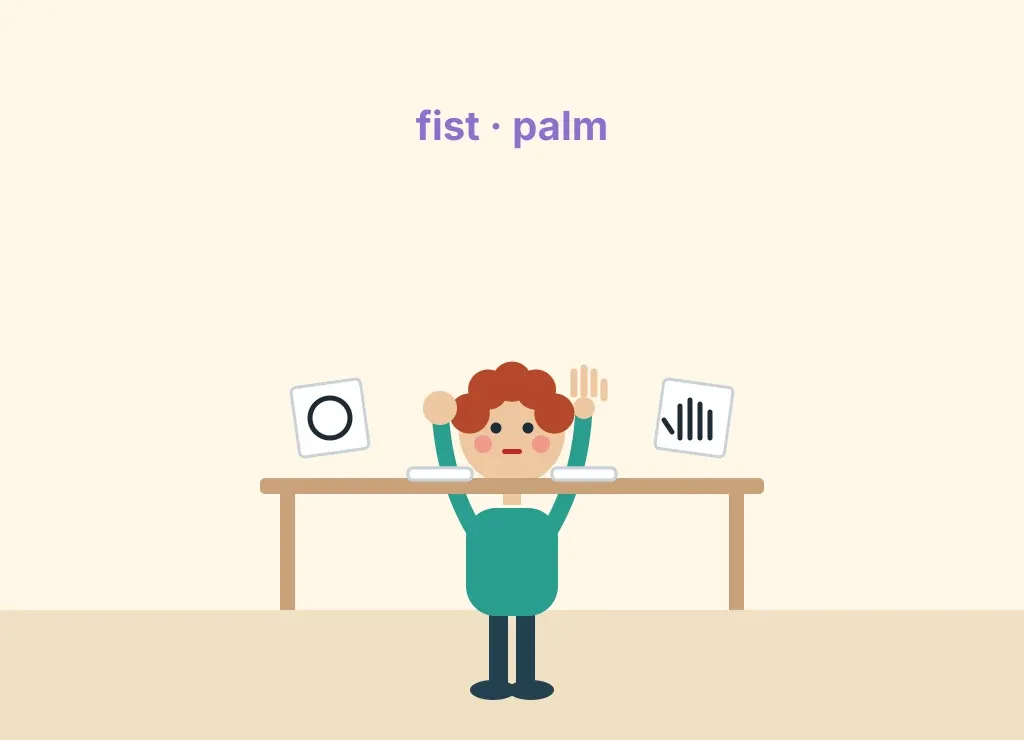
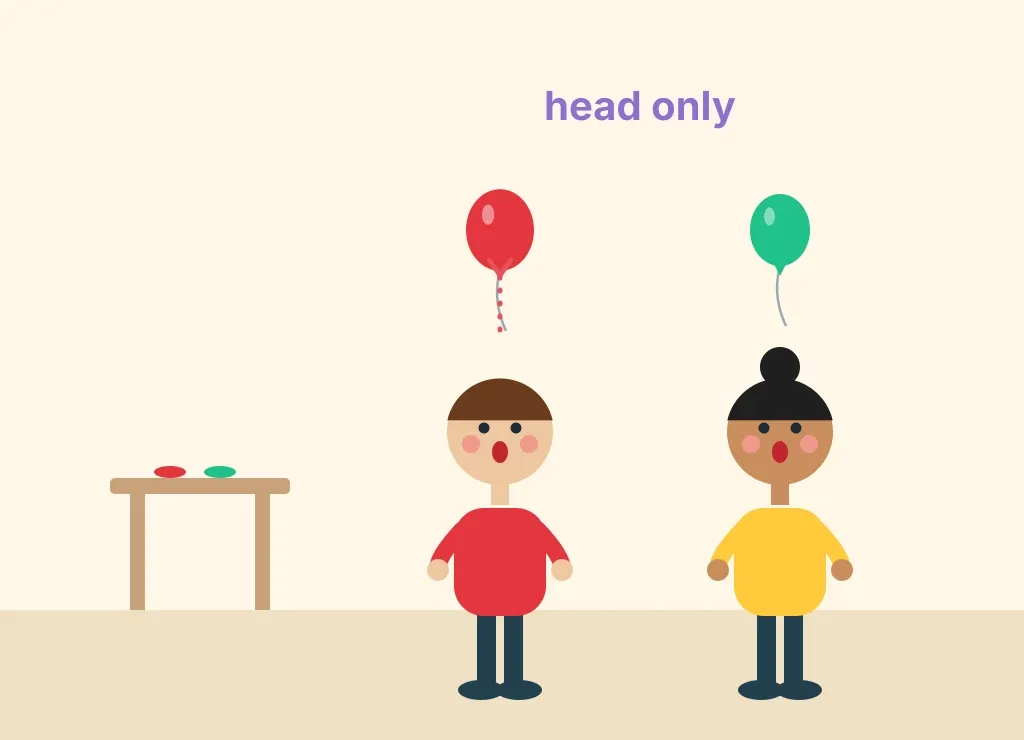
Every game has a card with the group size, the recommended age, how long it takes and whether it is for indoors or outdoors, followed by the materials, the setup, the step-by-step rules, variations and tips, and an illustration of the main rule. Some games were collected from short videos, others from written sources. Each card says where it came from.

You can also switch to selection mode and pick games to save as a PDF (which you can print).

General tip: always have a timer (your phone’s will do), a speaker with music, painter’s tape to mark lines on the floor, and spare plastic cups and balloons. With those you can run more than half of the games.

Jump to

Pick a kind of game

Category
Indoor/Outdoor

365 of 365 games

129 games

Family Games (Christmas or Other Occasions)

Quick, very visual parlour games, ideal for Christmas Eve or a family dinner. Almost all of them use plastic cups, balloons and things you already have at home.

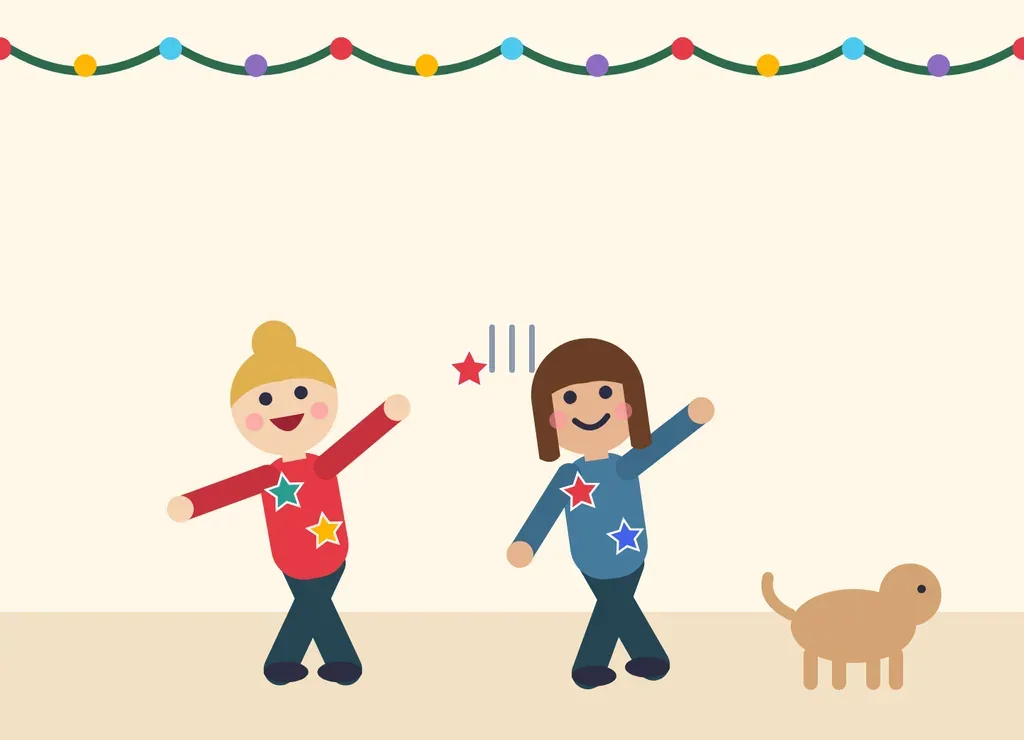
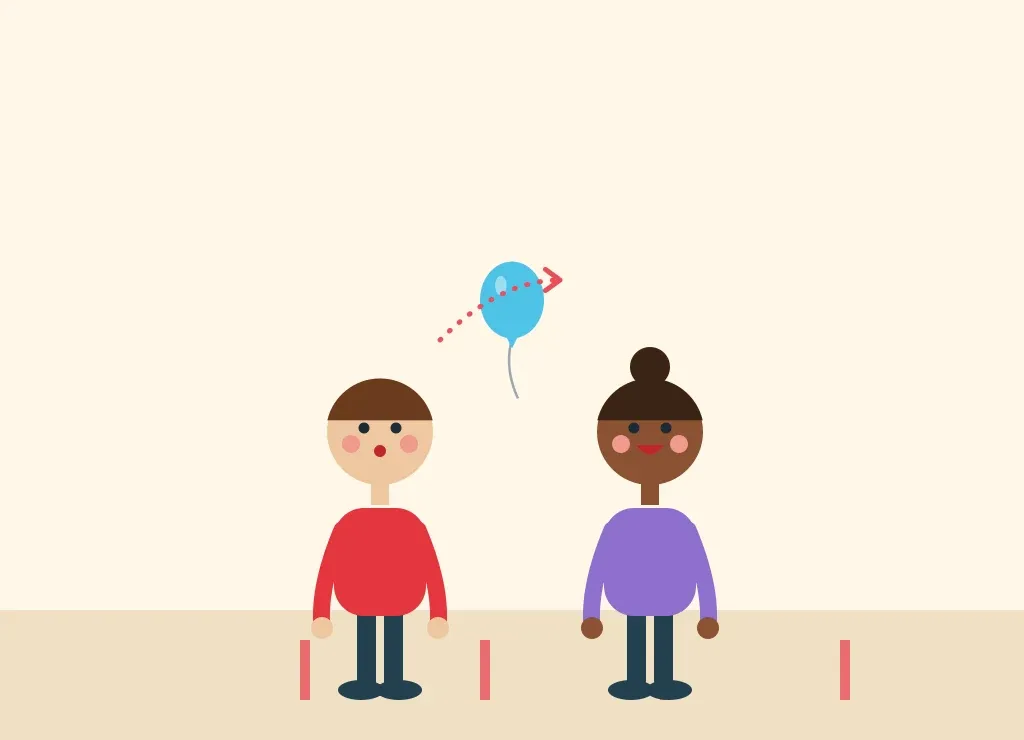
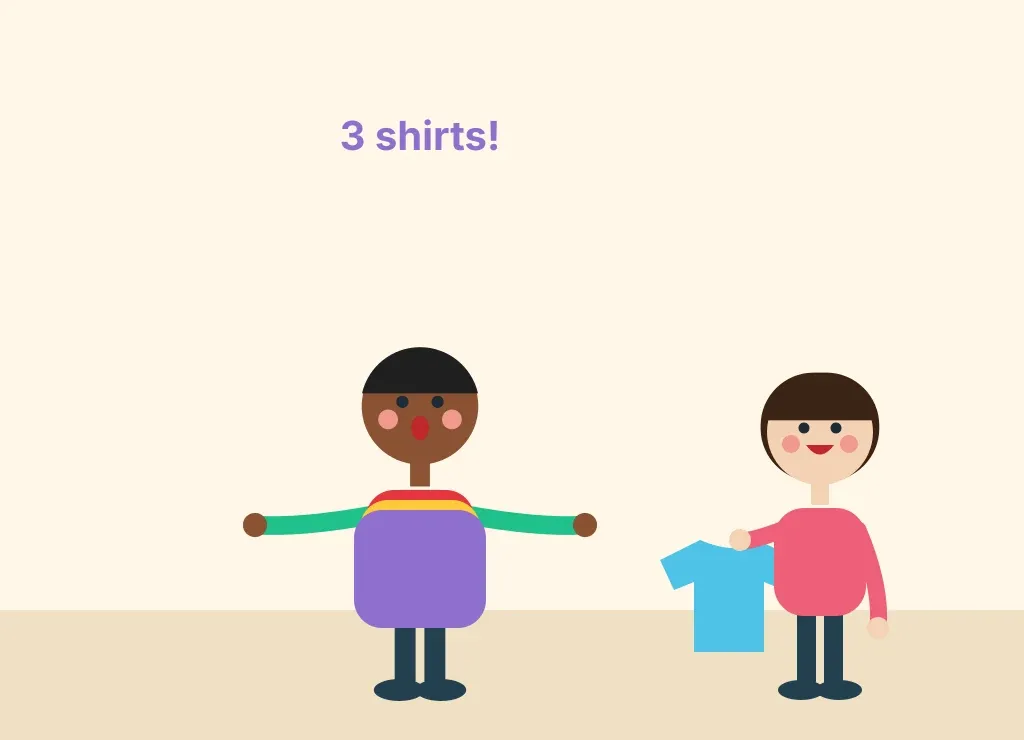
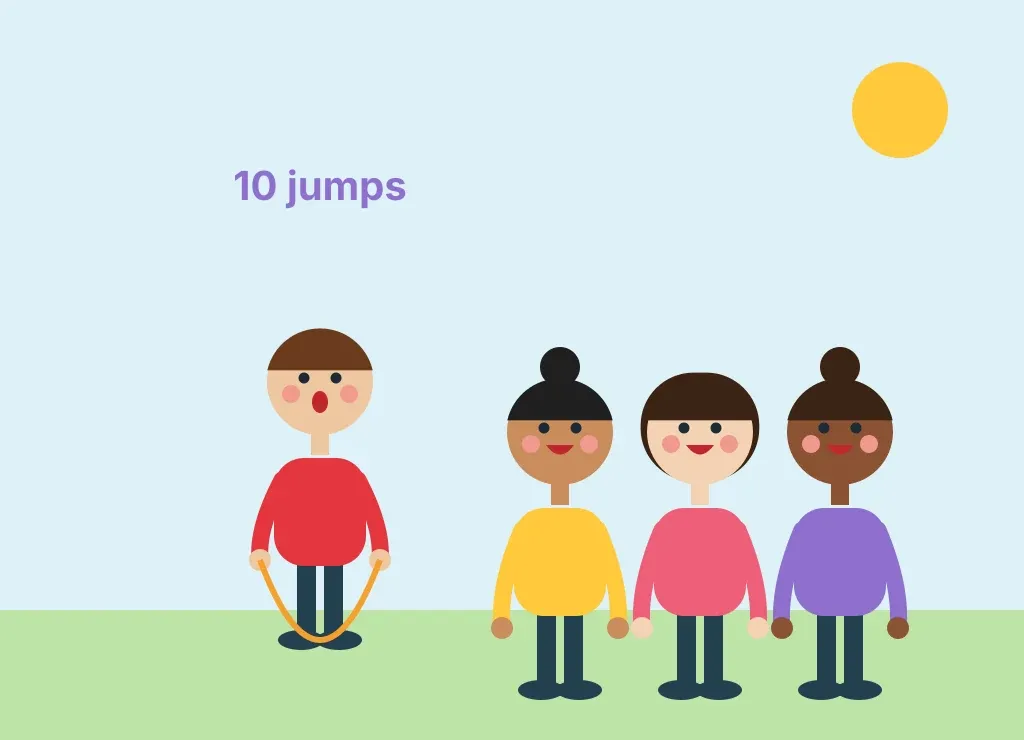
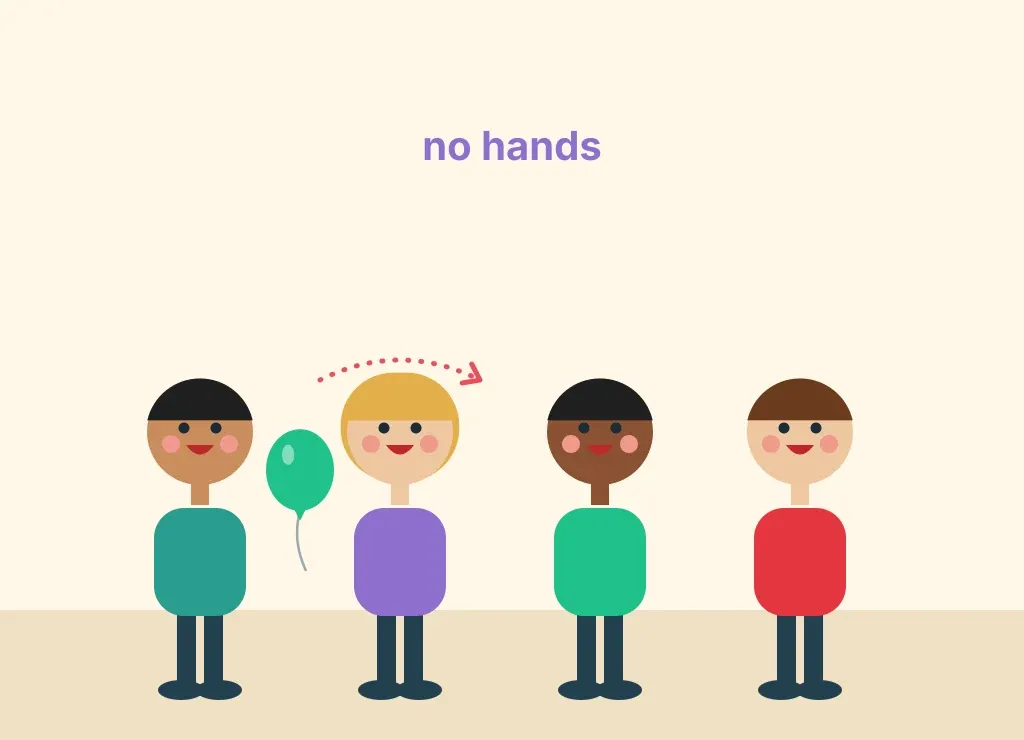
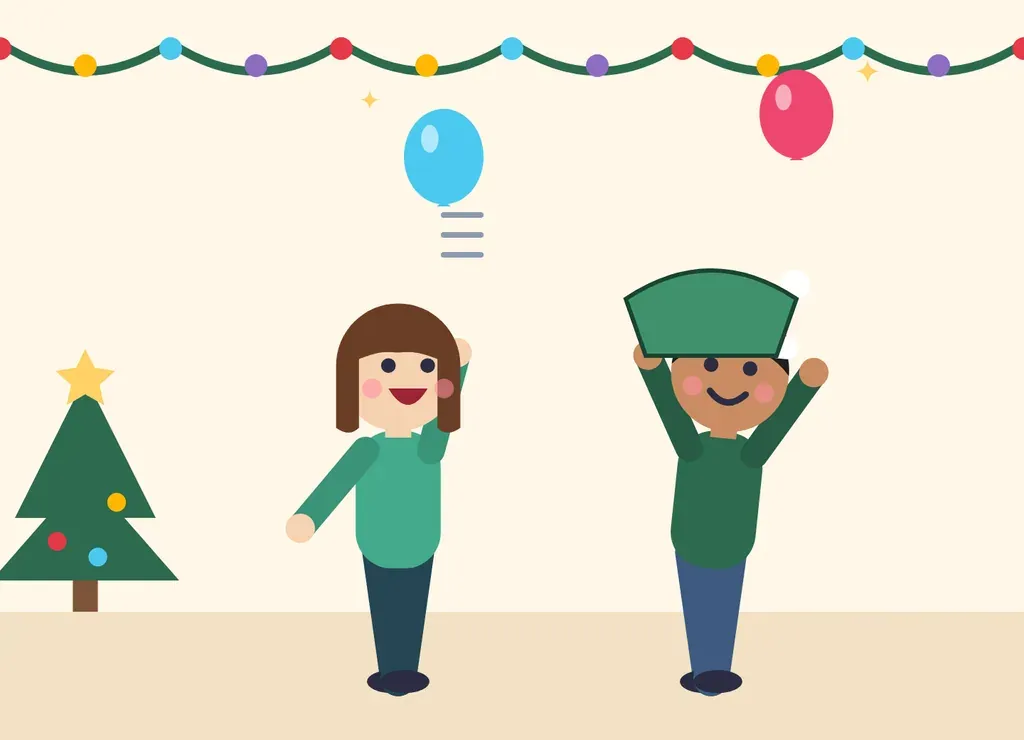
Illustration: Sweater Without Dropping the Balloon

Sweater Without Dropping the Balloon

Original title: Ponerse el suéter sin dejar caer el globo (ES)

Group
2 to 4 players at a time
Age
8+
Duration
1 to 2 min per round
Where
Indoors
How to play

Materials

  • 1 loose sweater per player (Christmas jumpers are perfect)
  • 1 inflated balloon per player

Setup

  • Clear space in the middle of the room, away from lamps and fragile objects.
  • Put each sweater on the floor, inside out or rolled up.

Rules, step by step

  1. Each player starts with the balloon in hand and the sweater on the floor.
  2. On the signal, they throw the balloon into the air.
  3. They have to put the sweater on while keeping the balloon in the air, tapping it with their hands, head or elbows.
  4. If the balloon touches the floor, the player takes the sweater off and starts again (or is out).
  5. The winner is whoever gets the sweater fully on (head and both arms) without the balloon falling.

Variations and tips

  • Harder: also put on a beanie and a scarf.
  • In teams: a teammate may blow on the balloon, but not touch it.
  • Use balloons with a little water inside so they are heavier and less predictable.

Original video: @bzonehair_wholesale@sandroluizwolverine
The original video
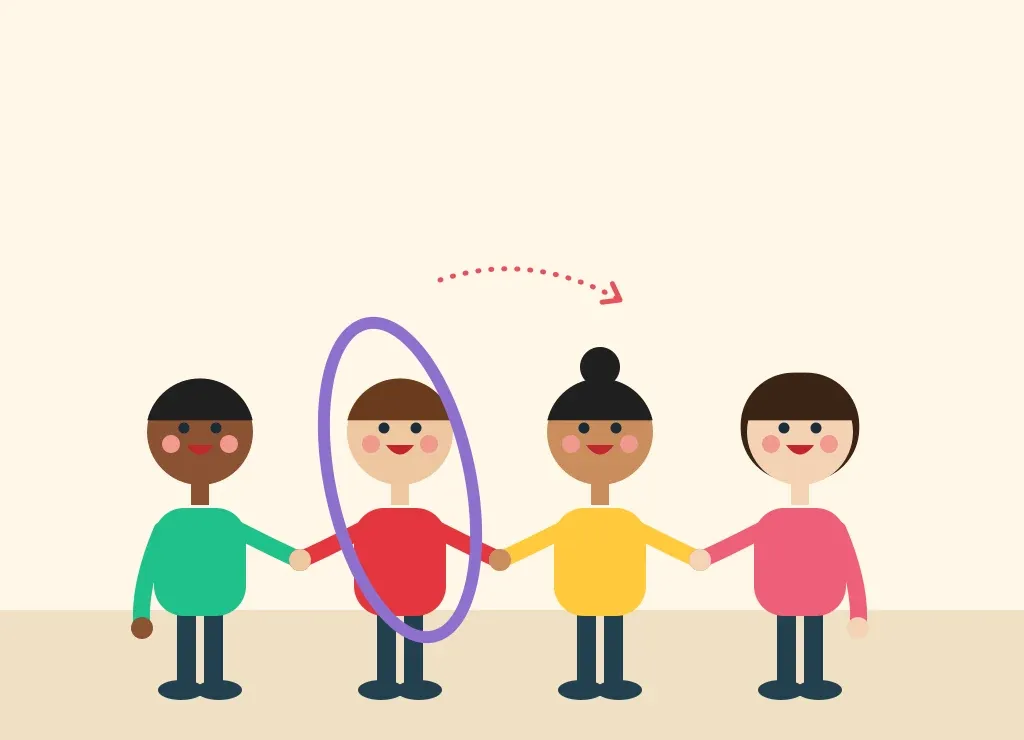
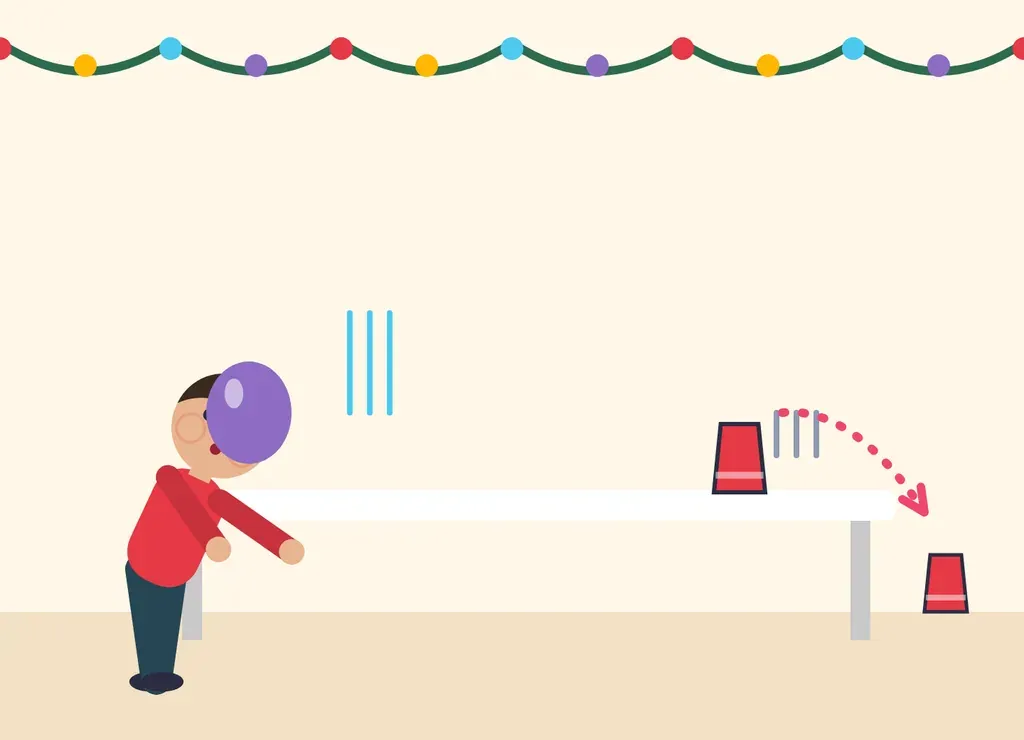
Illustration: Blown Away

Blown Away

Original title: The best Christmas game (EN) / jogo do balão (PT)

Group
2 players (or 2 teams in a relay)
Age
6+
Duration
1 to 3 min
Where
Indoors
How to play

Materials

  • Balloons (several per player)
  • 1 plastic cup per player
  • 1 long table

Setup

  • Place an upside-down cup in the middle of the table, in front of each player.
  • Set the starting line at the head of the table.

Rules, step by step

  1. Each player inflates a balloon without tying it and holds it shut with their fingers.
  2. They aim the mouth of the balloon at the cup and let the air out.
  3. The jet of air has to push the cup until it falls off the far end of the table.
  4. They can refill the balloon as many times as they like, but never touch the cup with their hands or the balloon.
  5. The first to knock the cup off wins.

Variations and tips

  • Use several cups in a row (3 to 5) and knock them off one by one.
  • Relay: each team member may only inflate the balloon once.
  • Tip: long balloons give a stronger, more focused jet.

Original video: @bzonehair_wholesale@sara.bfsilva

The original video
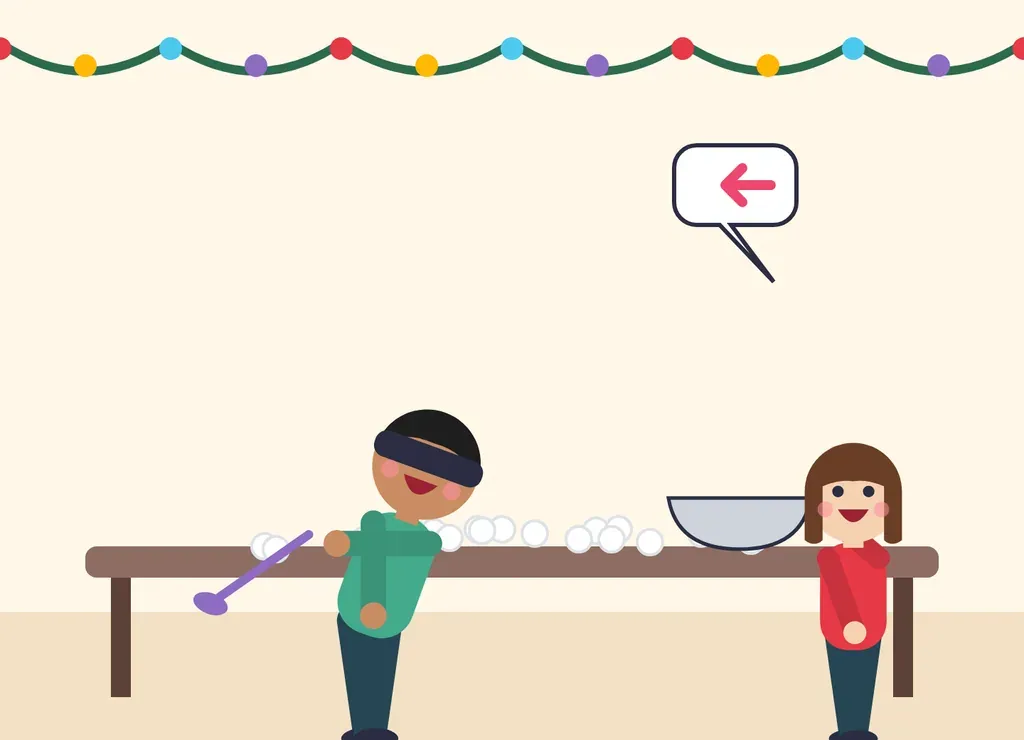
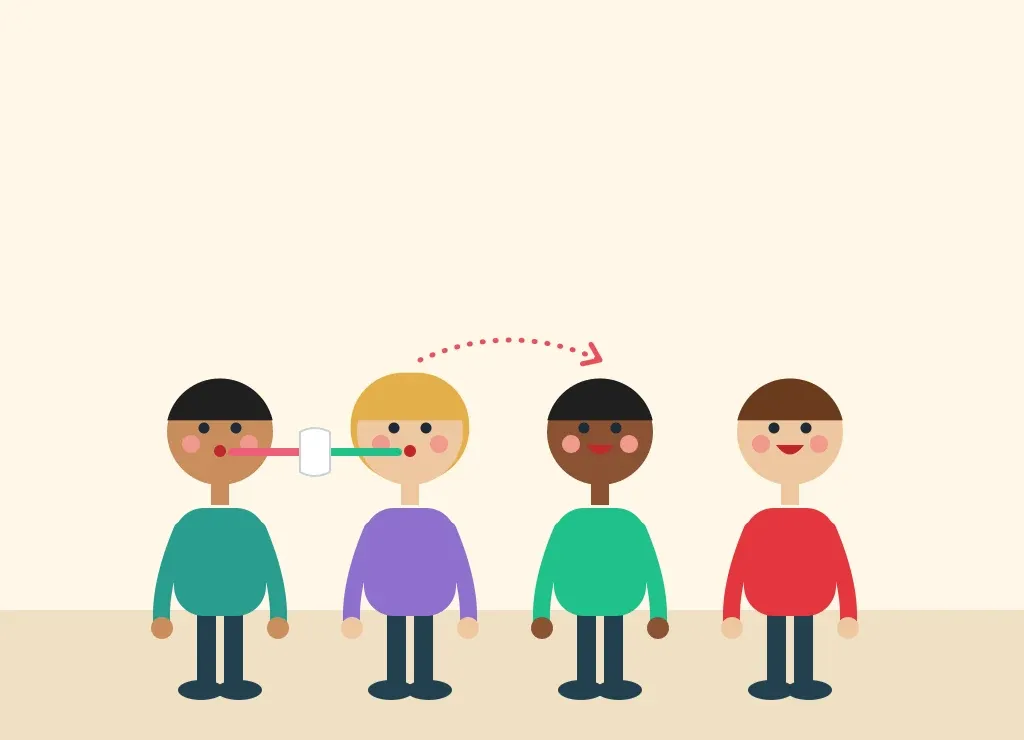
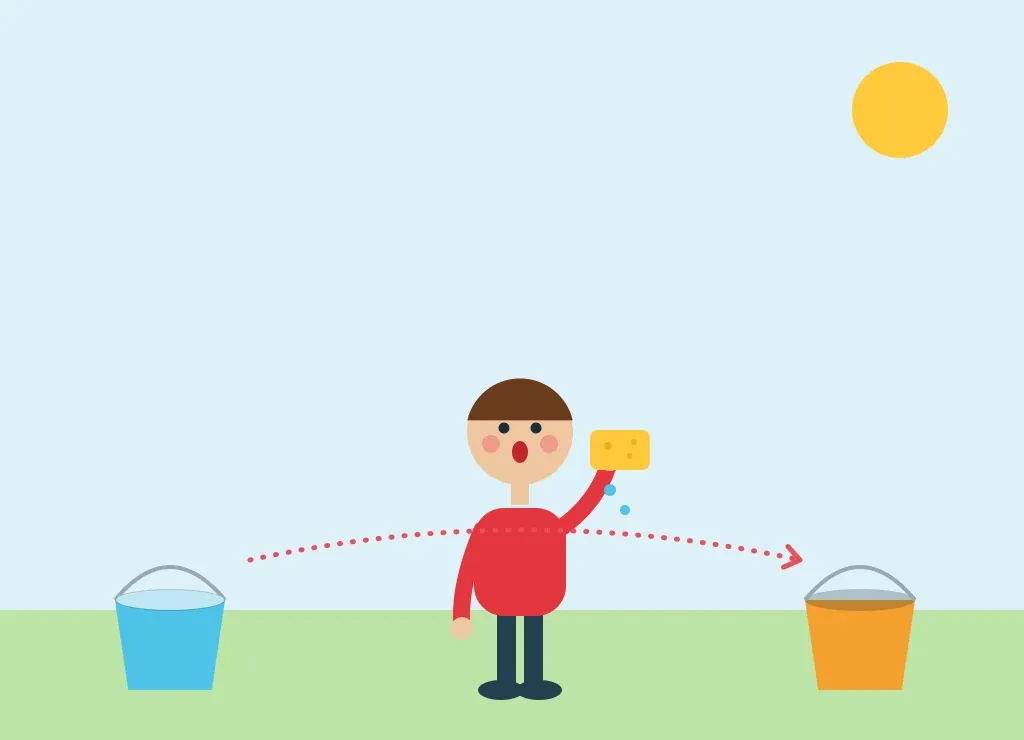
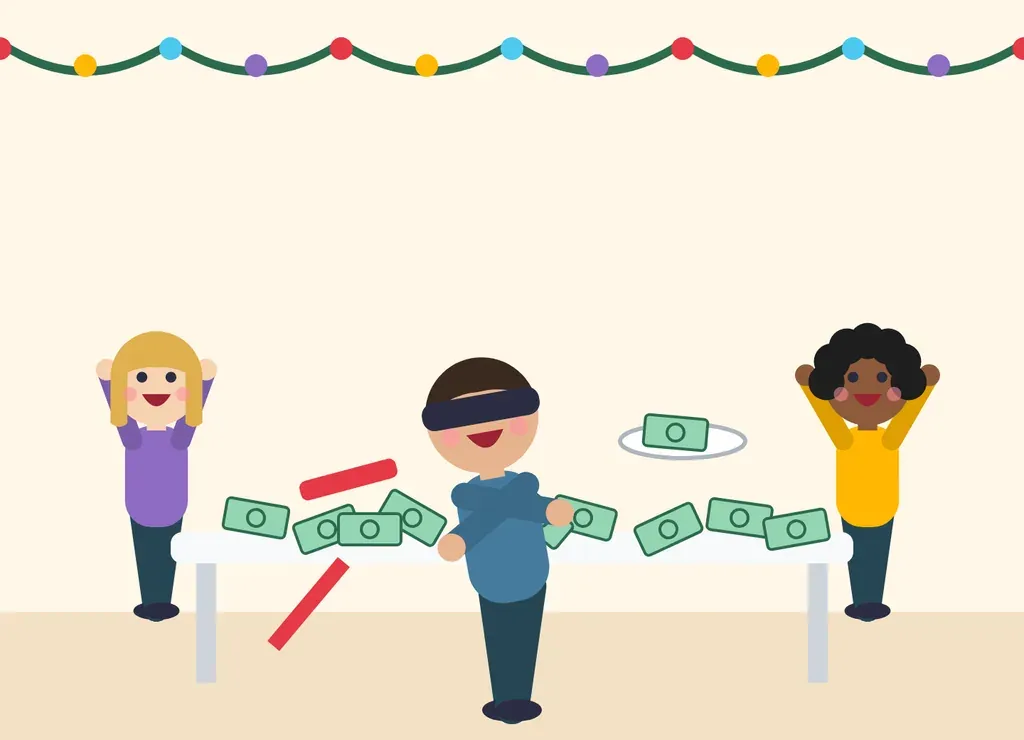
Illustration: Blindfolded Spatula Cash Grab

Blindfolded Spatula Cash Grab

Original title: Big Winner (EN)

Group
1 player at a time, as many spectators as you like
Age
10+
Duration
30 to 60 sec per player
Where
Indoors
How to play

Materials

  • Fake banknotes, chocolate coins or sweets
  • 1 spatula or kitchen turner
  • 1 paper plate
  • 1 blindfold (or sleep mask)
  • Timer

Setup

  • Spread the notes/sweets over a table or worktop.
  • Blindfold the player and give them the spatula in one hand and the plate in the other.

Rules, step by step

  1. The blindfolded player stands next to the table.
  2. On the signal, they have 30 seconds to scoop up as many notes as possible with the spatula and put them on the plate.
  3. They may not use their free hand to pick up or hold the notes.
  4. Whatever is on the plate when time runs out is their prize.
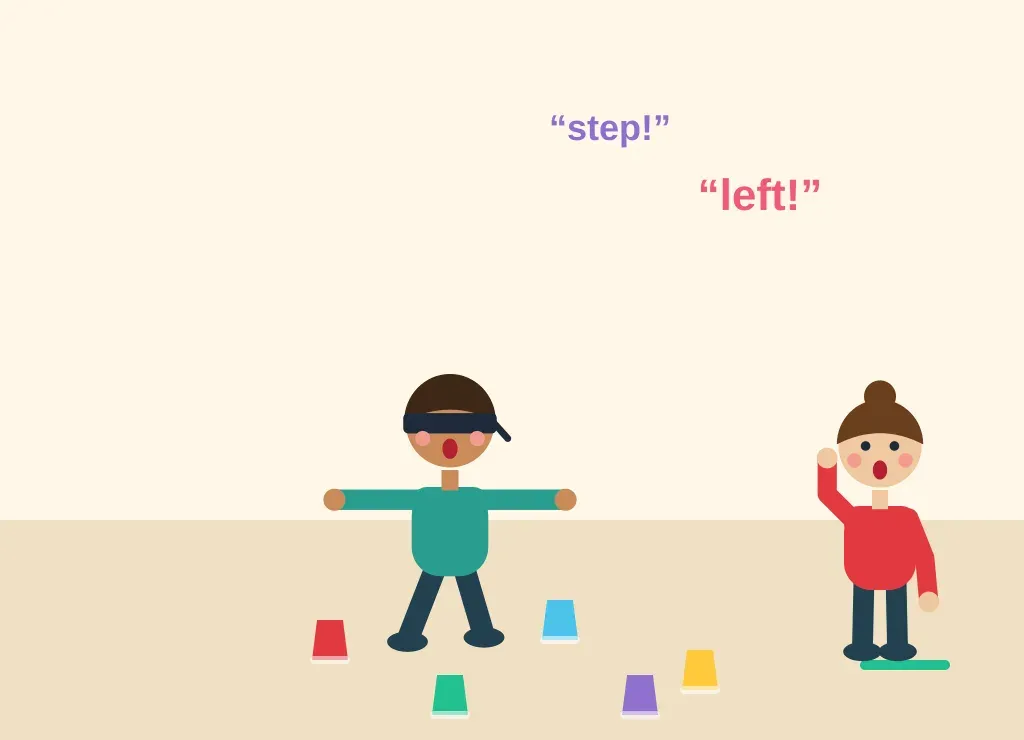
  5. The audience may shout hints ("more to the left!") or try to confuse the player.

Variations and tips

  • Use a wooden spoon instead of a spatula (harder).
  • Each note has a different value; the highest total wins.
  • For kids: swap money for prize cards ("you choose dessert").

Original video: @bzonehair_wholesale@sandroluizwolverine
The original video
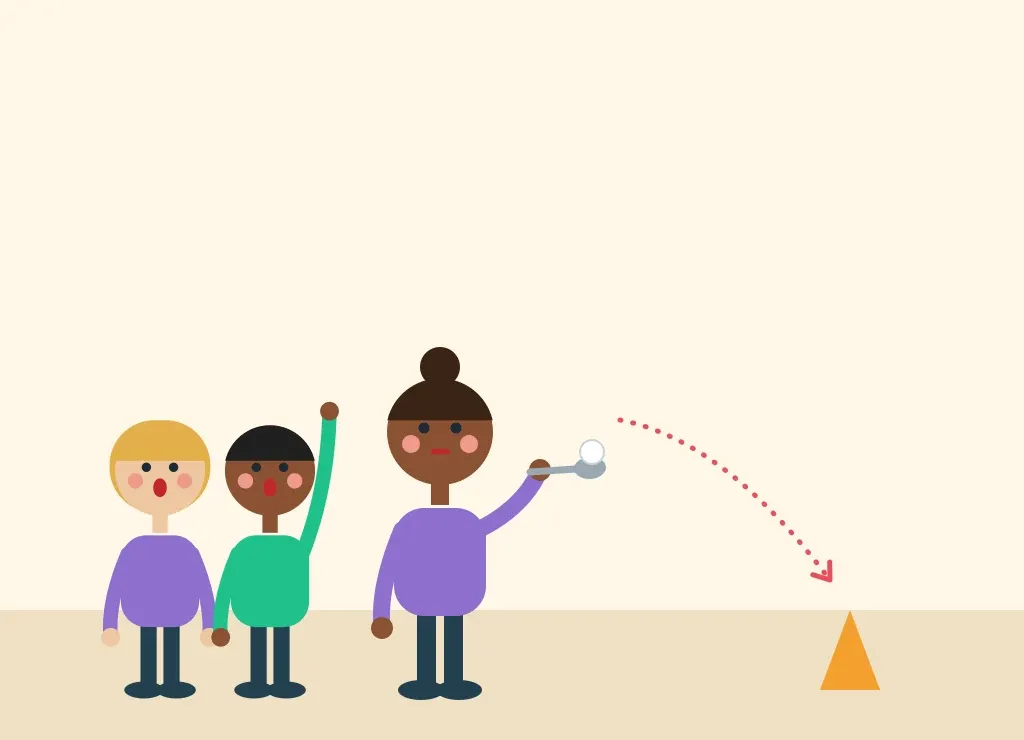
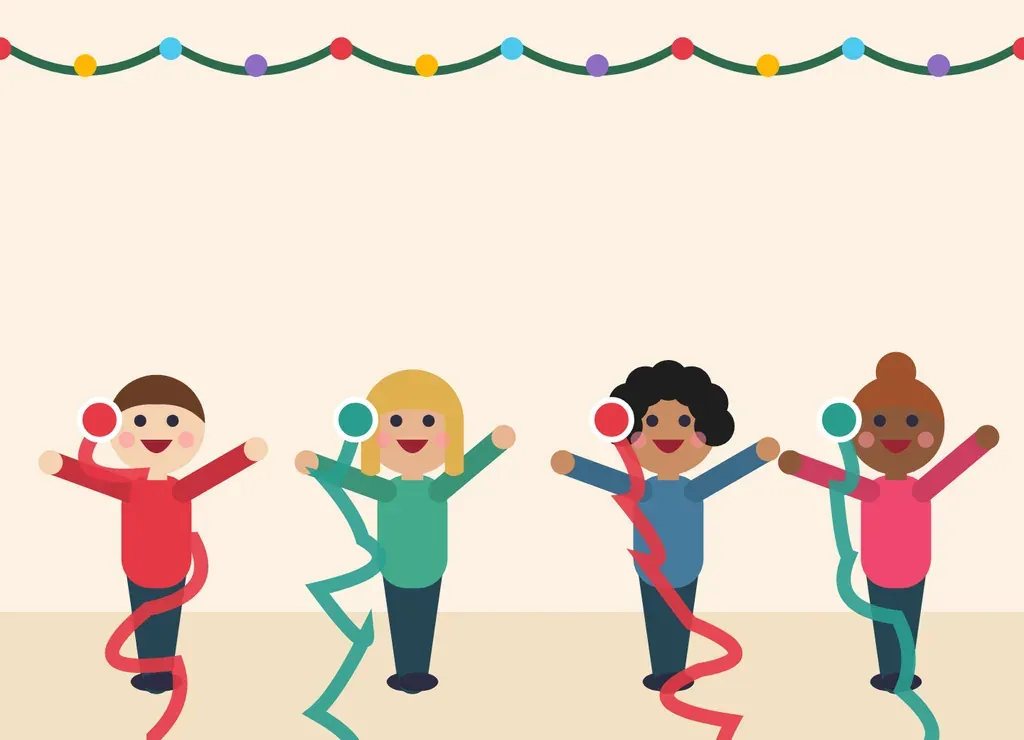
Illustration: Streamer Race

Streamer Race

Original title: Unroll streamer the fastest (EN)

Group
4 to 10 players at once
Age
6+
Duration
1 to 2 min
Where
Indoors
How to play

Materials

  • 1 roll of streamer (crêpe paper ribbon) per player, all the same size

Setup

  • Give each player a roll.
  • Make sure there is space around everyone (the ribbons fly!).

Rules, step by step

  1. Each player holds the roll with both hands.
  2. On the signal, they have to unroll the whole roll as fast as possible using only their fingers (they can spin the roll, pull, shake).
  3. If the ribbon tears, they carry on from the piece left on the roll.
  4. The first to reach the end of the roll and hold up the cardboard core wins.

Variations and tips

  • Extra difficulty: unroll with arms stretched above the head.
  • In pairs: one holds the roll, the other pulls the ribbon.
  • Tip: buy cheap, identical rolls so nobody gets an advantage.

Original video: @bzonehair_wholesale@sandroluizwolverine
The original video
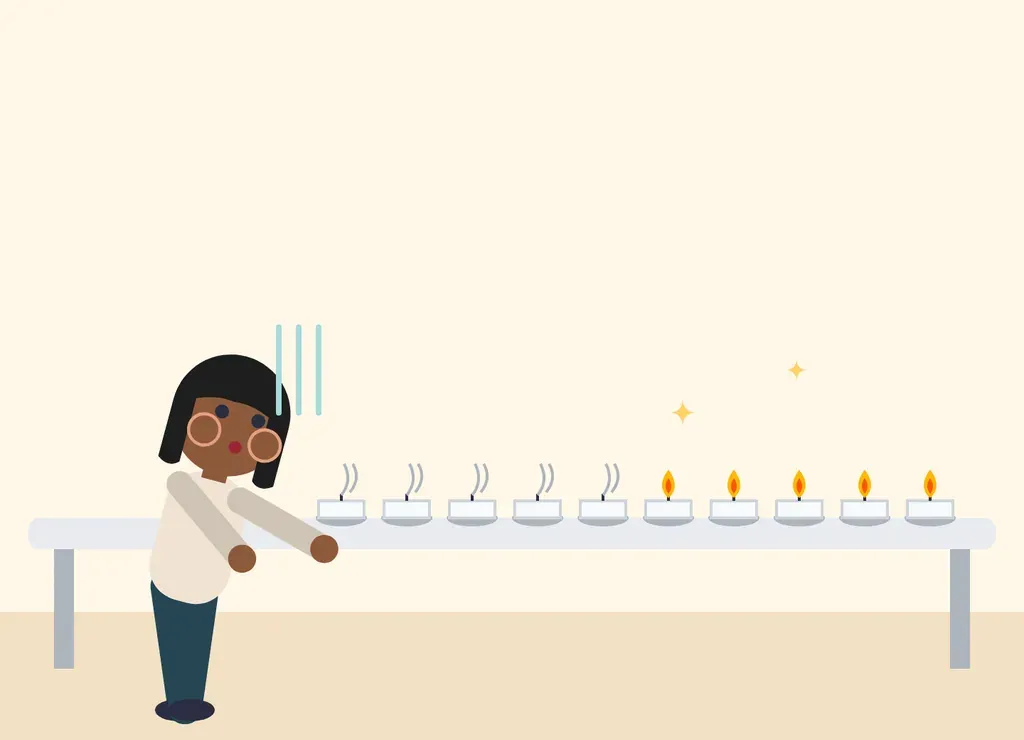
Illustration: Candles in One Breath

Candles in One Breath

Original title: Candle challenge (EN)

Group
1 player at a time
Age
8+ (adult supervision)
Duration
10 sec per player
Where
Indoors
How to play

Materials

  • 10 to 15 small candles (tealights)
  • Lighter
  • A worktop or long table with nothing flammable nearby

Setup

  • Line the candles up in a straight row, 3 or 4 cm apart.
  • Light them all.

Rules, step by step

  1. The player stands at one end of the row, level with the candles.
  2. They fill their lungs and, in a single continuous breath, try to blow out as many candles as possible.
  3. They may walk along the worktop while blowing, but may not breathe in again.
  4. Count how many candles went out. The night's record wins.

Variations and tips

  • Zigzag or curved row (much harder).
  • Space the candles further apart each round.
  • Safety: an adult always lights and watches the candles; tie long hair back.

Original video: @bzonehair_wholesale@sandroluizwolverine
The original video
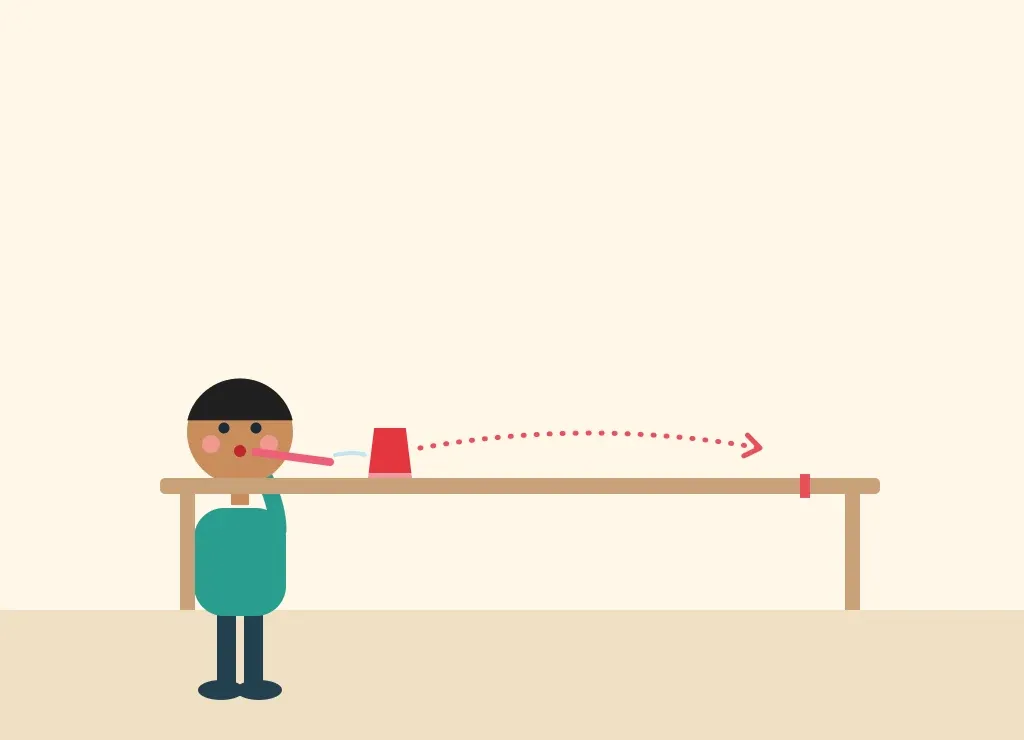
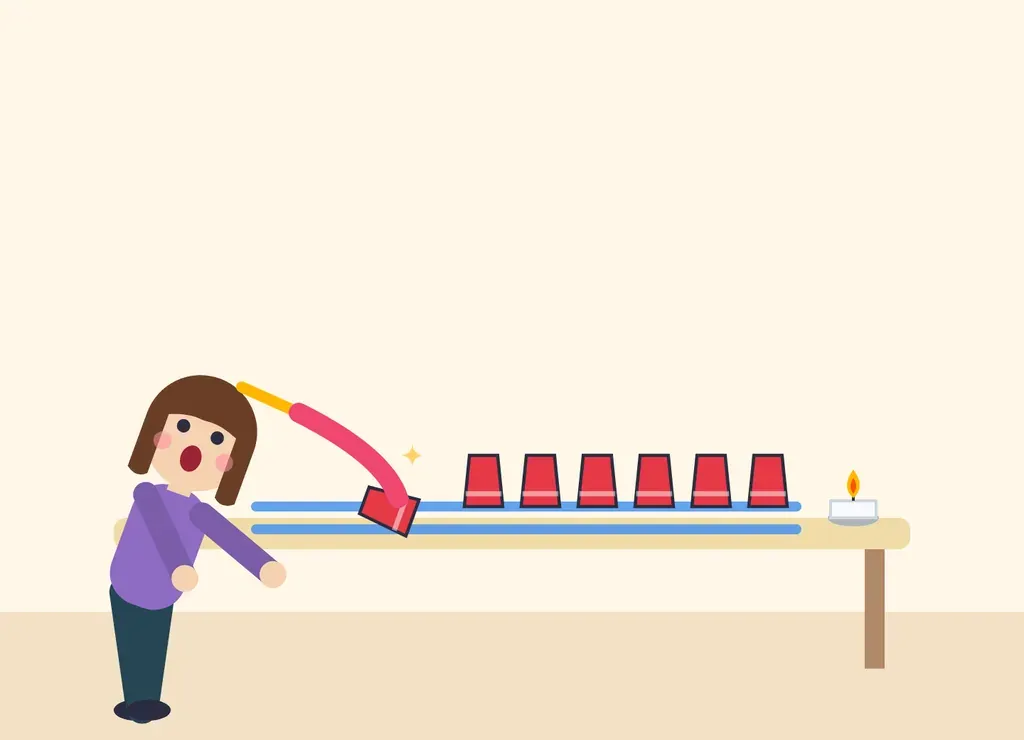
Illustration: Party Blower Cup Knockdown

Party Blower Cup Knockdown

Original title: Party blower cup race (EN)

Group
2 players per table (or more, on each side)
Age
6+
Duration
1 to 2 min
Where
Indoors
How to play

Materials

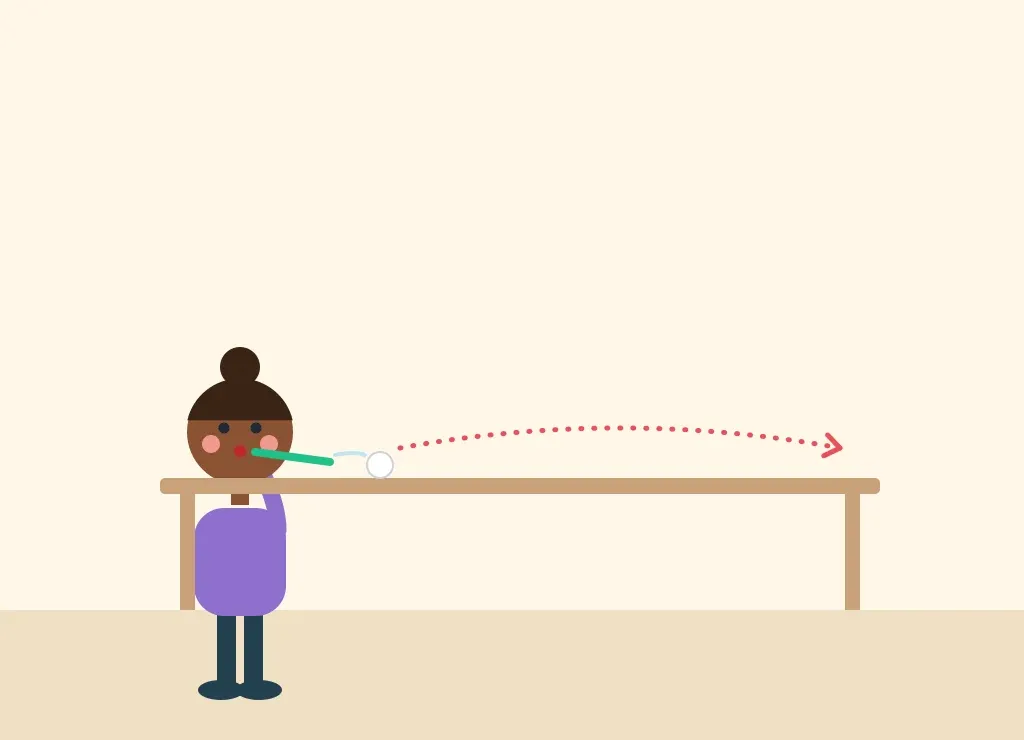
  • 1 party blower (the whistle that unrolls) per player
  • 8 to 10 plastic cups per player
  • Tape (to mark lanes)

Setup

  • Mark a lane along the table for each player with tape.
  • Stand the cups upside down in a row inside each lane.

Rules, step by step

  1. Each player stands at one end of the table with the party blower in their mouth.
  2. On the signal, they blow so the blower unrolls and knocks over the first cup.
  3. They may not touch the cups with their hands, only with the party blower.
  4. They move along, knocking the cups down one by one.
  5. The first to clear their lane of standing cups wins.

Variations and tips

  • Tower in the middle: a pyramid of cups in the centre of the table and everyone blows at once; whoever knocks over the last cup wins.
  • Put a candle at the end of the lane: the final "target" is to blow it out with the party blower (with an adult).
  • Tip: buy long party blowers; short ones don't reach the cups.

Original video: @bzonehair_wholesale@sandroluizwolverine
The original video
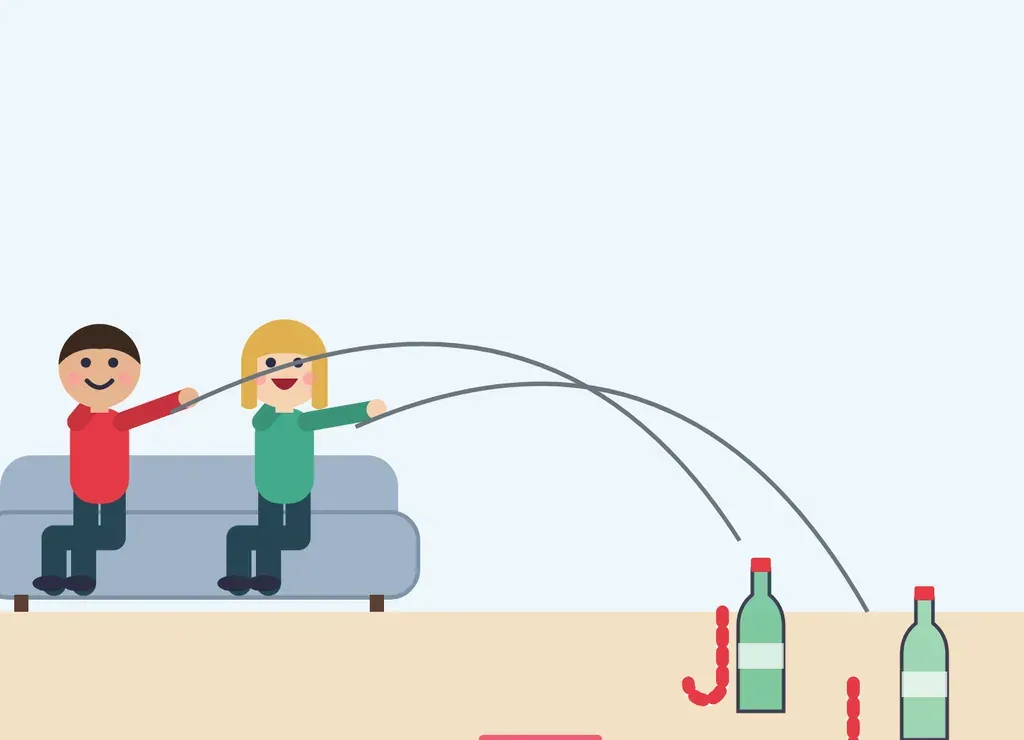
Illustration: Candy Cane Bottle Fishing

Candy Cane Bottle Fishing

Original title: My competitive family – candy cane bottle (EN)

Group
2 to 6 players
Age
8+
Duration
2 to 5 min
Where
Indoors
How to play

Materials

  • 1 empty glass bottle per player (or a plastic bottle with a little water)
  • 1 candy cane per player
  • 1 piece of string, 2 to 3 m long, per player
  • Tape for the finish line

Setup

  • Tie the candy cane to the end of the string.
  • Stand the bottles on the floor, 2 or 3 metres from the players.
  • Mark a finish line on the floor, next to the players.

Rules, step by step

  1. Players stand behind a line (or sit on the sofa) holding the end of the string.
  2. On the signal, they have to hook the candy cane into the neck of the bottle, moving only the string.
  3. Once the bottle is "caught", they drag it to the finish line without letting it fall.
  4. If the bottle tips over, agree beforehand: in the easy version you keep dragging it lying down; in the hard one it has to be stood up again.
  5. The first to bring the bottle to the finish line wins.

Variations and tips

  • Use longer strings for adults and shorter ones for kids.
  • Sweet-free version: a hook made from a paper clip or coat hanger.
  • Tip: wide-necked glass bottles make it easier for the little ones.

Original video: @bzonehair_wholesale@sandroluizwolverine
The original video
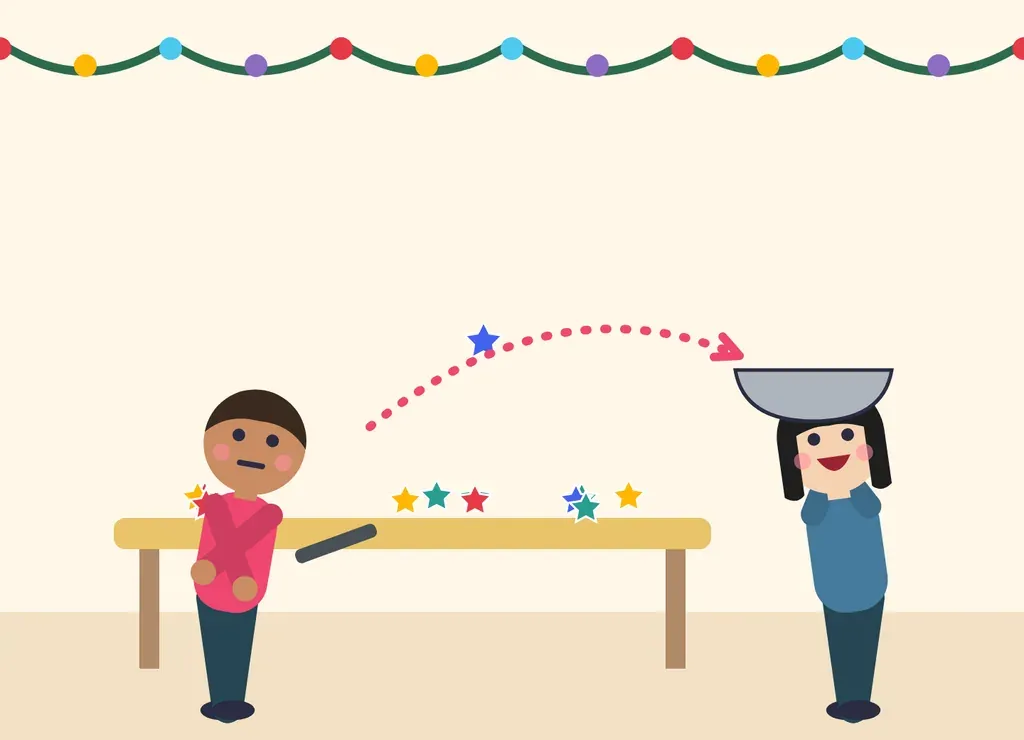
Illustration: Bow Scoop

Bow Scoop

Original title: Bow toss (EN)

Group
Teams of 2
Age
6+
Duration
1 min per team
Where
Indoors
How to play

Materials

  • Lots of self-adhesive gift bows
  • 1 large bowl or basin
  • 1 spatula, spoon or fan per team

Setup

  • Spread the bows over a table.
  • One member of each team holds the bowl on the other side of the table.

Rules, step by step

  1. One player uses the spatula to flick the bows, one at a time, towards the bowl.
  2. Their teammate moves the bowl to catch the bows in the air.
  3. Nobody may touch the bows with their hands.
  4. After 1 minute, count the bows in the bowl.
  5. The team with the most bows wins.

Variations and tips

  • The bowl player is blindfolded and their teammate guides them by voice.
  • Different-coloured bows are worth different points.
  • Tip: self-adhesive bows stick to each other; peel the backing off first.

Original video: @bzonehair_wholesale@sandroluizwolverine
The original video
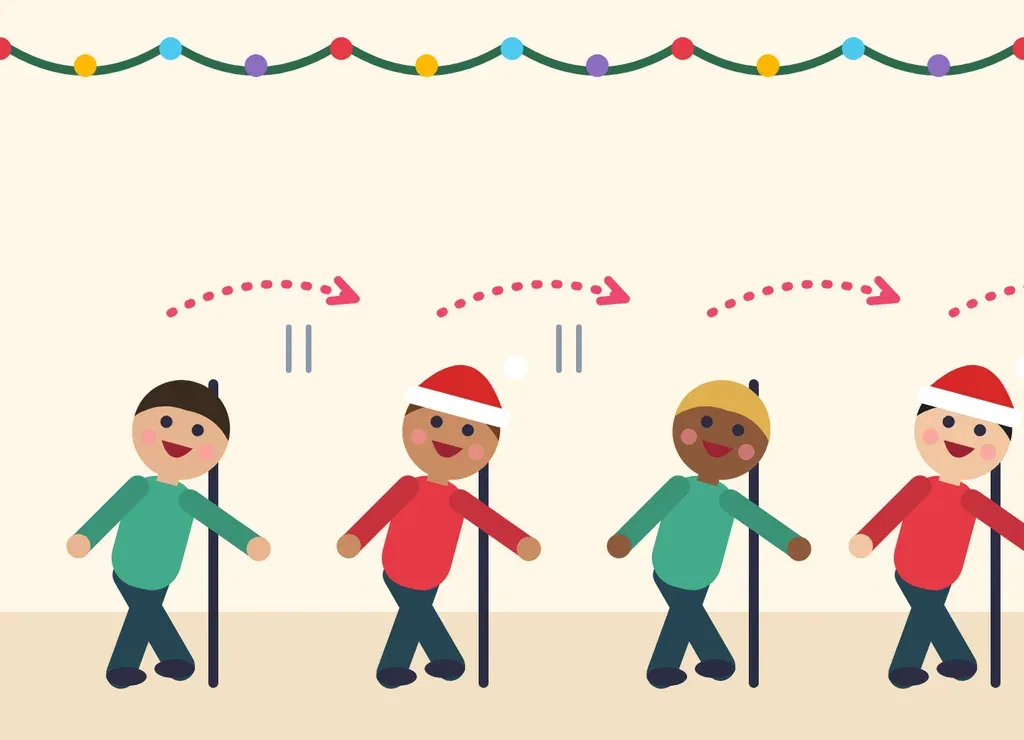
Illustration: Falling Stick

Falling Stick

Original title: Stick drop / Cane game (EN)

Group
6 to 15 players
Age
8+
Duration
5 to 10 min
Where
Indoors or outdoors
How to play

Materials

  • 1 stick, broom handle or long cane per player

Setup

  • Form a circle, each player with their stick standing upright in front of them, held only by the top.
  • Distance between players: about 1 metre (it keeps growing).

Rules, step by step

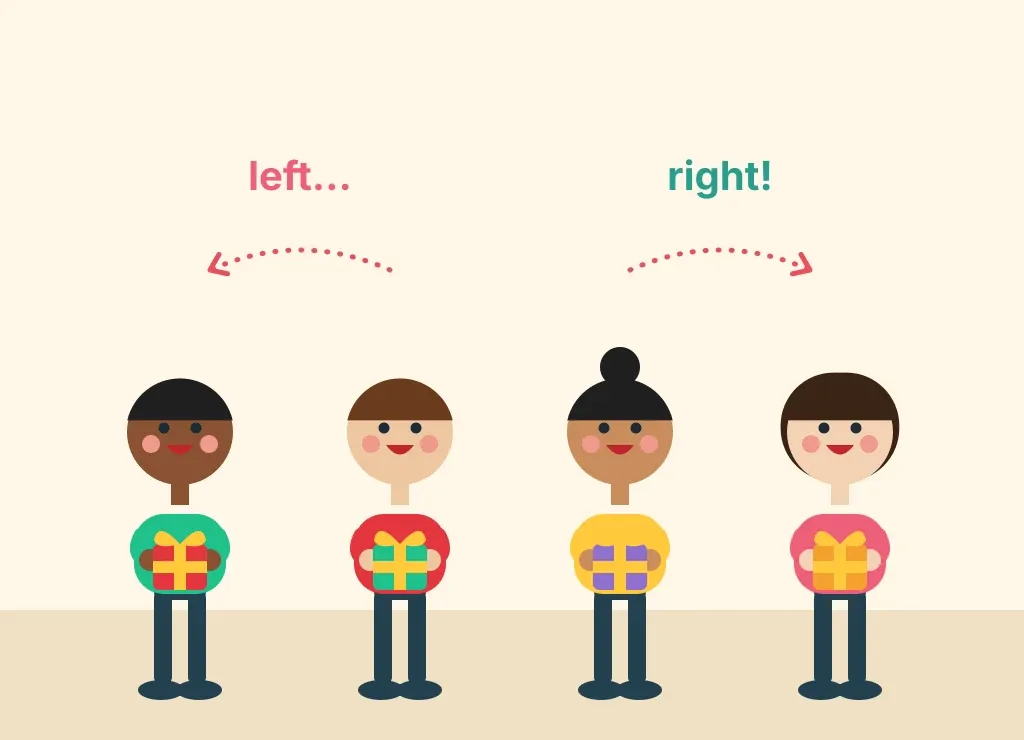
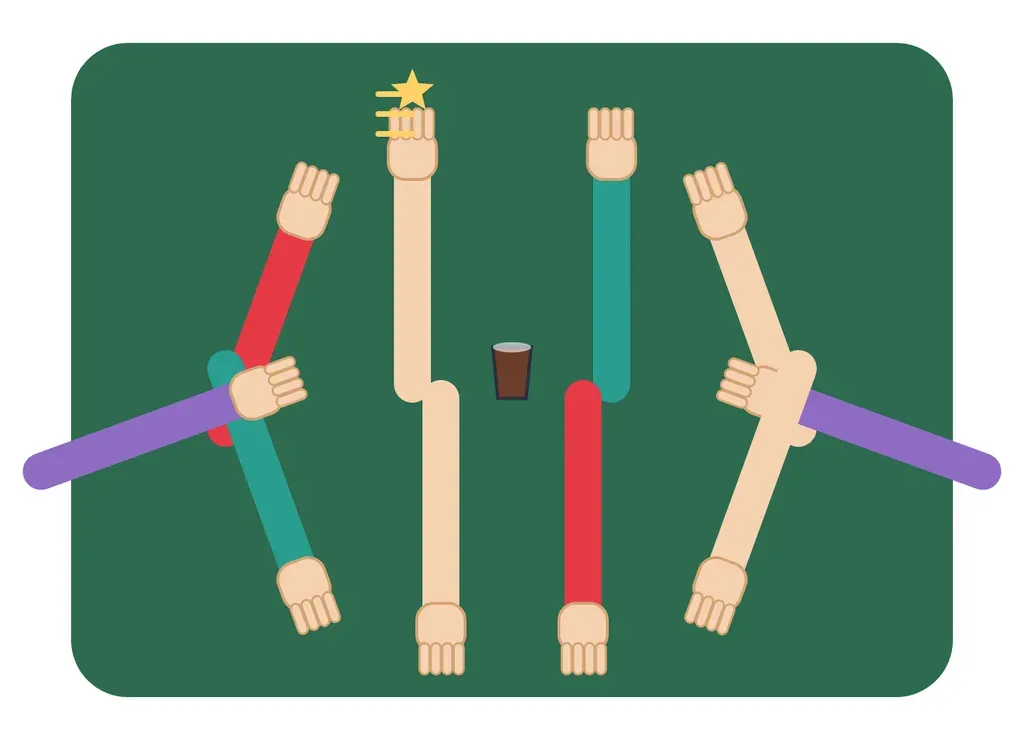
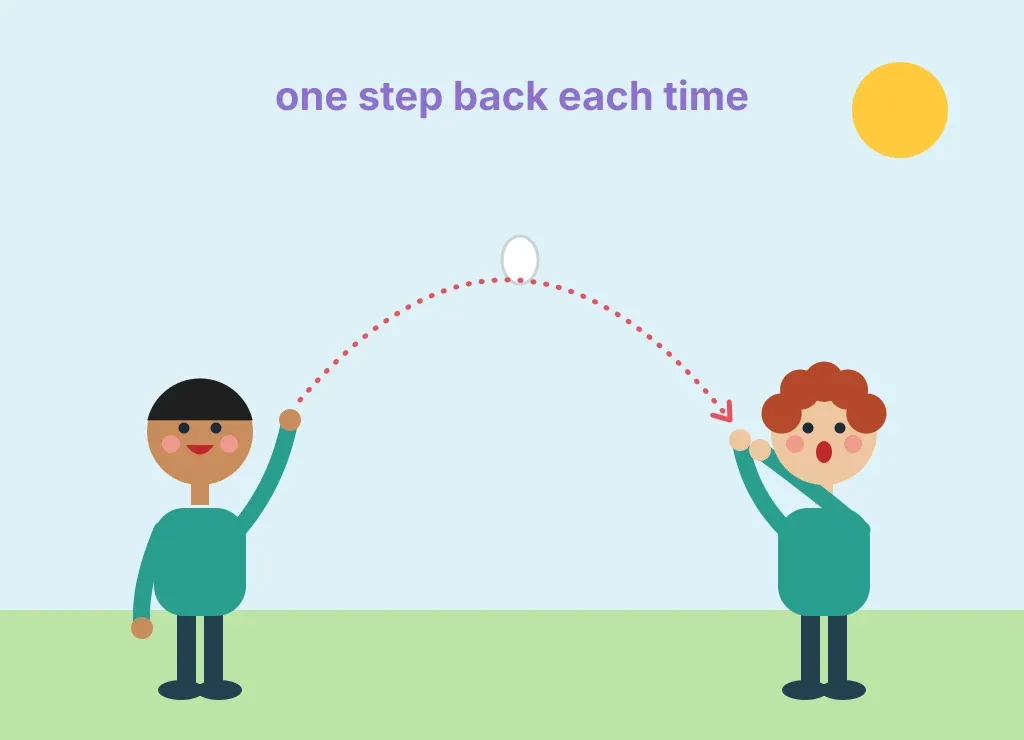
  1. A leader shouts "Right!" or "Left!".
  2. Everyone lets go of their own stick and runs to catch their neighbour's on that side before it hits the floor.
  3. Whoever drops a stick is out (or takes a step back, increasing the distance).
  4. After each round the circle gets bigger.
  5. The last player still in the game wins.

Variations and tips

  • Change direction halfway ("Right... no, LEFT!").
  • Pairs: two players facing each other swap sticks.
  • Safety: no slippery rugs on the floor, and light sticks.

Original video: @bzonehair_wholesale@sandroluizwolverine
The original video
Illustration: Christmas Chain

Christmas Chain

Original title: Christmas Touchdown (EN)

Group
Teams of 2 to 4
Age
8+
Duration
5 min
Where
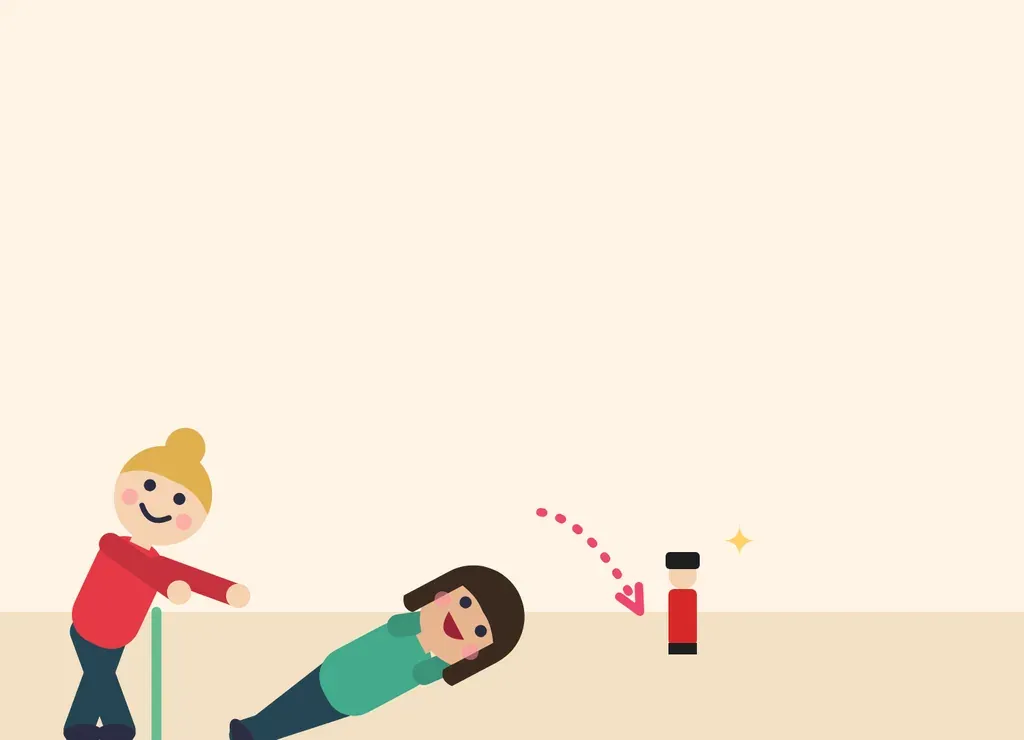
Indoors (smooth floor)
How to play

Materials

  • 1 small figure (nutcracker, elf or skittle) per team
  • Tape to mark the line
Setup

  • Mark a line on the floor with tape.
Rules, step by step

  1. The first team member keeps at least one foot (or knee) behind the line, without crossing it.
  2. Their teammates hold on to them (hands, arms), forming a chain that stretches forward.
  3. The last in the chain carries the figure and tries to stand it up as far from the line as possible.
  4. If anyone in the chain touches the floor beyond the line with another part of their body, the go doesn't count.
  5. The team that places the figure furthest away wins.

Variations and tips

  • No kneeling: feet only on the floor.
  • Each team gets 2 attempts and the best one counts.
  • The "cheats" with a rake in the video get a good laugh, but they don't count!

Original video: @livingwithlady

The original video
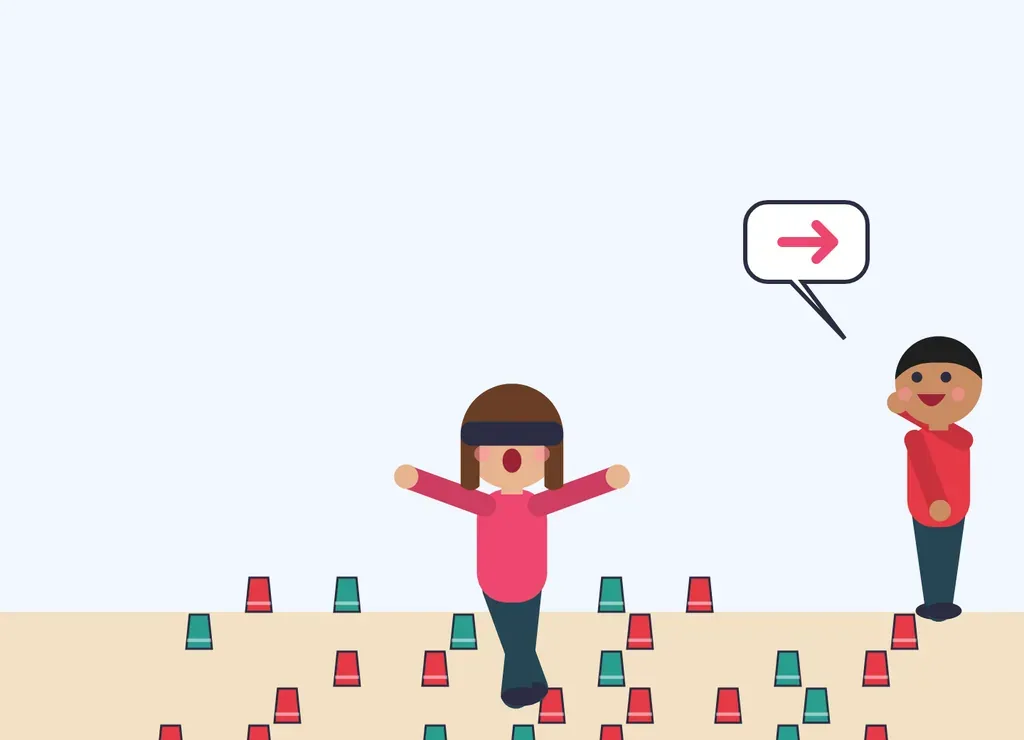
Illustration: Blindfolded Cup Maze

Blindfolded Cup Maze

Original title: Blindfolded Cup Maze (EN)

Group
Pairs (1 blindfolded + 1 guide)
Age
8+
Duration
2 min per pair
Where
Indoors
How to play

Materials

  • 30 to 60 plastic cups in two colours
  • 1 blindfold
  • Tape for start and finish

Setup

  • Stand the cups on the floor across a 3 x 4 m area, leaving narrow paths.
  • Mark the start and finish lines.

Rules, step by step

  1. One player is blindfolded and stands at the start.
  2. Their partner, outside the maze, guides them by voice only ("small step to the left!").
  3. The blindfolded player has to cross the maze to the finish without knocking over any cups.
  4. Each cup knocked over adds a 5-second penalty (or means elimination, in the hard version).
  5. The pair with the lowest time wins.

Variations and tips

  • All pairs at once: the voices mix and it gets chaotic (and hilarious).
  • The guide may only use colour words: "red" = left, "green" = right.
  • Tip: cups in different colours help the guide give directions.

Original video: @livingwithlady

The original video
Illustration: Bow Snatch

Bow Snatch

Original title: Bow Blaster (EN)

Group
6 to 20 players
Age
8+
Duration
3 to 5 min
Where
Indoors (plenty of space)
How to play

Materials

  • 5 self-adhesive gift bows per player (or clothes pegs)

Setup

  • Each player sticks 5 bows on their clothes: back, shoulders, arms.
  • Set the boundaries of the playing area.

Rules, step by step

  1. On the signal, everyone tries to snatch the others' bows while protecting their own.
  2. Each bow snatched gets stuck on your own clothes.
  3. No grabbing, hard pushing or hiding bows inside your clothes.
  4. After 3 minutes, see who has the most bows.
  5. Whoever has the most bows stuck on wins.

Variations and tips

  • Teams by bow colour.
  • Anyone left without bows is out, or becomes a helper for another player.
  • Clothes-peg version: easier to reuse.

Original video: @livingwithlady

The original video
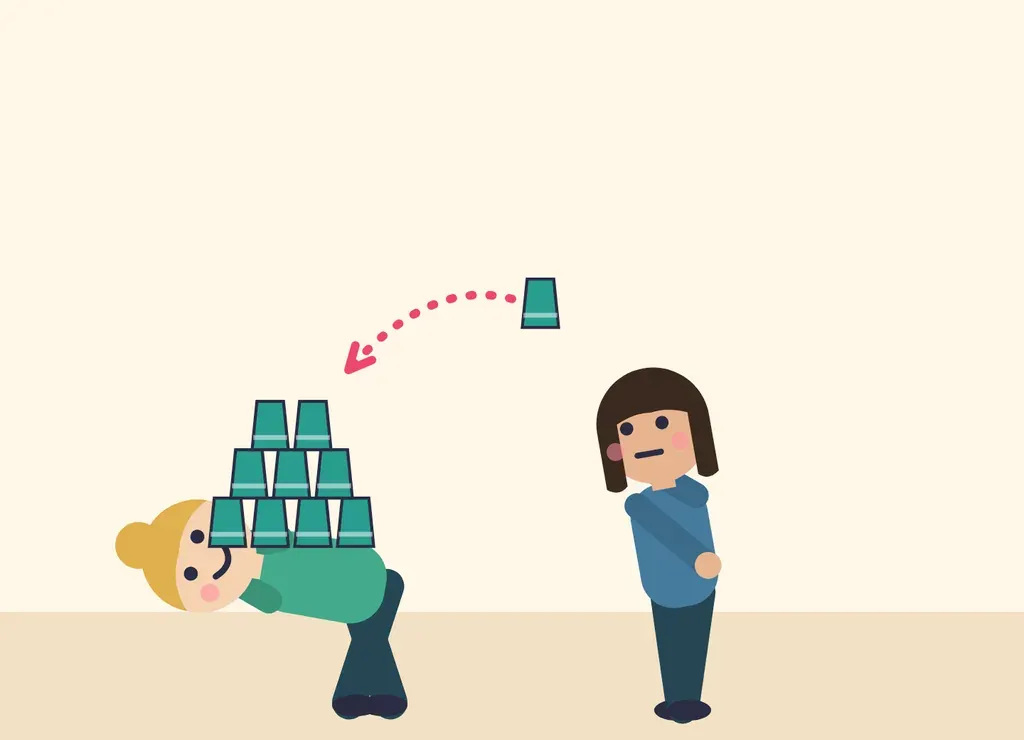
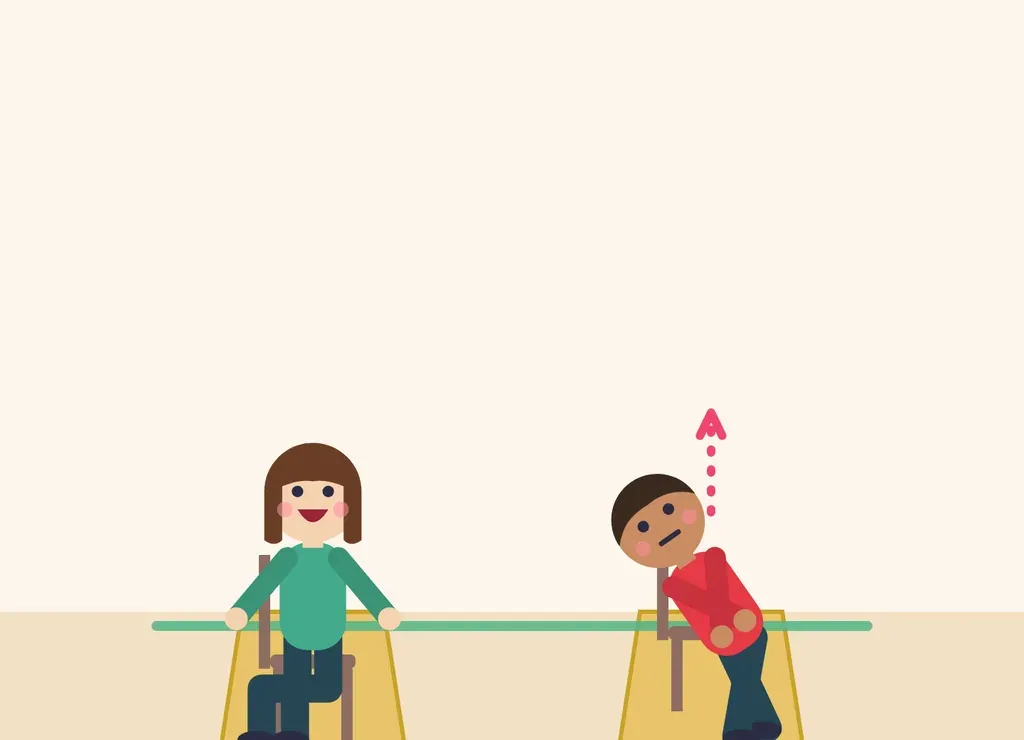
Illustration: Human Shelf

Human Shelf

Original title: The Human Shelf (EN)

Group
Teams of 2
Age
8+
Duration
1 min per round
Where
Indoors
How to play

Materials

  • 20 to 40 plastic cups per team
  • Timer

Setup

  • One member of each team bends forward, back flat like a table and hands behind their head.
  • Their teammate stands beside them with the cups.

Rules, step by step

  1. On the signal, the teammate stacks the cups on the "shelf's" back (a pyramid or towers).
  2. The shelf may not move their hands or stand up.
  3. If the tower falls, they start again with the cups still on top.
  4. After 1 minute, count how many cups are standing.
  5. The team with the most cups on the back wins.

Variations and tips

  • At the end, the shelf has to walk 3 steps without dropping anything.
  • Swap roles in the second round.
  • Tip: flat back and feet shoulder-width apart.

Original video: @livingwithlady

The original video
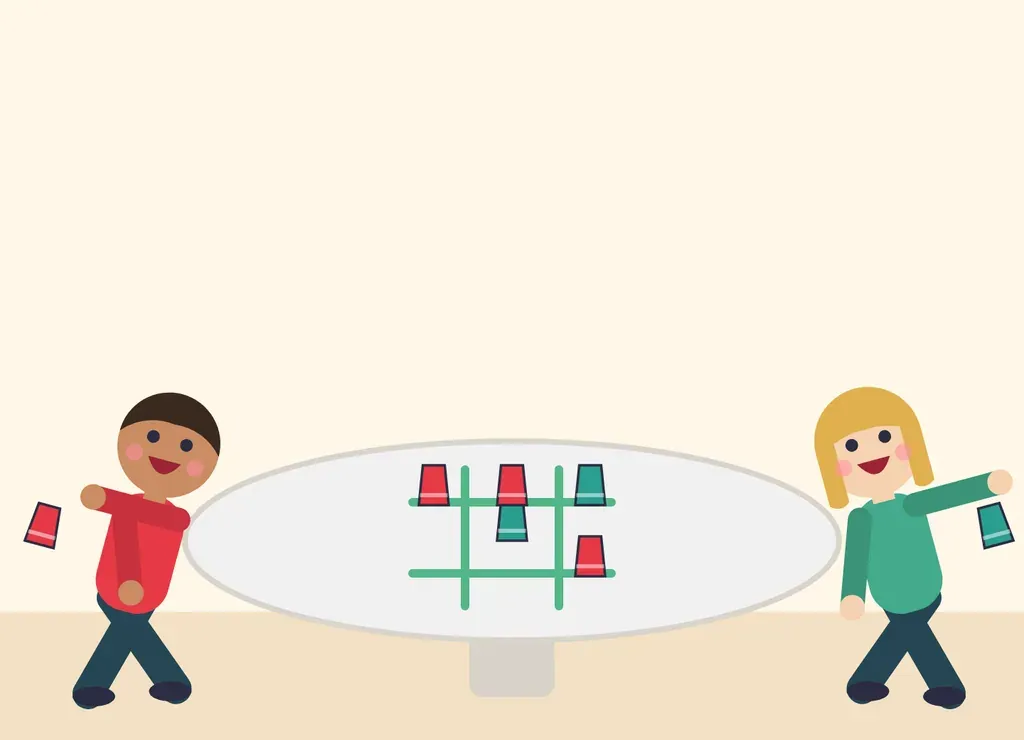
Illustration: Cup Noughts and Crosses

Cup Noughts and Crosses

Original title: Ultimate Tic-Tac-Toe (EN)

Group
2 teams of 3 to 5
Age
8+
Duration
5 to 10 min
Where
Indoors
How to play

Materials

  • Round or square table
  • Tape to draw the 3 x 3 grid
  • 5 cups of one colour and 5 of another per team

Setup

  • Draw a noughts and crosses grid on the table with tape.
  • Each team lines up a few metres from the table, with its cups.

Rules, step by step

  1. On the signal, the first player of each team runs and places a cup in a free square.
  2. They run back and tag the next player, who runs and places another cup.
  3. Once a team has 3 cups on the table, the next player may move one of their team's cups to another square.
  4. The first team to get three in a row wins.
  5. Play best of 5.

Variations and tips

  • Stacking version: you can put a cup on top of an opponent's to "steal" the square (towers).
  • Each runner has to spin around 3 times before placing the cup.
  • Tip: a referee by the table avoids arguments.

Original video: @livingwithlady

The original video
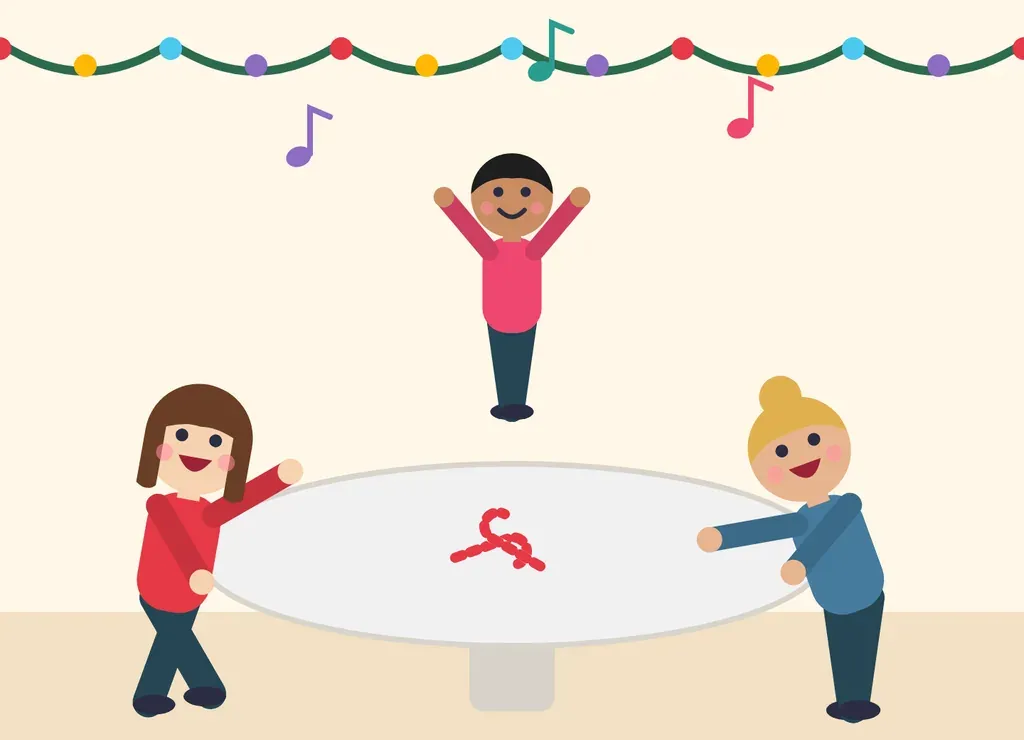
Illustration: Musical Candy Canes

Musical Candy Canes

Original title: Musical Candy Canes (EN)

Group
5 to 15 players
Age
5+
Duration
5 to 10 min
Where
Indoors
How to play

Materials

  • Candy canes (one fewer than the number of players)
  • Round table
  • Music and someone to stop it

Setup

  • Put the candy canes in the centre of the table.
  • Players stand around the table.

Rules, step by step

  1. While the music plays, everyone walks/dances around the table, always in the same direction.
  2. When the music stops, everyone tries to grab a candy cane.
  3. Whoever is left without a candy cane is out.
  4. Take away one candy cane and repeat.
  5. Whoever grabs the last candy cane wins (and eats it!).

Variations and tips

  • No touching the candy canes before the music stops: anyone who does is out.
  • Players who are out take over the music.
  • Sweet-free: use spoons, pine cones or socks.

Original video: @livingwithlady

The original video
Illustration: Wrapping Paper Race

Wrapping Paper Race

Original title: Wrapping Paper Races (EN)

Group
2 to 4 players
Age
8+
Duration
2 min per race
Where
Indoors (smooth floor)
How to play

Materials

  • 1 roll of wrapping paper per player
  • 1 chair per player
  • Tape for the finish line

Setup

  • Lay a length of wrapping paper in front of each chair (about 3 m).
  • Mark the finish line at the end of the paper.

Rules, step by step

  1. Each player sits on the chair with their feet on the paper.
  2. On the signal, they have to reach the finish line without their feet touching the floor.
  3. To move forward, they get up from the chair and pull and move the chair and the paper, but their feet may only step on paper.
  4. If they tear the paper or touch the floor, they go back to the start.
  5. The first to reach the finish line sitting on the chair wins.

Variations and tips

  • Use only one sheet of paper that has to keep being pulled forward (harder).
  • In pairs: one on the chair, the other pulls the paper.
  • Tip: the paper slides a lot; be careful on wooden floors.

Original video: @livingwithlady

The original video
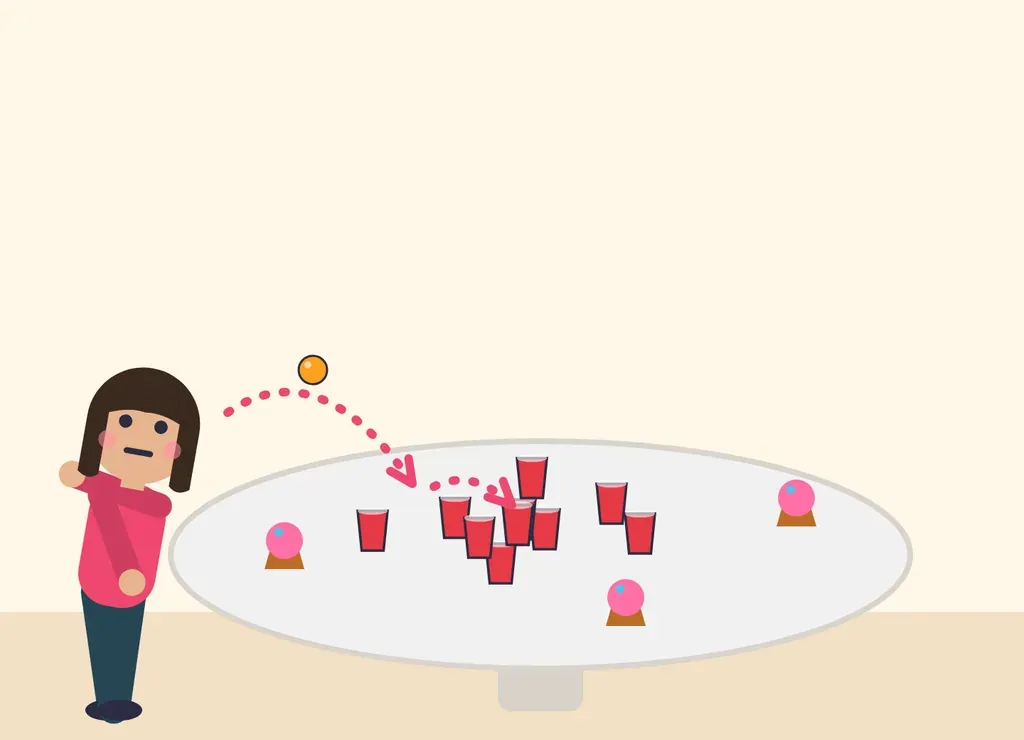
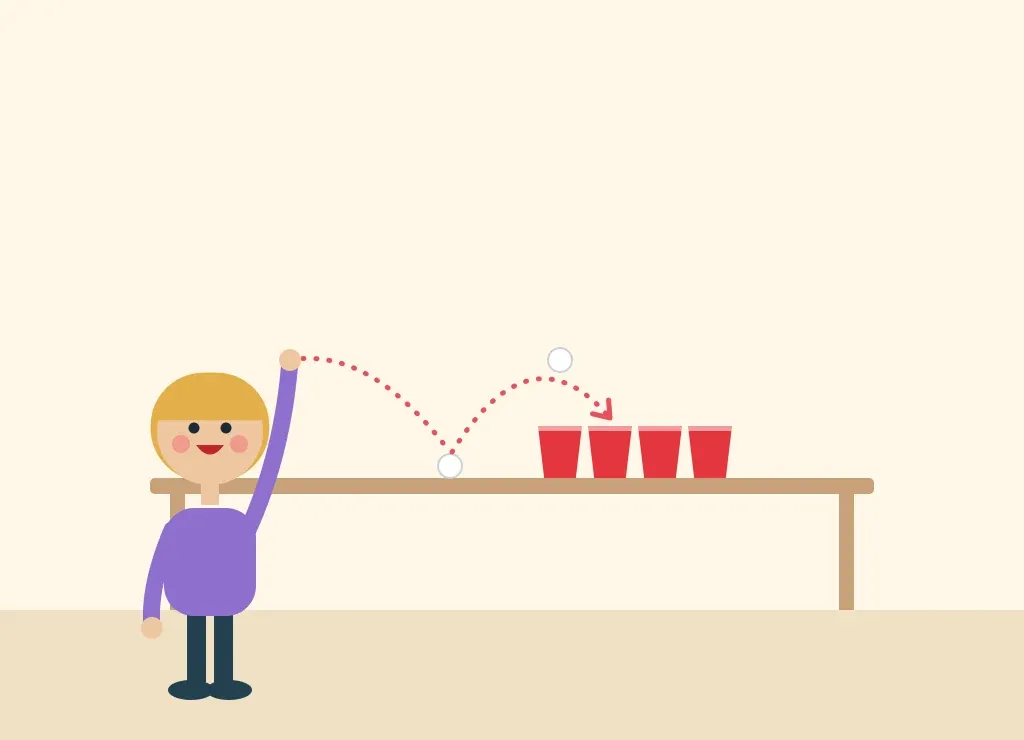
Illustration: Ping-Pong in the Cups

Ping-Pong in the Cups

Original title: Brincadeira 2 (PT-BR)

Group
4 to 15 players, taking turns
Age
5+
Duration
5 to 10 min
Where
Indoors
How to play

Materials

  • 10 to 20 plastic cups
  • Ping-pong balls
  • Big table
  • Small prizes (cakes, chocolates), optional

Setup

  • Stand the cups around the table, some closer and some further away.
  • Put the prizes between the cups, as obstacles.
  • Mark the line you throw from.

Rules, step by step

  1. Each player has 3 balls.
  2. They throw the ball so it bounces once on the table before landing in a cup.
  3. Ball in a cup = 1 point (cups further away can be worth 2).
  4. Whoever lands a ball in a cup with a prize next to it takes the prize.
  5. Whoever has the most points after 3 rounds wins.

Variations and tips

  • Throw without a bounce (harder).
  • Teams: the cups a team hits are removed; whoever clears the table wins.
  • Tip: orange balls are easier to see on white tables.

Original video: @ludpuntel

The original video
Illustration: Oven Glove Present

Oven Glove Present

Original title: Gift with oven mitts (PT-BR)

Group
5 to 20 players in a circle
Age
6+
Duration
10 to 20 min
Where
Indoors
How to play

Materials

  • 1 very well-wrapped present (several layers of paper and tape)
  • 1 pair of oven gloves
  • 1 die

Setup

  • Wrap the present in lots of layers so it lasts.
  • Sit everyone in a circle with the present, the gloves and the die in the middle.

Rules, step by step

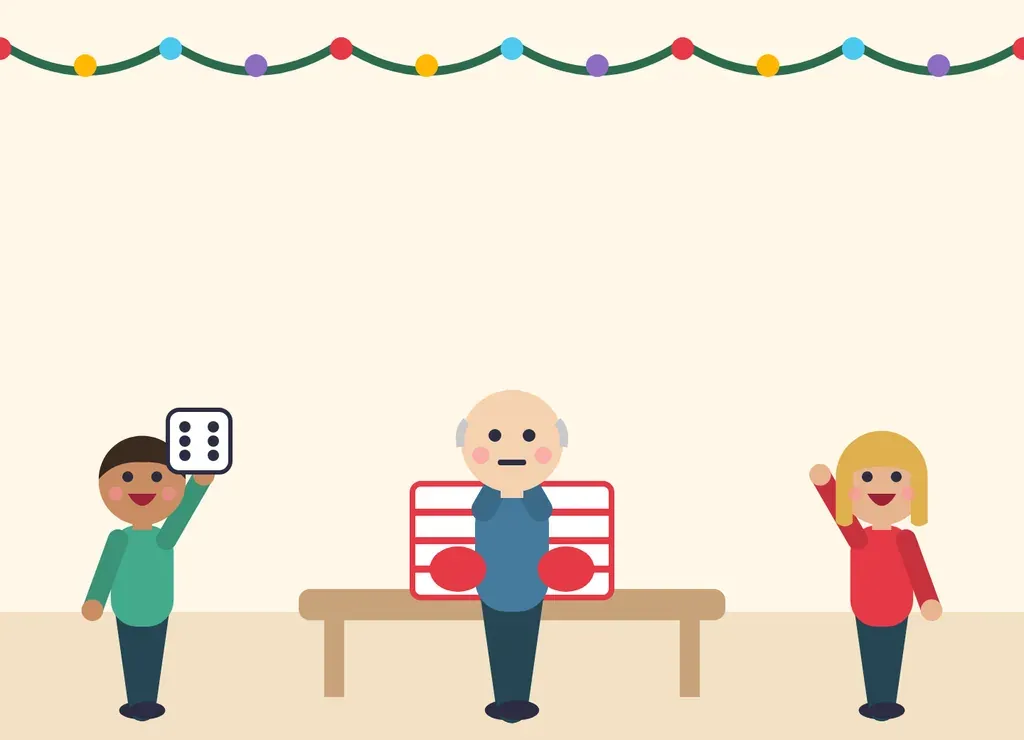
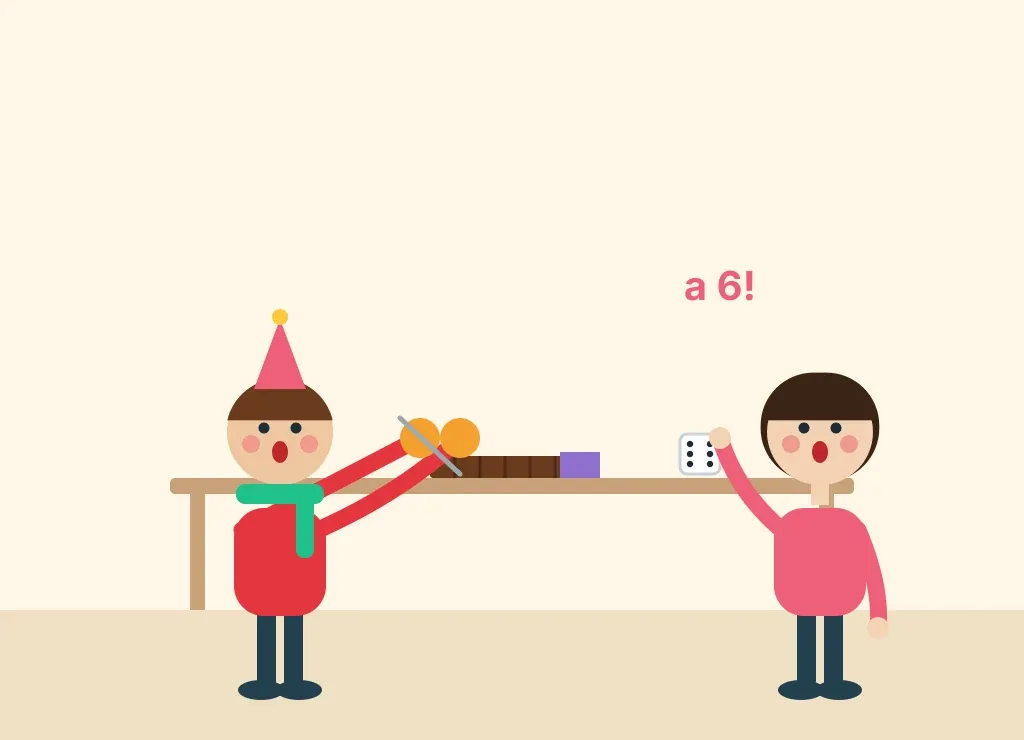
  1. Players take turns rolling the die, passing it to the right.
  2. Whoever rolls a 6 puts on the oven gloves and starts unwrapping the present.
  3. The others keep rolling; when someone else rolls a 6, they take the gloves and the present.
  4. Nobody may unwrap without the gloves on.
  5. Whoever removes the last layer of paper keeps the present.

Variations and tips

  • Add a beanie and a scarf that have to be put on before unwrapping.
  • Put small prizes between the layers of wrapping.
  • Tip: wide tape makes the game much longer and more fun.

Original video: @ludpuntel

The original video
Illustration: Balloon Bellies

Balloon Bellies

Original title: Brincadeira 4 (PT-BR)

Group
Pairs, several at once
Age
12+
Duration
1 to 2 min per round
Where
Indoors
How to play

Materials

  • 1 balloon per player
  • Loose T-shirts

Setup

  • Each player inflates a balloon and puts it inside their T-shirt, like a belly.

Rules, step by step

  1. Players form pairs, facing each other.
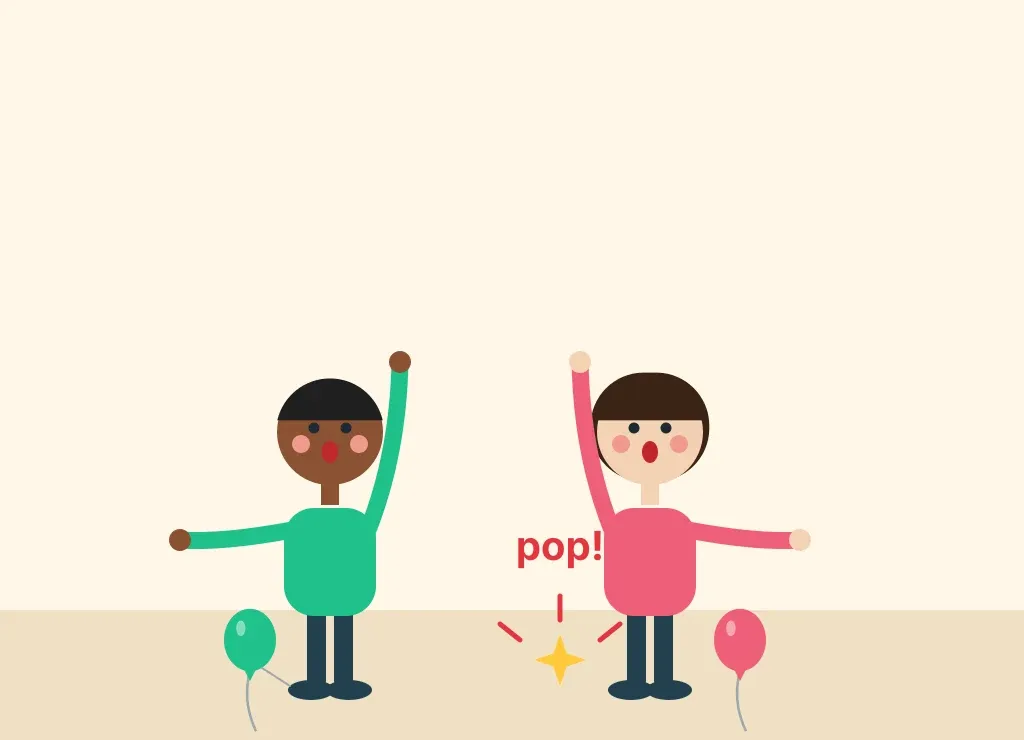
  2. On the signal, they try to pop their opponent's balloon just by bumping bellies, without using their hands.
  3. Whoever's balloon pops first loses the round.
  4. Winners form new pairs until one champion is left.

Variations and tips

  • Everyone against everyone at once.
  • Gentle version for kids: instead of popping, try to make the other's balloon fall out of their shirt.
  • Safety: watch out for anyone scared of balloons popping.

Original video: @ludpuntel

The original video
Illustration: Cracker and Lollipop

Cracker and Lollipop

Original title: Brincadeira 1 (PT-BR)

Group
2 players at a time
Age
8+
Duration
1 to 2 min
Where
Indoors
How to play

Rules reconstructed from the video (no spoken explanation); adjust as you like.

Materials

  • 1 lollipop per player
  • 1 dry cracker (water biscuit type) per player
  • 1 extra lollipop as a prize

Setup

  • Sit the two players side by side.
  • Put the prize lollipop on a tray in front of them.

Rules, step by step

  1. Each player has a cracker in one hand and a lollipop in the other.
  2. On the signal, they have to eat the whole cracker and then whistle (a dry mouth makes this very hard!).
  3. The first to whistle grabs the prize lollipop from the tray.
  4. Whoever ends up with the prize wins.

Variations and tips

  • Reflex version: the leader keeps saying "soap, soap..." and when they say "lollipop!" whoever grabs the lollipop first wins.
  • Use two crackers for adults.
  • Tip: keep water nearby.

Original video: @ludpuntel

The original video
Illustration: Blow Out the Candle from Afar

Blow Out the Candle from Afar

Original title: POV: és a neta mais velha (PT)

Group
1 player at a time
Age
6+ (supervision)
Duration
15 sec per player
Where
Indoors
How to play

Materials

  • 1 small candle
  • Lighter
  • Long table

Setup

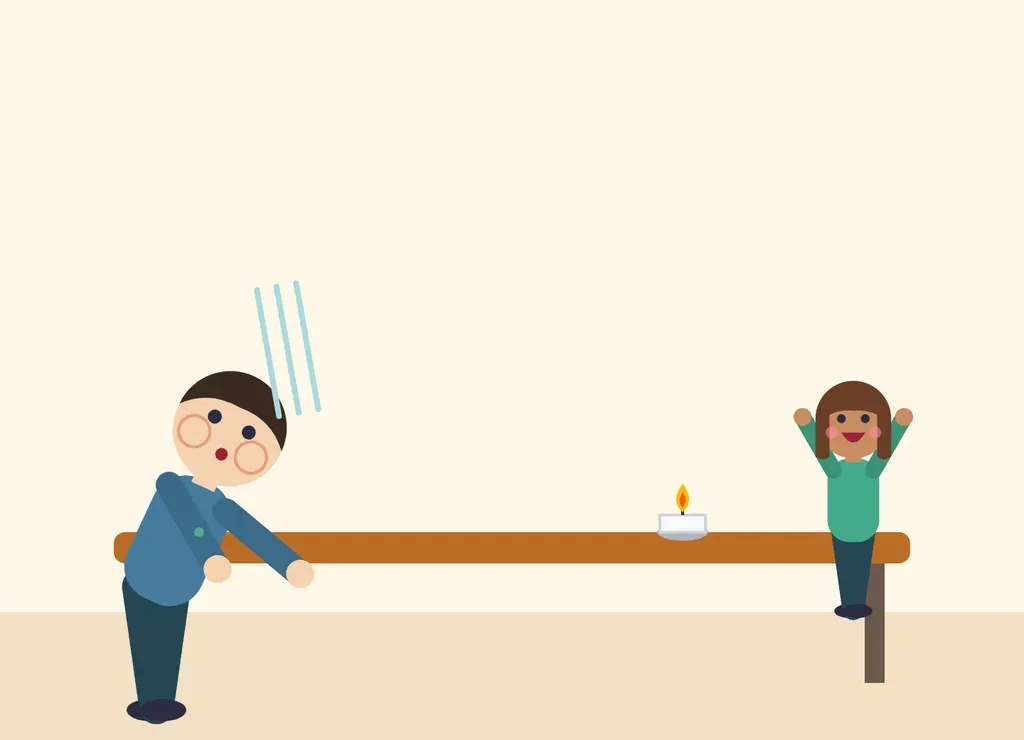
  • Light the candle in the middle of the table.
  • Mark the table edge you blow from with tape.

Rules, step by step

  1. The player stays behind the edge of the table, without leaning their face past it.
  2. They have 3 breaths to blow out the candle.
  3. If they blow it out, the candle moves back 20 cm for the next round.
  4. Whoever blows out the candle from the furthest distance wins.

Variations and tips

  • Blow through a toilet roll or kitchen roll tube.
  • Blow through a straw.
  • Safety: an adult always watches the candle.

Original video: @sara.bfsilva

The original video
Illustration: Cup on the Waist

Cup on the Waist

Original title: POV: és a neta mais velha (PT)

Group
Pairs
Age
6+
Duration
1 min per pair
Where
Indoors
How to play

Materials

  • 1 plastic cup per pair
  • 1 piece of string
  • 10 ping-pong balls per pair

Setup

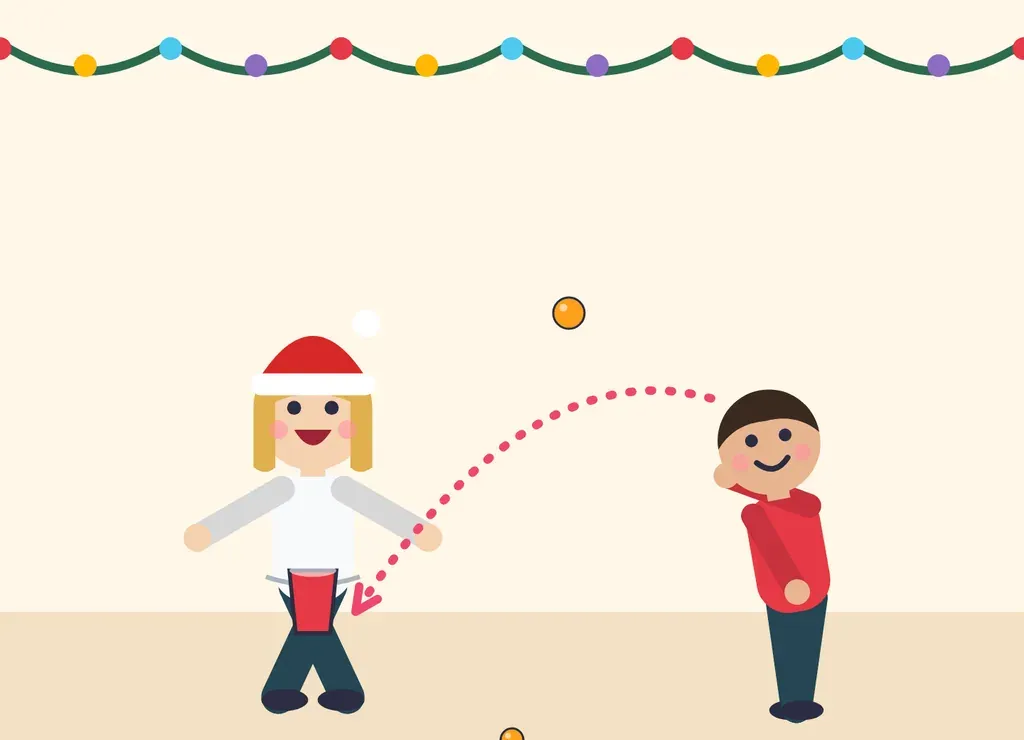
  • Make a hole in the cup and tie it to a string around one player's waist, with the cup at the front.
  • Their partner stands 2 metres away with the balls.

Rules, step by step

  1. On the signal, the partner throws the balls one by one.
  2. The player with the cup moves (no hands) to catch the balls in the cup.
  3. Each ball caught is worth 1 point.
  4. The pair with the most balls in the cup after 1 minute wins.

Variations and tips

  • Greater distance each round.
  • Throw with a bounce on the floor.
  • Tip: large paper cups make it easier for the little ones.

Original video: @sara.bfsilva

The original video
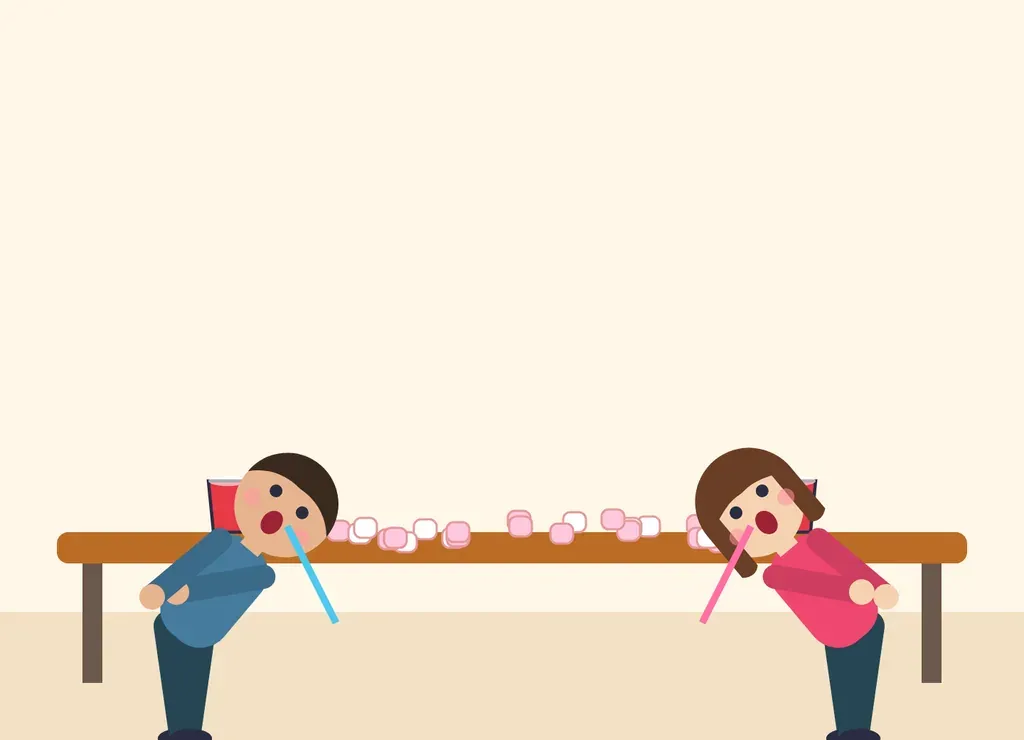
Illustration: Marshmallows with a Straw

Marshmallows with a Straw

Original title: POV: és a neta mais velha (PT)

Group
2 to 6 players
Age
6+
Duration
1 min
Where
Indoors
How to play

Materials

  • Small (mini) marshmallows
  • 1 straw per player
  • 1 cup per player
  • Timer

Setup

  • Spread the marshmallows over the table.
  • Give each player a straw and a cup.

Rules, step by step

  1. On the signal, each player sucks up a marshmallow with the straw and keeps it stuck to the end.
  2. They carry it to their cup and drop it in.
  3. They may not use their hands to touch the marshmallows.
  4. Whoever has the most marshmallows in their cup after 1 minute wins.

Variations and tips

  • Use dried beans or bits of paper instead of marshmallows.
  • Put the cup further away or on top of a box.
  • Hygiene: one straw per person, always.

Original video: @sara.bfsilva

The original video
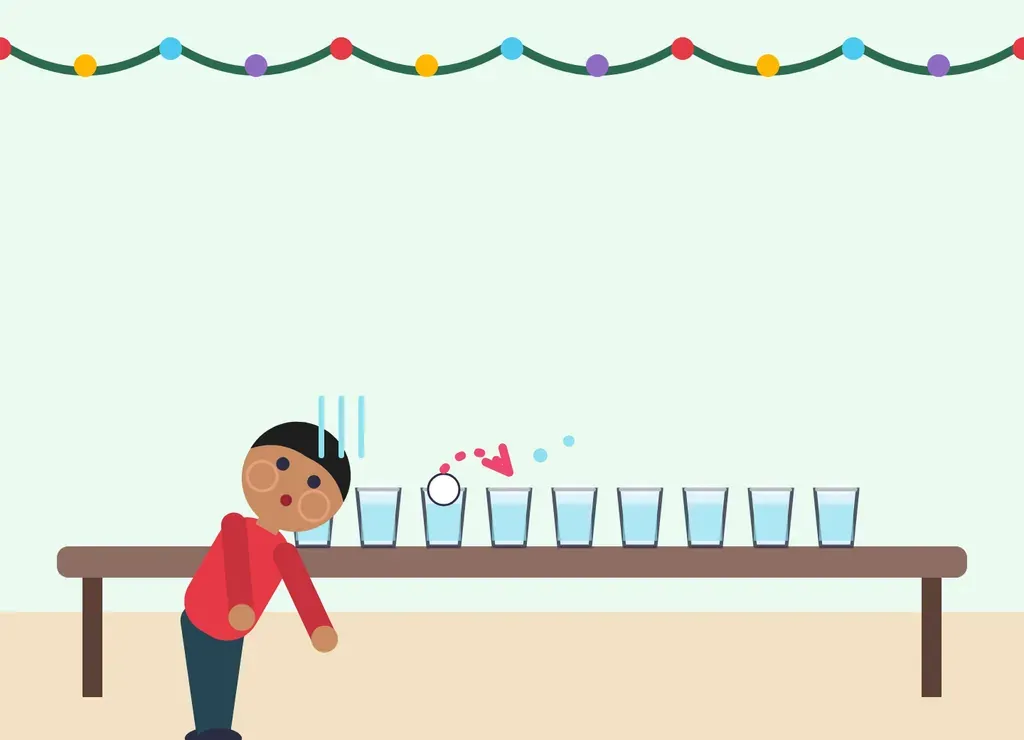
Illustration: Blow the Ball from Cup to Cup

Blow the Ball from Cup to Cup

Original title: Christmas games (PT-BR)

Group
2 to 4 players (or a relay)
Age
6+
Duration
1 to 2 min
Where
Indoors
How to play

Materials

  • 8 to 10 clear plastic cups per player
  • Water
  • 1 ping-pong ball per player

Setup

  • Line the cups up in a row on the table, touching each other.
  • Fill all the cups with water almost to the top.
  • Put the ball in the first cup.

Rules, step by step

  1. On the signal, the player blows the ball so it jumps into the next cup.
  2. They keep blowing until the ball reaches the last cup.
  3. They may not touch the ball or the cups with their hands.
  4. If the ball falls out, they start again from the first cup.
  5. The first to get the ball to the last cup wins.

Variations and tips

  • Cups slightly apart (harder).
  • Cups in a double row with two balls.
  • Tip: put towels down: there will be water everywhere!

Original video: @isabootelho

The original video
Illustration: Blindfolded Cotton Wool Spoon

Blindfolded Cotton Wool Spoon

Original title: Christmas games (PT-BR)

Group
Teams of 3 to 6
Age
6+
Duration
1 to 2 min
Where
Indoors
How to play

Materials

  • 1 bag of cotton wool balls
  • 1 spoon per player
  • 1 bowl per team
  • Blindfolds

Setup

  • Spread the cotton wool over a table.
  • Put down a bowl for each team.
  • Blindfold the players who will be scooping.

Rules, step by step

  1. The blindfolded players hold the spoon.
  2. On the signal, they try to scoop cotton wool balls with the spoon and put them in their team's bowl.
  3. Their teammates who can see guide them by voice only.
  4. No using the free hand.
  5. The team with the most cotton wool in the bowl when time is up wins.

Variations and tips

  • Spoon held in the mouth (hygiene: one spoon each).
  • Bowl on a teammate's head.
  • Tip: cotton wool is light and runs away; ask for silence between rounds.

Original video: @isabootelho

The original video
Illustration: Leapfrog Cup

Leapfrog Cup

Original title: Christmas games (PT-BR)

Group
2 to 4 players
Age
8+
Duration
1 to 2 min
Where
Indoors
How to play

Materials

  • 10 plastic cups per player (all the same size)

Setup

  • Put the cups in a row on the table, with two cups nested at the start.
  • Each player has their own row.

Rules, step by step

  1. The player blows hard over the rim of the top cup until it jumps into the next cup in the row.
  2. They keep blowing the cup from cup to cup to the end.
  3. They may not use their hands to help the cup.
  4. The first to get the cup to the end of the row wins.

Variations and tips

  • Do it as a relay: each team member does one jump.
  • Cups further apart each round.
  • Tip: blow close up and downwards, right at the rim.

Original video: @isabootelho

The original video
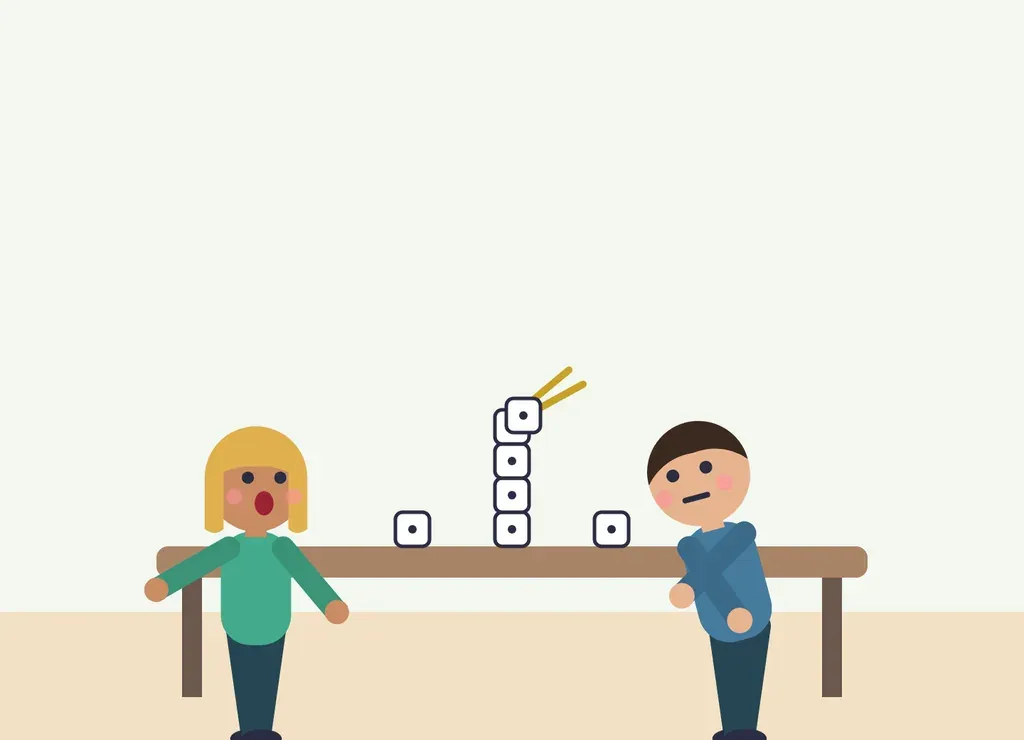
Illustration: Chopstick Dice Tower

Chopstick Dice Tower

Original title: Christmas games (PT-BR)

Group
2 to 4 players
Age
8+
Duration
1 min
Where
Indoors
How to play

Materials

  • 1 pair of chopsticks per player
  • 6 to 10 dice per player (or square sweets)

Setup

  • Spread the dice on the table in front of each player.

Rules, step by step

  1. On the signal, each player picks up the dice with the chopsticks, one at a time.
  2. They stack them into the tallest tower they can.
  3. They may not touch the dice with their hands.
  4. If the tower falls, they start again.
  5. The tallest tower after 1 minute wins.

Variations and tips

  • Tower only with dice showing the same number on top.
  • Use your non-dominant hand.
  • Tip: a steady table with no tablecloth.

Original video: @isabootelho

The original video
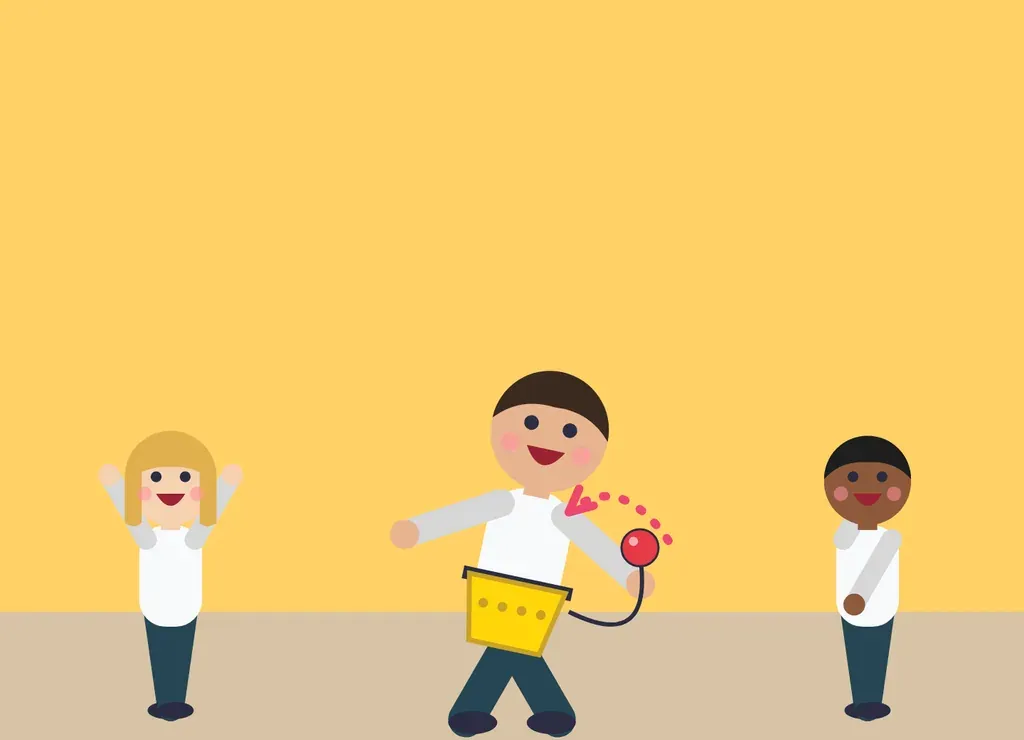
Illustration: Junk in the Trunk

Junk in the Trunk

Original title: Despedida de solteiros (PT)

Group
Teams, 1 player at a time
Age
12+
Duration
1 min per player
Where
Outdoors
How to play

Materials

  • Small basket (or big cup) attached to a belt
  • Light ball on a string tied to the belt, hanging behind

Setup

  • Fasten the belt with the basket at the front and the ball on the string behind the player.

Rules, step by step

  1. On the signal, the player has to swing their hips to land the hanging ball in the basket.
  2. No using hands.
  3. Whoever does it fastest (or most times in a minute) wins.

Variations and tips

  • Longer string for more difficulty.
  • Tip: the spectators laugh their heads off, film it!

Original video: @paulonsousa

The original video
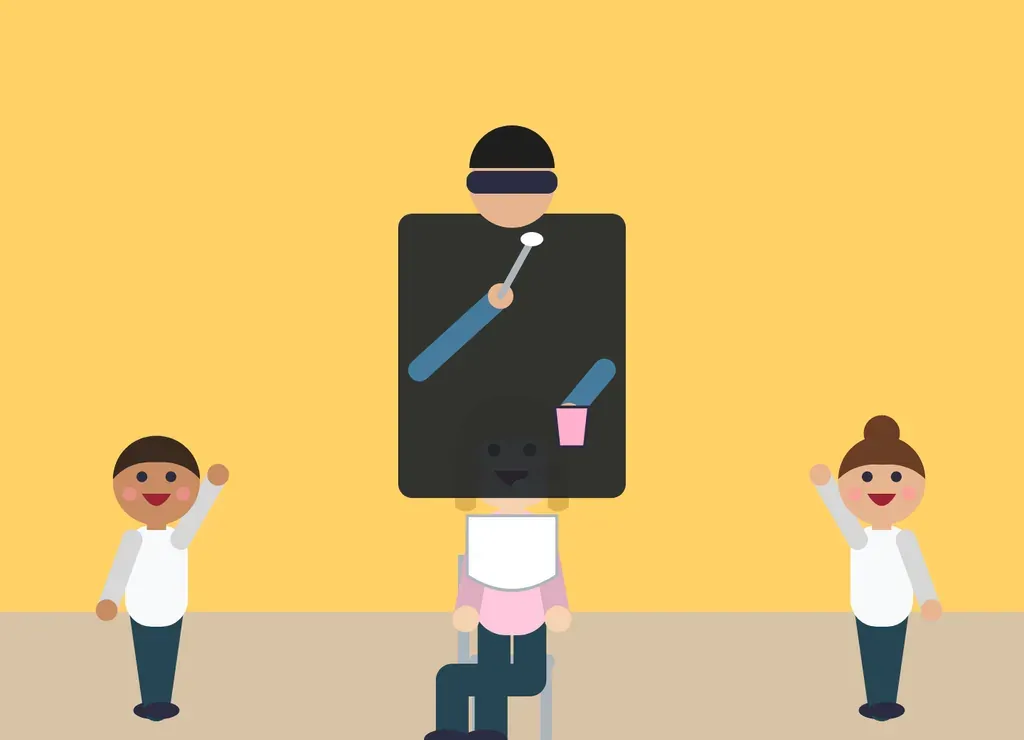
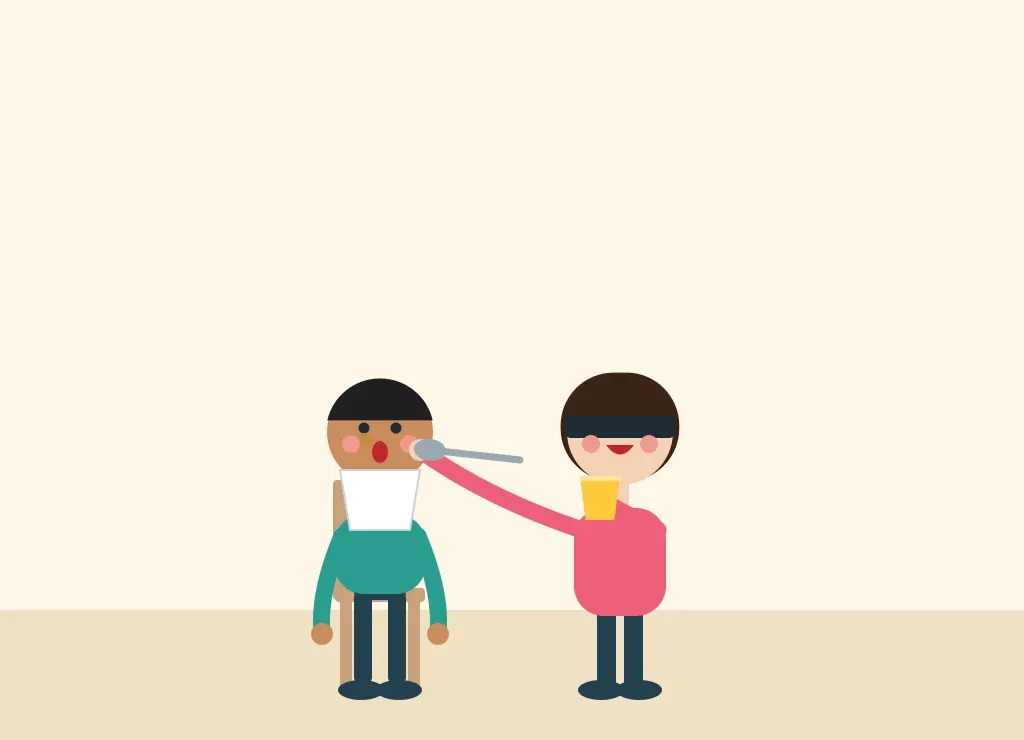
Illustration: Blindfolded Swapped-Arms Yoghurt

Blindfolded Swapped-Arms Yoghurt

Original title: Despedida de solteiros (PT)

Group
Pairs
Age
12+
Duration
2 min
Where
Indoors or outdoors
How to play

Materials

  • 1 yoghurt and 1 spoon per pair
  • 1 blindfold
  • 1 large black card with two arm holes (or a loose sweater)
  • Bibs or towels (it will get messy!)

Setup

  • The front player sits with their hands behind their back, hidden.
  • Their partner, blindfolded, stands behind and puts their arms through the holes in the card, as if they were the front player's arms.

Rules, step by step

  1. On the signal, the blindfolded player (behind) has to spoon the yoghurt into the front player's mouth.
  2. The front player may only give directions by voice.
  3. The first pair to finish the yoghurt wins.

Variations and tips

  • Brush the front player's teeth or comb their hair.
  • Hygiene: bib compulsory.
  • Tip: it has everyone crying with laughter.

Original video: @paulonsousa

The original video
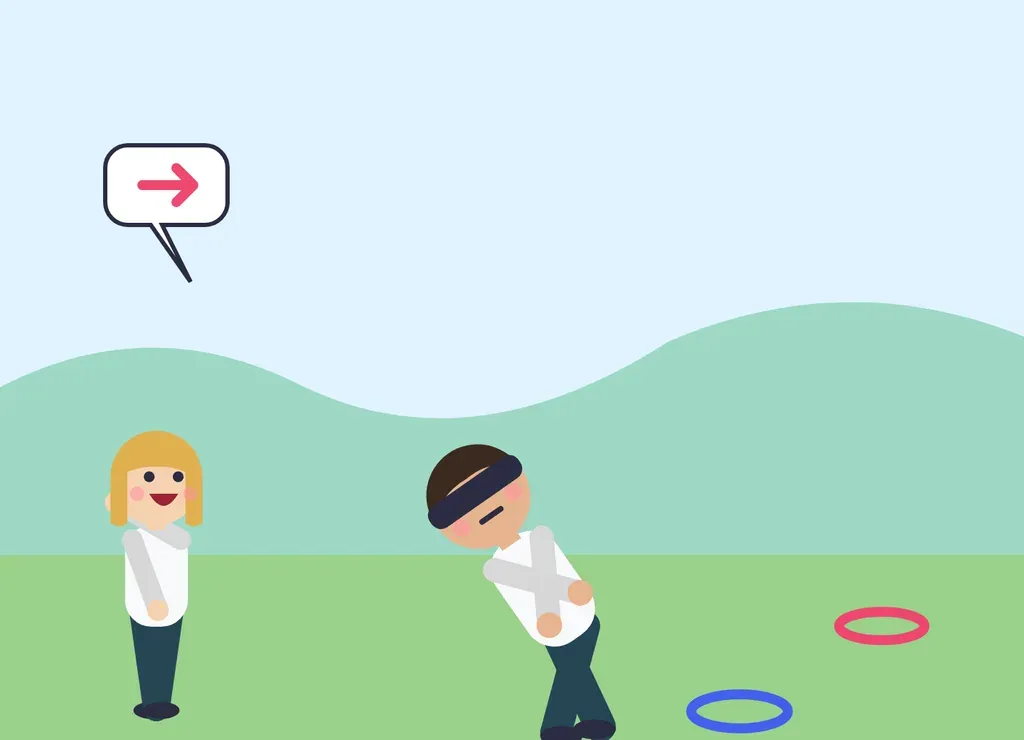
Illustration: Blindfolded Hoop Orienteering

Blindfolded Hoop Orienteering

Original title: Despedida de solteiros (PT)

Group
Teams of 3 to 8
Age
8+
Duration
5 to 10 min
Where
Outdoors
How to play

Materials

  • Small hoops or plastic rings
  • 1 blindfold per team
  • Cones

Setup

  • Spread the hoops over the lawn.
  • Blindfold one player from each team.

Rules, step by step

  1. The team gives directions to the blindfolded player to reach each hoop.
  2. The blindfolded player has to pick the hoop up off the ground and bring it back.
  3. Each hoop brought back scores extra points.
  4. Whoever has the most hoops when time is up wins.

Variations and tips

  • Each team may only use 5 words.
  • Tip: colour teams with wristbands help keep things organised.

Original video: @paulonsousa

The original video
Illustration: Secret Missions

Secret Missions

Original title: Despedida de solteiros (PT)

Group
10 to 40 players
Age
Adults
Duration
The whole weekend
Where
Indoors and outdoors
How to play

Materials

  • Plastic eggs or slips of paper
  • List of missions (one per guest)
  • Phone to record the proof

Setup

  • Write one mission per guest (e.g. "Take a photo of someone sleeping", "Swap an accessory with one of the couple", "Tell Daniel you are thinking of buying a car").
  • Put each mission in a plastic egg and hand them out in secret.

Rules, step by step

  1. Each guest opens their egg and keeps it secret.
  2. During the weekend they have to complete the mission without the couple noticing.
  3. They record a video or take a photo as proof.
  4. On the last day, the missions and the proof are revealed to the couple (ideally on a projector).

Variations and tips

  • Missions that score points for the team.
  • The couple try to guess each person's mission.
  • Tip: funny missions, but never humiliating ones.

Original video: @paulonsousa

The original video
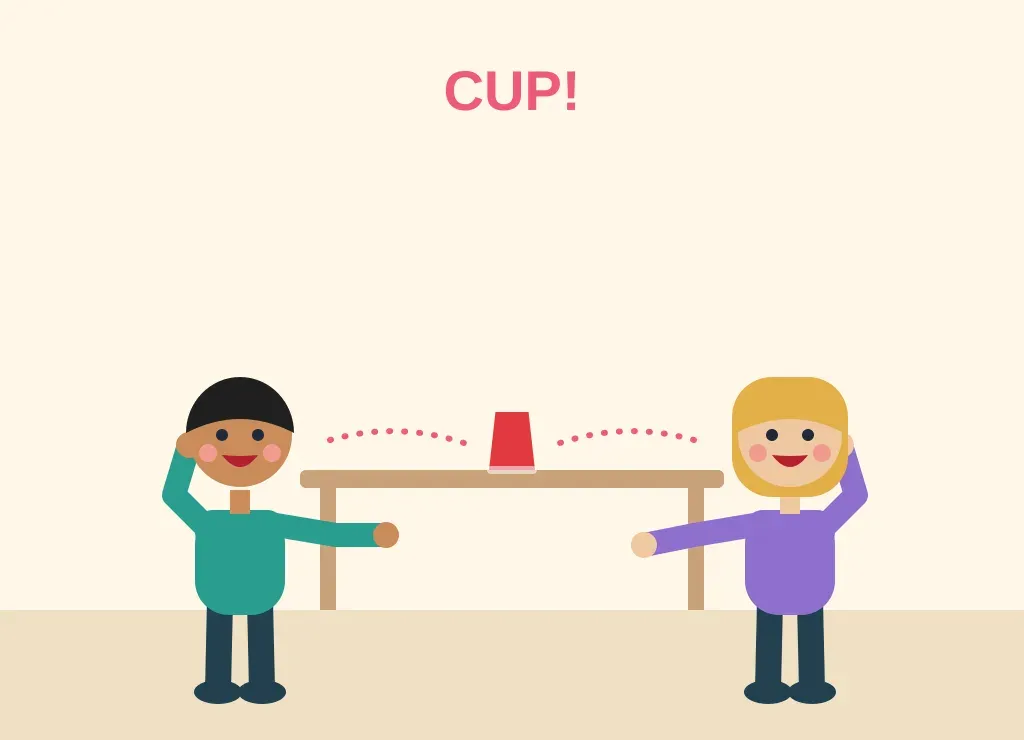
Illustration: Get the Cup

Get the Cup

Group
2 players at a time (or a whole circle around a table)
Age
5+
Duration
1 to 2 min per round
Where
Indoors
How to play

Materials

  • 1 plastic cup (or any small object) per pair
  • 1 table

Setup

  • Players stand on opposite sides of the table, with the cup upside down in the middle.
  • Pick a caller who is not playing.

Rules, step by step

  1. The caller shouts body parts ("head!", "shoulders!", "knees!") and the players touch them as fast as they can.
  2. At any moment, the caller shouts "cup!" instead.
  3. The first player to grab the cup wins the round.
  4. Grabbing the cup on any other word costs a point.
  5. Best of 5 rounds wins; the winner stays on against the next challenger.

Variations and tips

  • Tricky caller: say words that sound like "cup" ("cap!", "cop!", "cupcake!").
  • Everyone at once: a circle of players around a table with one cup fewer than players.
  • Safety: use plastic cups and a light object; heads can bump over the table.
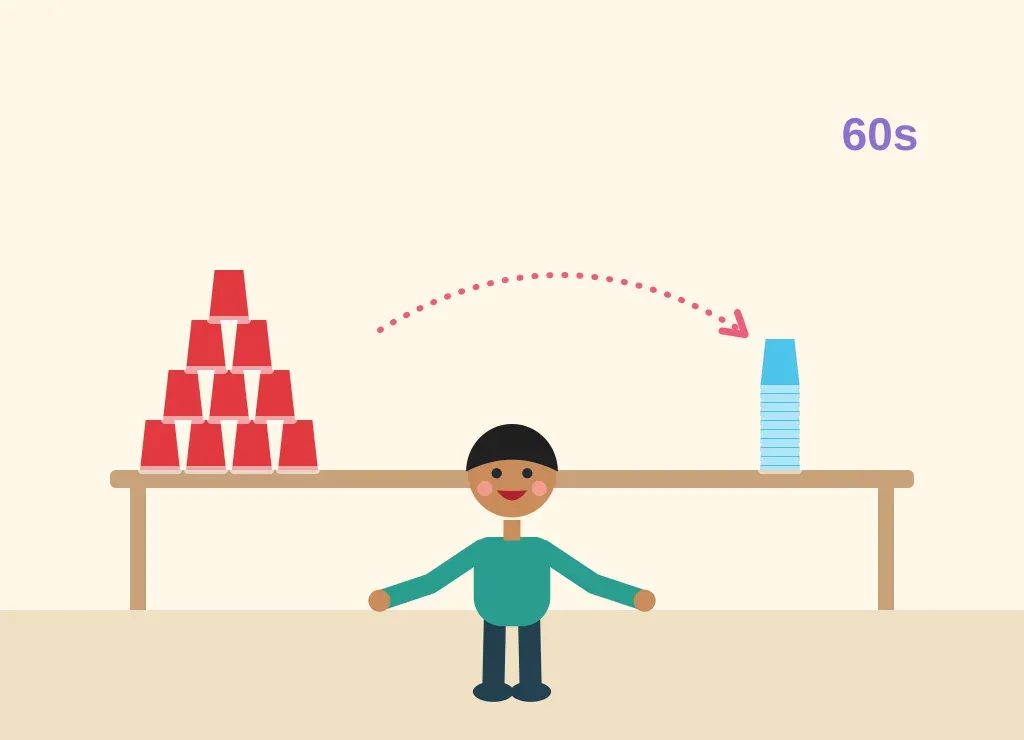
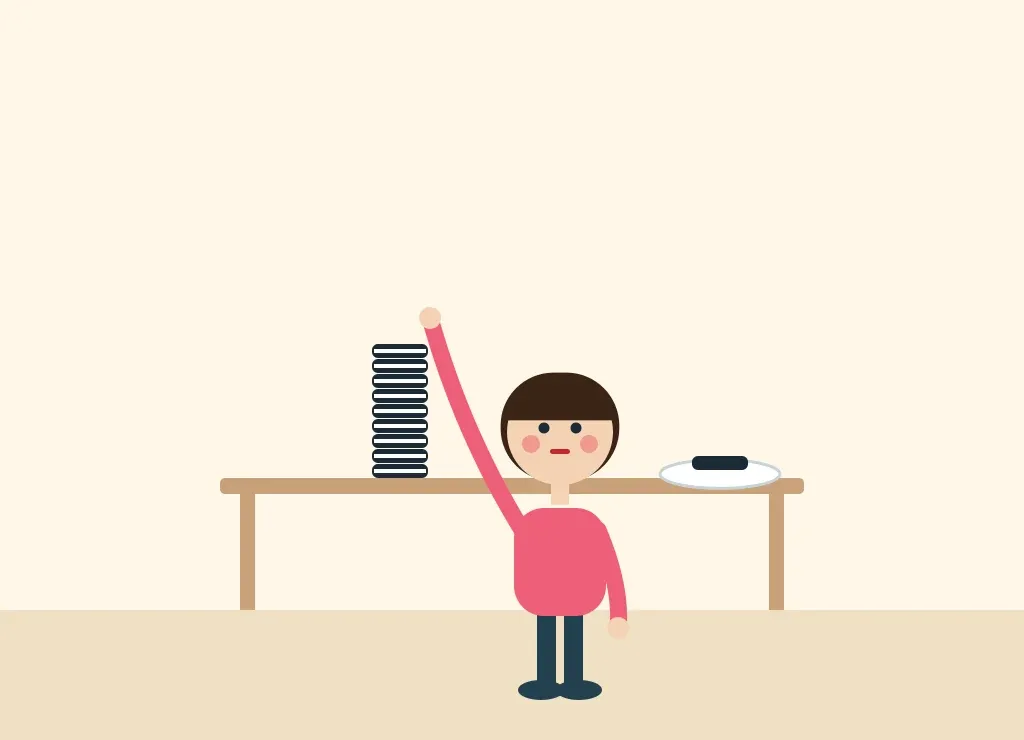
Illustration: Stack Attack

Stack Attack

Group
1 player per table (or several side by side)
Age
6+
Duration
1 min per player
Where
Indoors
How to play

Materials

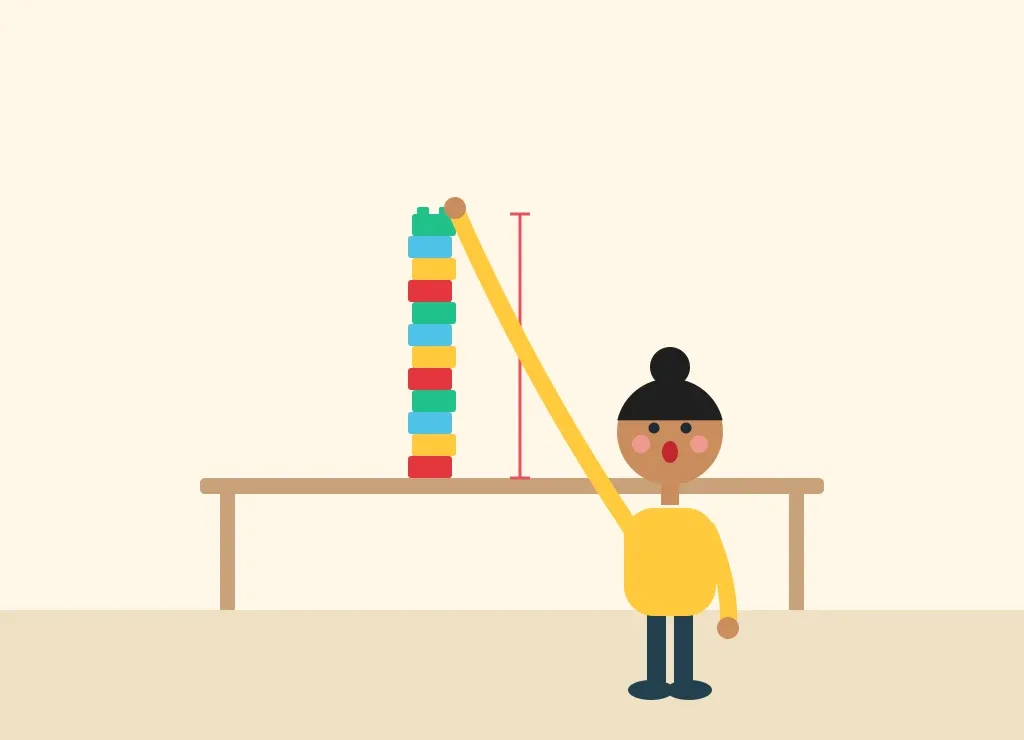
  • 21 or 36 plastic cups per player
  • Timer
  • 1 table

Setup

  • Give each player a single stack of cups on the table.

Rules, step by step

  1. On the signal, the player builds a pyramid with all the cups (6-5-4-3-2-1 for 21 cups, 8 rows for 36).
  2. Once the pyramid is complete, they take it apart into a single stack again.
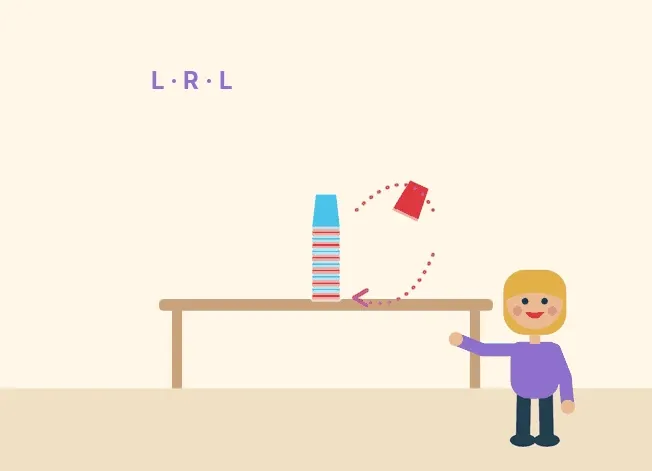
  3. If the pyramid falls, they gather the cups and carry on building.
  4. Whoever finishes inside 60 seconds wins; with several players, the fastest wins.

Variations and tips

  • Easier: 10 cups (4-3-2-1).
  • Harder: only one hand, or the cups must go back into the stack in colour order.
  • From the TV show "Minute to Win It".
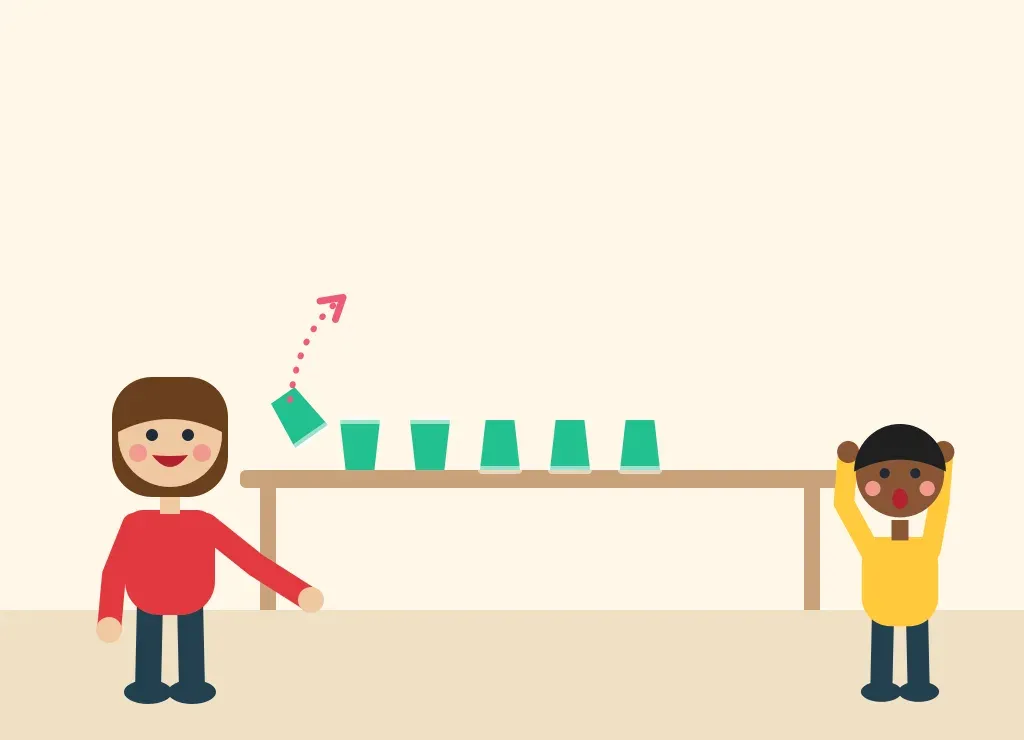
Illustration: Cup Flip Race

Cup Flip Race

Group
2 to 6 players, or teams in a relay
Age
6+
Duration
1 to 3 min
Where
Indoors
How to play

Materials

  • 5 to 10 plastic cups per player
  • 1 long table

Setup

  • Line each player's cups up mouth up along the edge of the table, with the rim sticking out a little.

Rules, step by step

  1. On the signal, the player flicks the rim of the first cup upwards so it flips and lands upside down.
  2. They may only move on to the next cup once the current one has landed upside down.
  3. If a cup falls off the table, they put it back and try again.
  4. The first to flip all their cups wins.

Variations and tips

  • Relay: each team member flips one cup and runs to tag the next.
  • Harder: flip them all, then flip them back mouth up.
  • Tip: a little water in the bottom of the cup makes the flip easier.
Illustration: Movin' on Up

Movin' on Up

Group
1 player at a time (or teams in a relay)
Age
6+
Duration
1 min per player
Where
Indoors
How to play

Materials

  • 20 plastic cups in two colours (10 of each)
  • Timer

Setup

  • Make a stack of 20 cups, alternating the colours (or with just one colour at the bottom).

Rules, step by step

  1. On the signal, the player takes the top cup off the stack and moves it to the bottom.
  2. They must alternate hands: one cup with the right, the next with the left.
  3. They carry on until the colour that started at the bottom is back underneath the whole stack.
  4. If the stack falls, they gather the cups and carry on.
  5. Whoever finishes inside 60 seconds wins; with several players, the fastest.

Variations and tips

  • Easier: 10 cups.
  • Relay: each team member moves 5 cups and hands the stack to the next.
  • From the TV show "Minute to Win It".
Illustration: Defy Gravity

Defy Gravity

Group
1 to 4 players at a time
Age
5+
Duration
1 min per round
Where
Indoors (plenty of space)
How to play

Materials

  • 2 or 3 inflated balloons per player
  • Timer

Setup

  • Clear the middle of the room and give each player their balloons.

Rules, step by step

  1. The player puts one hand behind their back.
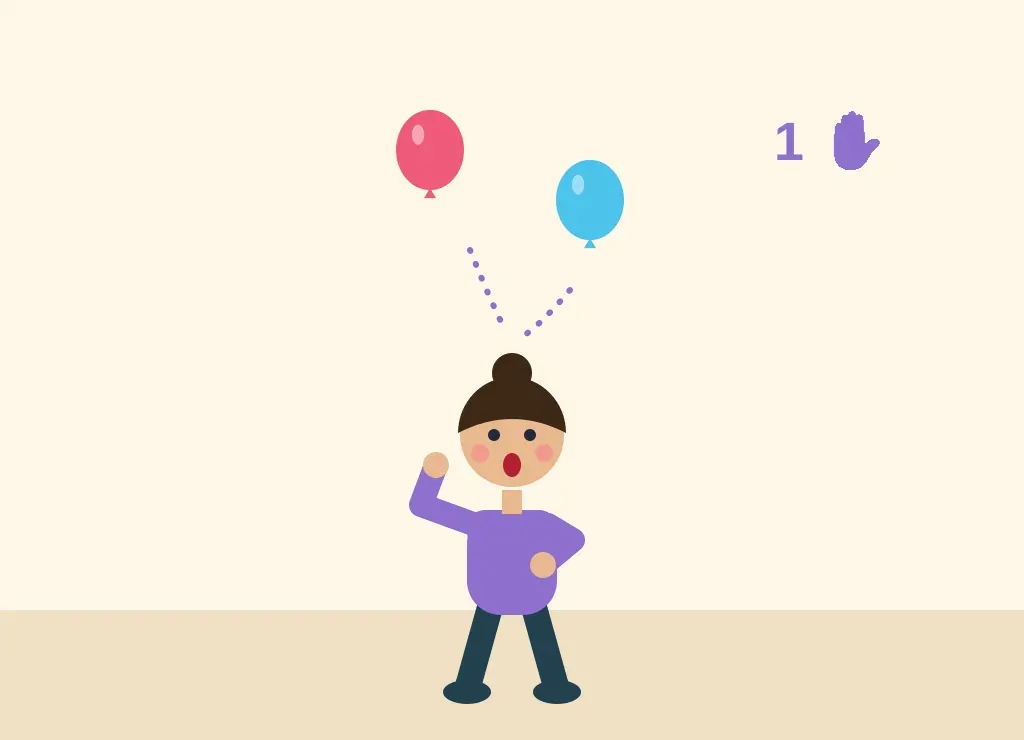
  2. On the signal, they throw the balloons up and have to keep them all in the air for 60 seconds, tapping them with the free hand only.
  3. If a balloon touches the floor, or they touch one with anything else, they are out.
  4. Whoever lasts the full minute wins.

Variations and tips

  • Easier: 2 balloons; harder: 3.
  • Everyone at once in the same space, so the balloons get mixed up.
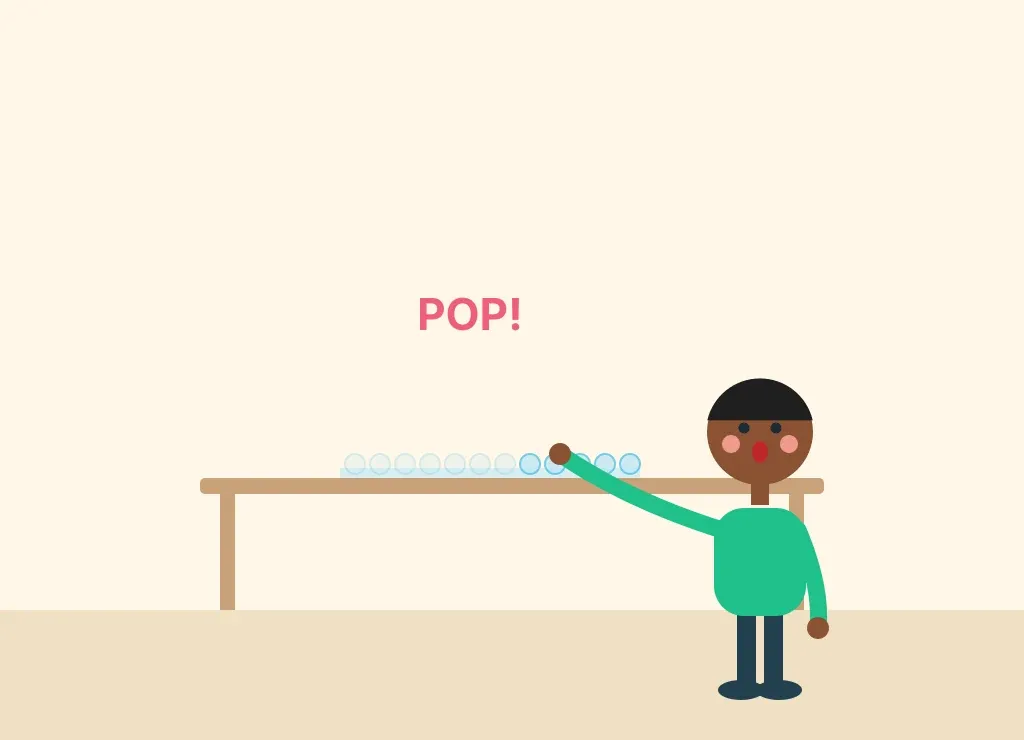
Illustration: Balloon Pop Countdown

Balloon Pop Countdown

Group
1 player at a time (or teams in a relay)
Age
6+
Duration
1 min per player
Where
Indoors
How to play

Materials

  • 10 balloons per player
  • Permanent marker
  • Timer

Setup

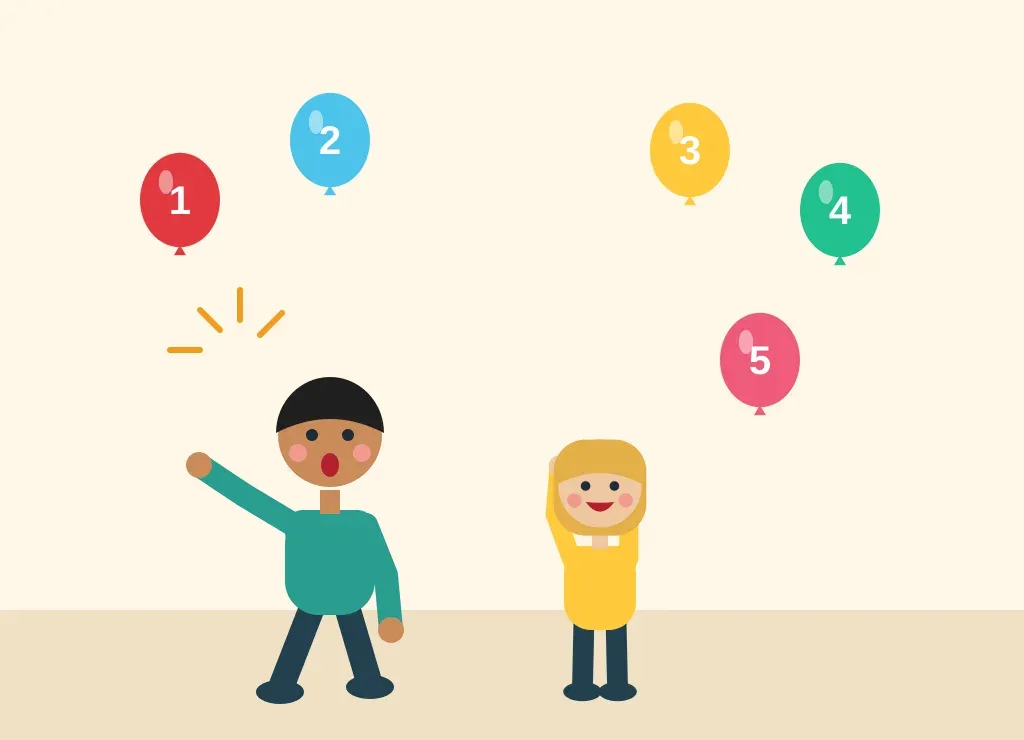
  • Write the numbers 1 to 10 on the balloons, one per balloon.
  • Scatter them around the room.

Rules, step by step

  1. On the signal, the player has to pop the balloons in order, from 1 to 10.
  2. Popping with hands, feet or by sitting on them is allowed; sharp objects are not.
  3. Popping the wrong number costs 5 seconds.
  4. The fastest to pop all 10 wins.

Variations and tips

  • Countdown: from 10 to 1, as the name says.
  • For little ones: use colours instead of numbers.
  • Put a small prize or a dare inside some balloons.
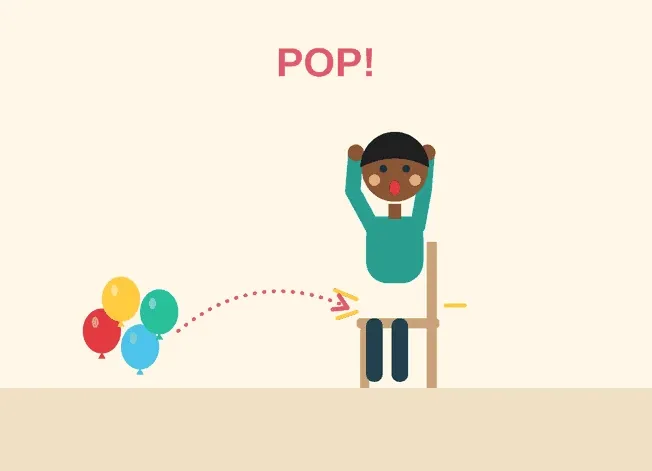
Illustration: Sitting Pop

Sitting Pop

Group
2 to 4 players at once
Age
6+
Duration
1 min per round
Where
Indoors
How to play

Materials

  • 10 inflated balloons per player
  • 1 chair (or cushion) per player
  • Timer

Setup

  • Put each player's pile of balloons about 3 metres from their chair.

Rules, step by step

  1. On the signal, the player runs, grabs a balloon, carries it to the chair and pops it by sitting on it.
  2. Only one balloon at a time.
  3. No hands, nails or objects to pop it: body weight only.
  4. Whoever pops the most balloons in a minute wins.

Variations and tips

  • With little ones: less inflated balloons pop more easily.
  • Put a slip of paper with a dare or a prize inside some balloons.
  • Safety: sturdy chairs, without wheels.
Illustration: Balloon Balance

Balloon Balance

Group
2 to 8 players at once, or teams in a relay
Age
5+
Duration
1 to 2 min
Where
Indoors or outdoors (no wind)
How to play

Materials

  • 1 inflated balloon per player
  • Tape to mark the start and finish lines

Setup

  • Mark a start line and a finish line 5 metres apart.

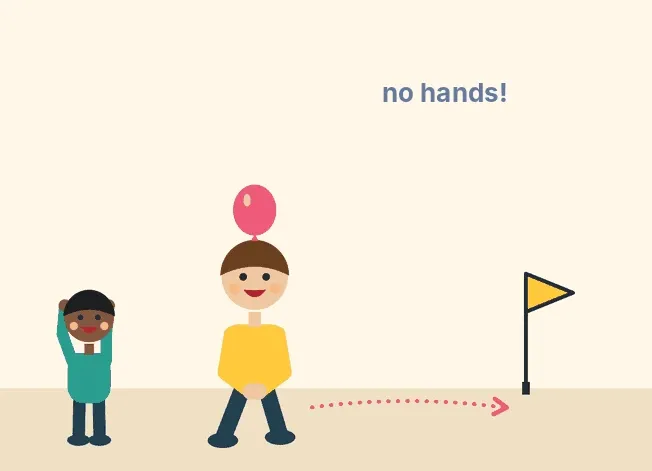
Rules, step by step

  1. Each player balances a balloon on top of their head, without holding it.
  2. On the signal, they walk to the finish with their hands behind their back.
  3. If the balloon falls, they go back to the start.
  4. The first to reach the finish with the balloon on their head wins.

Variations and tips

  • Harder: there and back, or weave around chairs on the way.
  • Relay: at the finish, pass the balloon onto the next teammate's head without using hands.
Illustration: Cereal Scramble

Cereal Scramble

Group
2 to 6 players at once
Age
5+
Duration
1 min per round
Where
Indoors
How to play

Materials

  • 1 empty cereal box per player (the same or different)
  • Scissors
  • Timer

Setup

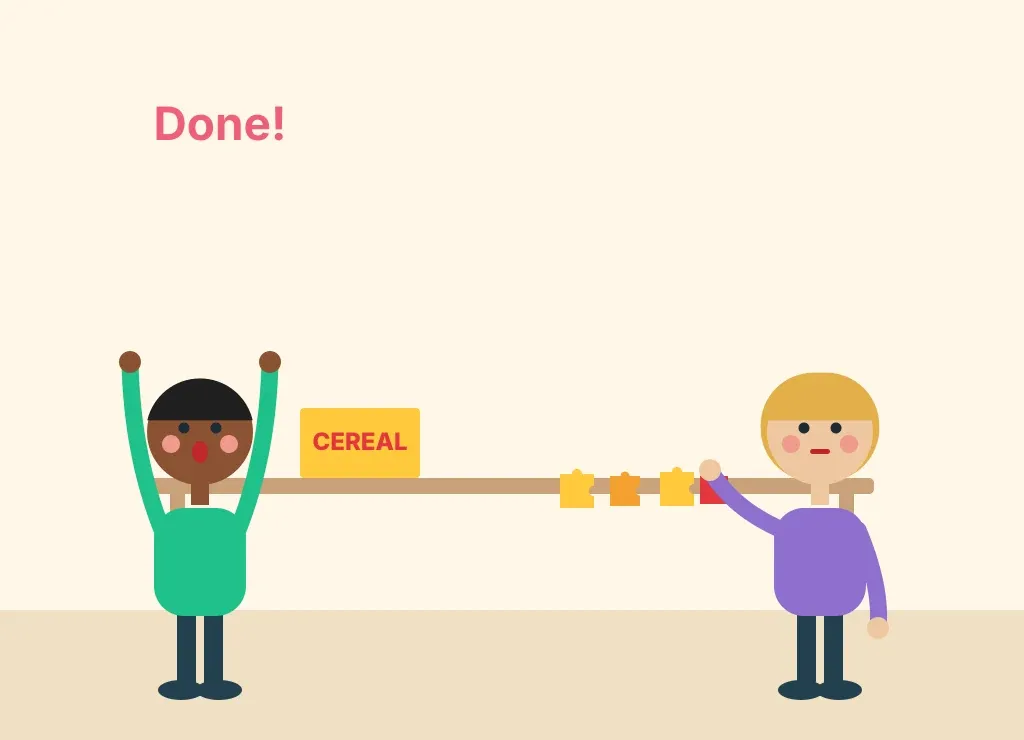
  • Cut the front of each box into puzzle pieces, with the same number of pieces for everyone (8 to 15).
  • Shuffle each box's pieces and put them in a pile in front of each player.

Rules, step by step

  1. On the signal, each player puts their puzzle together as fast as they can.
  2. Players may only touch the pieces in their own pile.
  3. Whoever finishes the whole box front first shouts "Done!" and the clock stops.
  4. If nobody finishes in 1 minute, the most complete puzzle wins.

Variations and tips

  • Easier: fewer pieces and straight cuts; harder: zigzag cuts.
  • As a team: each team builds a bigger puzzle made from a picture glued onto card.
  • Using a different box for each player stops pieces getting mixed up.
Illustration: Thread It

Thread It

Group
1 to 4 players at once
Age
10+
Duration
1 min per round
Where
Indoors
How to play

Materials

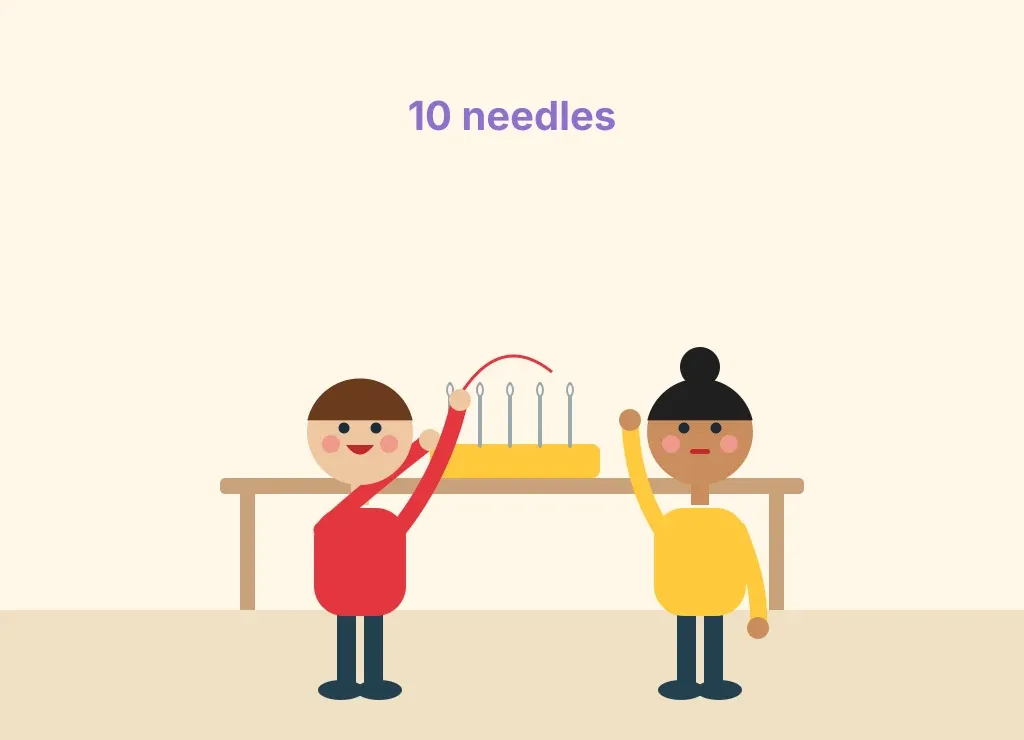
  • 10 sewing needles per player (with a wide eye)
  • Thread cut into 30 cm pieces
  • A sponge or a piece of polystyrene to stick the needles in
  • Timer

Setup

  • Stick the 10 needles upright in the sponge in front of each player.
  • Give each player a piece of thread.

Rules, step by step

  1. On the signal, the player threads the eye of the first needle and pulls the thread all the way through.
  2. Then they move on to the next needle, with the same thread or a new one.
  3. They may wet or twist the end of the thread to help.
  4. Whoever threads all 10 needles in under 1 minute wins, or whoever has threaded the most when time runs out.

Variations and tips

  • Easier: wool needles with a big eye and thick yarn.
  • Safety: needles always stuck in the sponge, never loose on the table.
Illustration: Scoop It Up

Scoop It Up

Group
2 to 4 players at once
Age
5+
Duration
1 min per round
Where
Indoors
How to play

Materials

  • 1 tablespoon per player
  • 6 ping-pong balls per player
  • 2 bowls per player
  • Timer

Setup

  • Put the 6 balls in one bowl and the empty bowl beside it, half a metre away.

Rules, step by step

  1. On the signal, the player holds the spoon in one hand and moves the balls, one by one, from one bowl to the other.
  2. The balls may only be touched with the spoon.
  3. If a ball falls, they pick it up by hand and put it back in the starting bowl.
  4. The first to move all 6 balls wins, or whoever has the most balls in the second bowl after 1 minute.

Variations and tips

  • Harder: put the bowls 2 metres apart or hold the spoon by the very end of the handle.
  • Bunny Tail variation: carry cotton balls on a spoon to a basket on the other side of the room.
  • For little ones: cotton balls instead of ping-pong balls.
Illustration: Rice Bowl

Rice Bowl

Group
2 to 4 players at once
Age
8+
Duration
1 min per round
Where
Indoors
How to play

Materials

  • 1 pair of chopsticks per player
  • 2 small bowls per player
  • Cooked rice (or uncooked, to make it harder)
  • Kitchen scales (optional)
  • Timer

Setup

  • Fill one of each player's bowls with the same amount of rice and put the empty one beside it.

Rules, step by step

  1. On the signal, each player moves rice from one bowl to the other using only the chopsticks, in one hand.
  2. Rice that falls on the table doesn't count.
  3. After 1 minute, everyone stops.
  4. Whoever has the most rice in the second bowl wins (weigh it or compare by eye).

Variations and tips

  • Uncooked rice is much harder: the grains slip.
  • Variation: move beads, beans or mini marshmallows with the chopsticks.
  • For children: training chopsticks held together with a rubber band.
Illustration: Apple Stacks

Apple Stacks

Group
2 to 4 players at once
Age
8+
Duration
1 min per round
Where
Indoors
How to play

Materials

  • 5 apples per player
  • A table
  • Timer

Setup

  • Each player sits at the table with 5 apples in front of them.

Rules, step by step

  1. On the signal, the player stacks the 5 apples on top of each other, straight up.
  2. Nothing but the apples and their hands may be used.
  3. Once the tower is built, they let go: it has to stand for 3 seconds to count.
  4. The first with a steady tower of 5 apples wins; if nobody manages, the tallest tower wins.

Variations and tips

  • Trick: look for the flattest side of each apple and alternate the stalks.
  • Easier: 3 apples.
  • Afterwards, the apples make a snack.
Illustration: Yank It

Yank It

Group
1 to 4 players at once
Age
8+
Duration
1 min per round
Where
Indoors
How to play

Materials

  • 5 plastic cups per player
  • 4 cards (index cards or playing cards) per player
  • A table
  • Timer

Setup

  • Build an alternating tower: cup, card, cup, card… starting and ending with a cup (all upright).

Rules, step by step

  1. On the signal, the player yanks the cards out sideways, from the top down, one at a time.
  2. As each card comes out, the cup above should drop into the cup below.
  3. If a cup falls off, the player rebuilds that part and carries on.
  4. Whoever ends with all 5 cups nested in one stack wins; if nobody does, whoever has the most cups nested.

Variations and tips

  • Trick: pull the card with a quick, flat movement, like the tablecloth trick.
  • Harder: start with the bottom card.
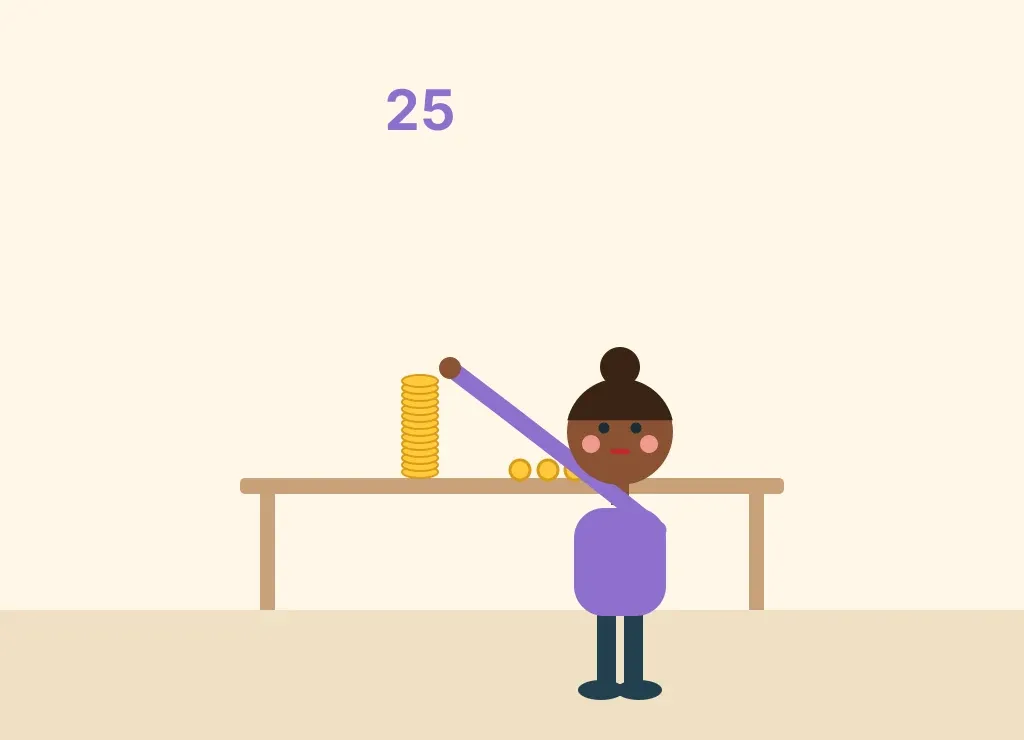
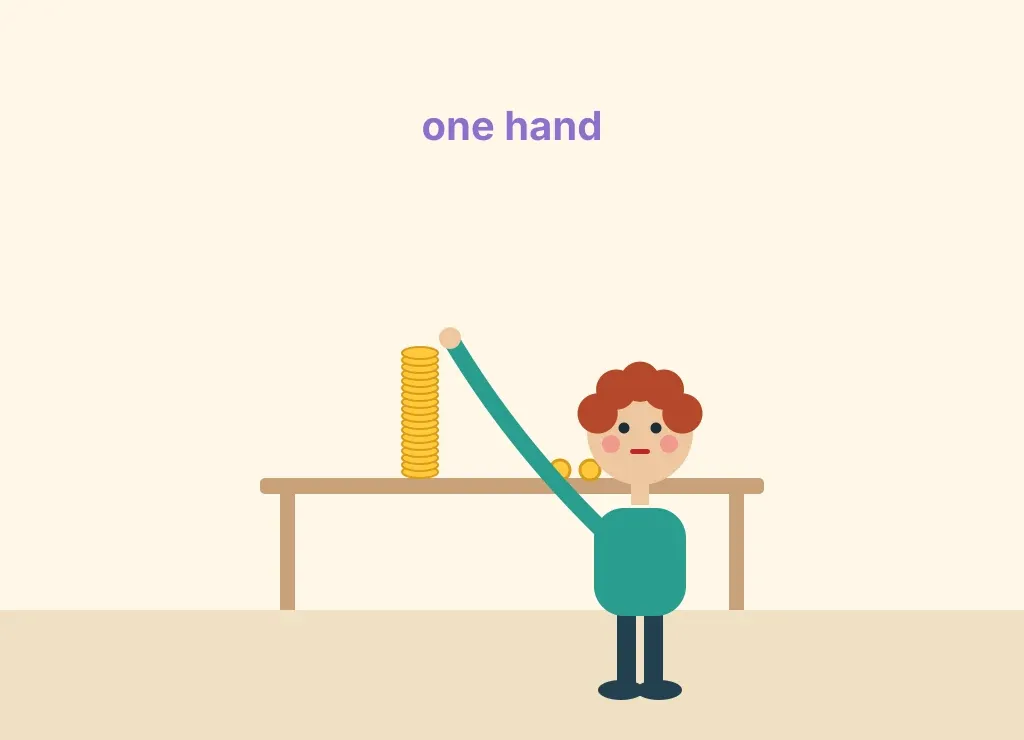
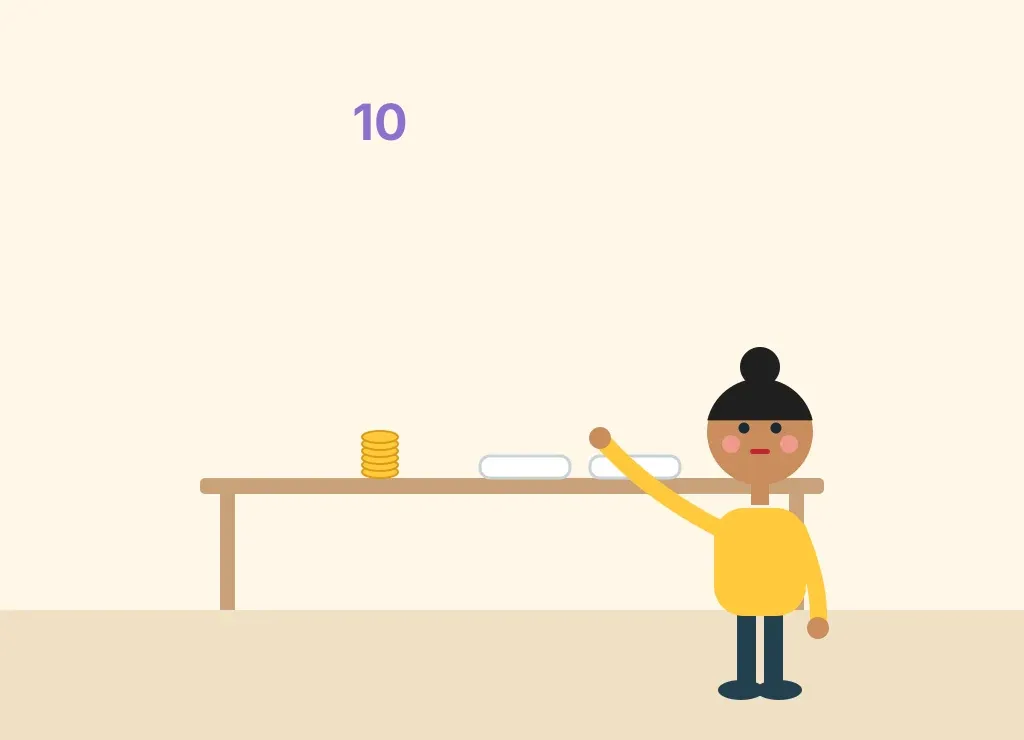
Illustration: Penny Stack

Penny Stack

Group
2 to 4 players at once
Age
6+
Duration
1 min per round
Where
Indoors
How to play

Materials

  • 25 one-cent coins per player
  • A table
  • Timer

Setup

  • Spread each player's coins on the table in front of them.

Rules, step by step

  1. On the signal, the player makes a single stack of all 25 coins, using only one hand.
  2. The other hand stays behind their back.
  3. If the stack falls, the player is out of that round.
  4. The first to finish the stack of 25 wins; if nobody finishes, the tallest stack after 1 minute wins.

Variations and tips

  • Harder: with the weaker hand or blindfolded.
  • One-cent coins are small: with children, use game counters.
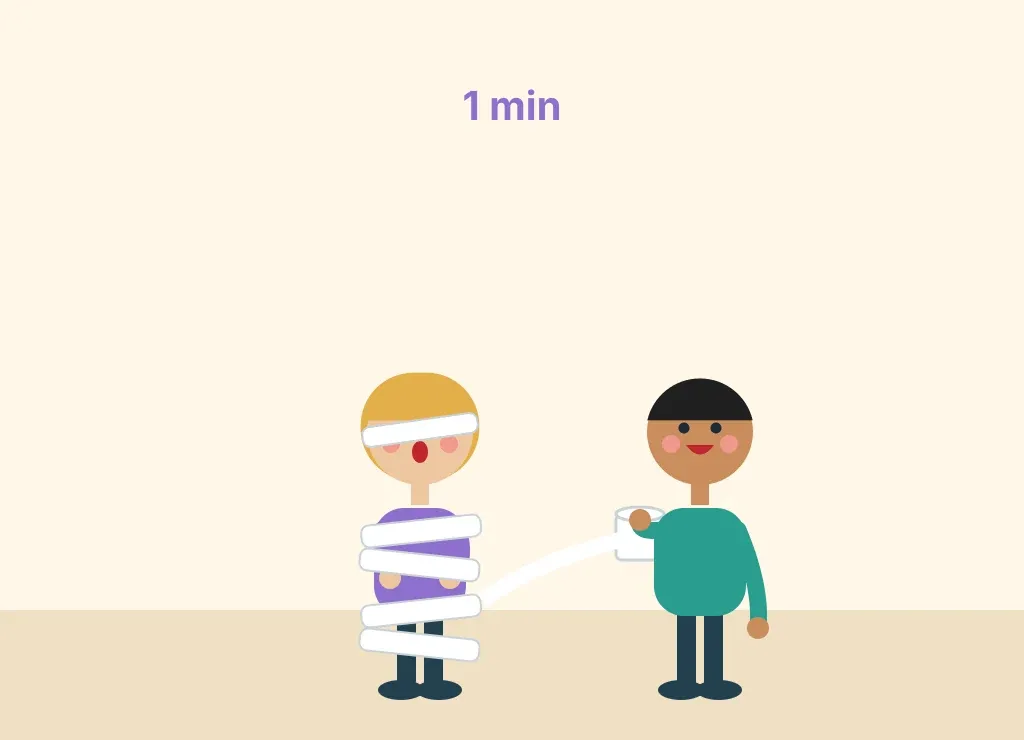
Illustration: Mummify Me

Mummify Me

Group
Pairs (2 to 6 pairs at once)
Age
4+
Duration
1 min per round
Where
Indoors
How to play

Materials

  • 1 roll of toilet paper per pair
  • Timer

Setup

  • Make pairs: one is the mummy, the other the wrapper.

Rules, step by step

  1. The mummy stands with their arms against their body.
  2. On the signal, the wrapper winds the paper around the mummy, from feet to head.
  3. If the paper tears, they carry on from the loose end.
  4. After 1 minute, the judges pick the most complete mummy (the one showing the least skin and clothes).

Variations and tips

  • Always leave the face (nose and mouth) free.
  • Halloween version: give a prize to the scariest mummy too.
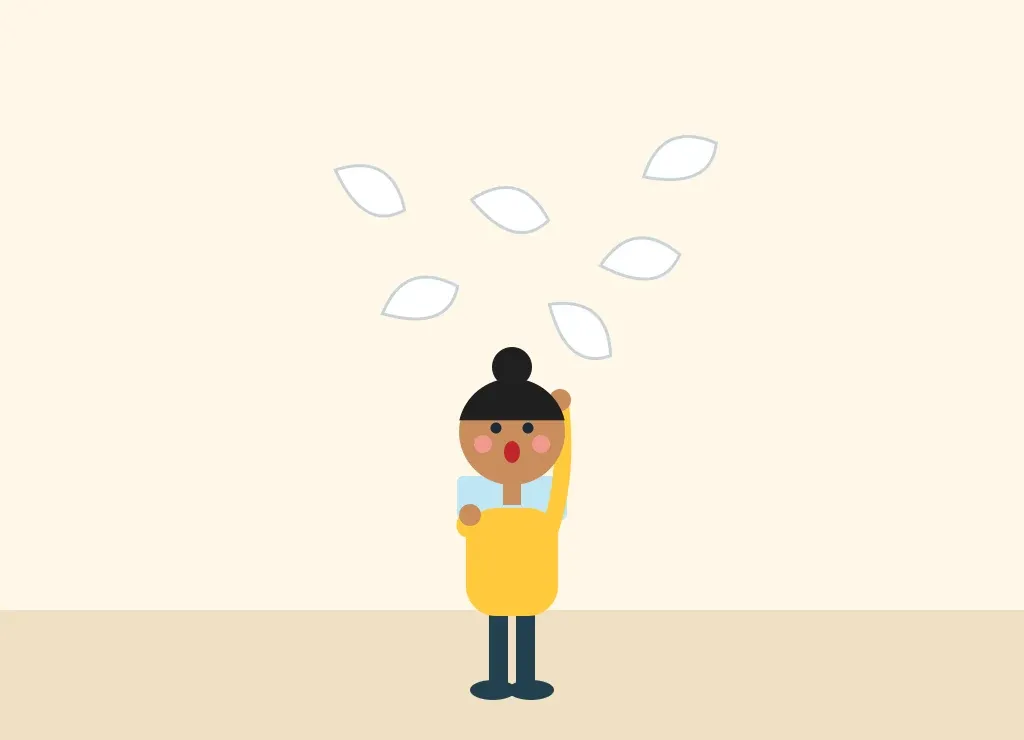
Illustration: Tissue Toss

Tissue Toss

Group
2 to 6 players at once
Age
4+
Duration
1 min per round
Where
Indoors
How to play

Materials

  • 1 full box of tissues per player
  • Timer

Setup

  • Give each player a box.

Rules, step by step

  1. The player holds the box in one hand and pulls the tissues out with the other.
  2. On the signal, they pull the tissues out one by one, without stopping.
  3. Only one tissue at a time counts: pulling several together doesn't.
  4. Whoever pulls out the most tissues in 1 minute wins, or whoever empties the box first.

Variations and tips

  • Harder: the box stays on the table and only one hand may be used.
  • Keep the tissues to clean up after the other games.
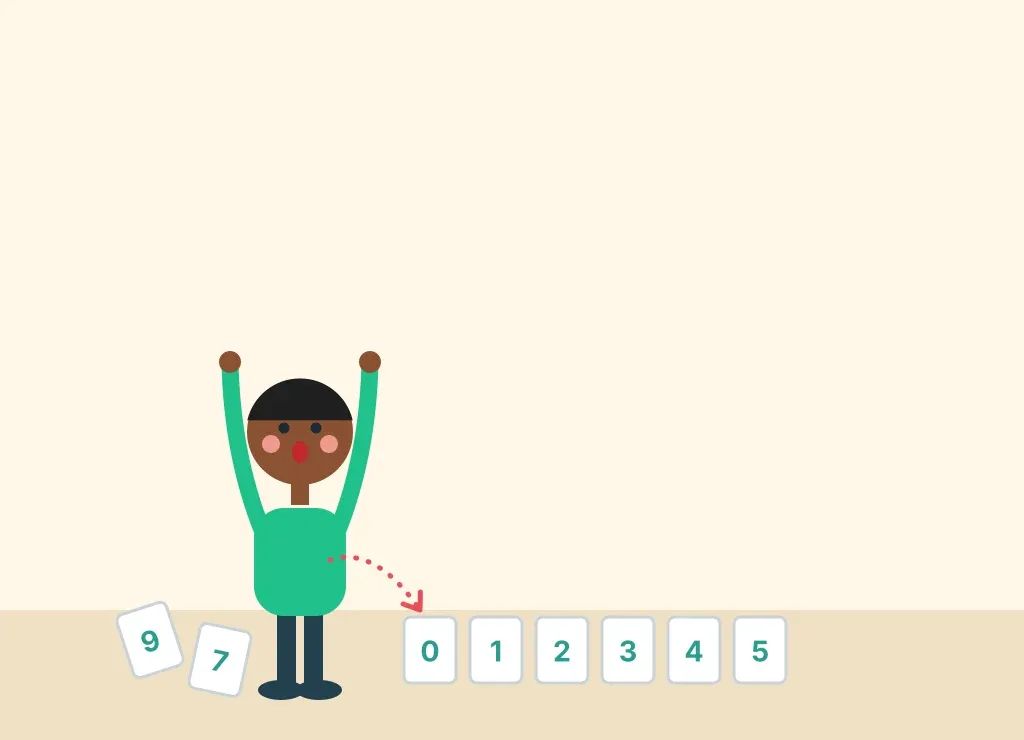
Illustration: Numbers in Order

Numbers in Order

Group
2 to 4 players or teams
Age
5+
Duration
1 to 2 min per round
Where
Indoors or outdoors
How to play

Materials

  • Cards with the numbers 0 to 25 (one set per player, in different colours)
  • Timer

Setup

  • Shuffle each set and spread it face up on the far side of the room.

Rules, step by step

  1. On the signal, the players run to their cards.
  2. They lay them out in a row, from 0 to 25, in order.
  3. When they finish, the player raises their arms and the judge checks.
  4. The first with the right row wins.

Variations and tips

  • For the youngest: only 1 to 10.
  • Harder: numbers in descending order, or only the even ones.
  • As a relay: each team member runs and places one card.
Illustration: Spoon Catapult

Spoon Catapult

Group
2 to 4 players at once
Age
6+
Duration
1 min per round
Where
Indoors
How to play

Materials

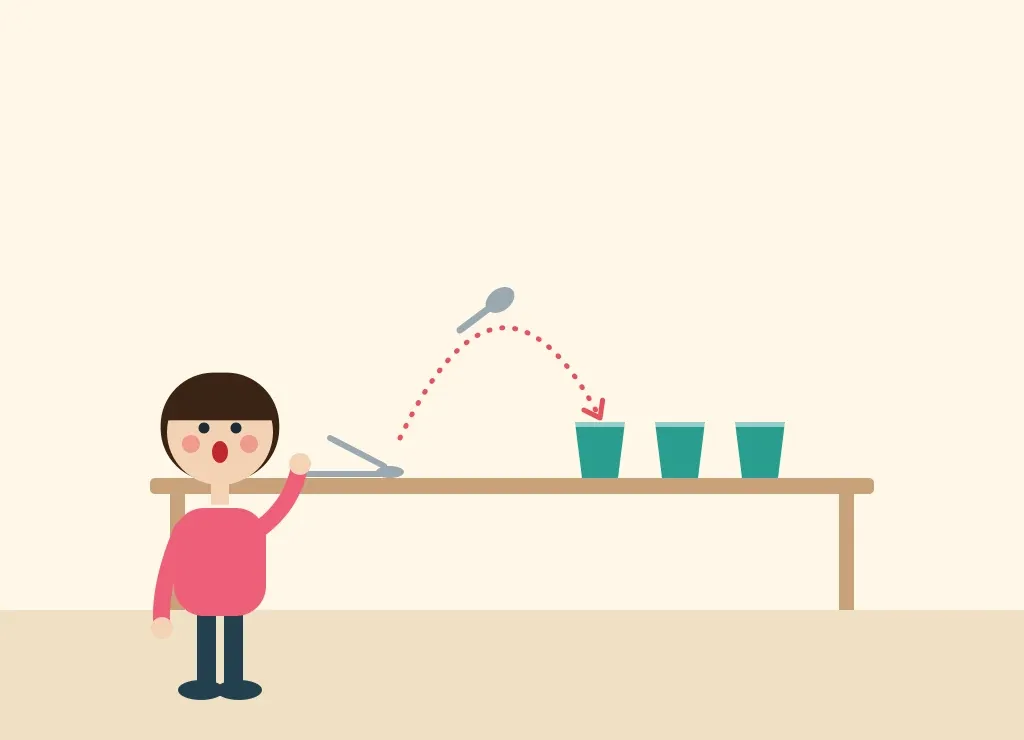
  • 1 plastic spoon per player
  • 10 ping-pong balls or pompoms per player
  • 1 cup per player
  • A table
  • Timer

Setup

  • Put the cup on the table, 1 metre from the player.

Rules, step by step

  1. The spoon lies on the table with the ball in its bowl.
  2. The player presses the end of the handle to catapult the ball towards the cup.
  3. They can't throw the ball by hand or lift the spoon off the table.
  4. Whoever has the most balls in the cup after 1 minute wins.

Variations and tips

  • Easier: a washing-up bowl instead of a cup.
  • Building the catapult from a spoon, lolly sticks and rubber bands is a good activity before the game.
Illustration: Sticky Marbles

Sticky Marbles

Group
2 to 4 players at once
Age
6+
Duration
1 min per round
Where
Indoors
How to play

Materials

  • Double-sided tape
  • 15 marbles per player
  • A long table
  • Timer

Setup

  • Stick a strip of double-sided tape across the far end of the table, one per player.
  • Mark the throwing line at the opposite end.

Rules, step by step

  1. On the signal, the players roll the marbles along the table, one at a time.
  2. The aim is for the marble to stop stuck on the tape.
  3. Marbles that fall off the table are lost.
  4. Whoever has the most marbles stuck after 1 minute wins.

Variations and tips

  • Safety: marbles are not for children under 3.
  • Harder: a thinner strip or one further away.
Illustration: M&M Matchmaking

M&M Matchmaking

Group
2 to 6 players at once
Age
4+
Duration
1 min per round
Where
Indoors
How to play

Materials

  • 1 pile of coloured chocolates (M&Ms or Smarties) per player
  • Paper cups in the chocolates' colours, one set per player
  • Timer

Setup

  • Put the pile of chocolates and the coloured cups in front of each player.

Rules, step by step

  1. On the signal, the player sorts the chocolates, one by one, into the cup of the same colour.
  2. Only one hand may be used.
  3. Chocolates in the wrong cup don't count.
  4. Whoever has the most chocolates sorted correctly after 1 minute wins.

Variations and tips

  • Cereal version: sort the marshmallows from the cereal by shape and colour.
  • Harder: use tweezers or chopsticks.
Illustration: Ping Pong Drop

Ping Pong Drop

Group
1 player at a time
Age
8+
Duration
1 min per player
Where
Indoors
How to play

Materials

  • 1 sturdy chair
  • 1 plastic cup
  • 10 ping-pong balls
  • Timer

Setup

  • Put the cup on the floor, right behind the chair.

Rules, step by step

  1. The player stands on the chair with the balls in hand, facing the cup.
  2. On the signal, they drop the balls one at a time, trying to land them in the cup.
  3. If the cup tips over, they stand it back up and carry on, but balls that fall out don't count.
  4. Whoever has the most balls in the cup after 1 minute wins.

Variations and tips

  • Safety: a chair without wheels and an adult next to the little ones.
  • Harder: drop the ball over your shoulder, with your back to the cup.
Illustration: Stone Face

Stone Face

Group
Pairs (as a tournament for groups)
Age
6+
Duration
1 min per duel
Where
Indoors or outdoors
How to play

Materials

  • Spray cream and paper plates (optional)
  • Timer

Setup

  • The two opponents stand face to face, eye to eye.

Rules, step by step

  1. On the signal, both try to keep a straight face.
  2. They may pull faces to make the other laugh, but can't touch them or speak.
  3. The first to smile or laugh loses (and gets a plate of cream in the face, if agreed).
  4. If nobody laughs in 1 minute, it's a draw.

Variations and tips

  • Without cream: the loser does a dance or a dare.
  • As a tournament: the winners face each other until one champion is left.
Illustration: Candy Hands

Candy Hands

Group
2 to 6 players at once
Age
6+
Duration
1 min per round
Where
Indoors
How to play

Materials

  • 1 pile of wrapped chocolates or sweets per player
  • Timer

Setup

  • Put the pile of sweets in front of each player.

Rules, step by step

  1. The player puts one hand behind their back.
  2. On the signal, they unwrap the sweets with one hand only, one at a time.
  3. Only a sweet completely out of its wrapper counts.
  4. Whoever unwraps the most sweets in 1 minute wins.

Variations and tips

  • Easier: with both hands, but wearing oven gloves.
  • Have a bag ready for the wrappers.
Illustration: Stack It Up

Stack It Up

Group
2 to 4 players at once
Age
5+
Duration
1 min per round
Where
Indoors
How to play

Materials

  • 1 packet of sandwich biscuits (like Oreos) per player
  • A table
  • Timer

Setup

  • Put the biscuits on a plate in front of each player.

Rules, step by step

  1. On the signal, the player stacks the biscuits one on top of the other.
  2. They may use both hands, but can't lean the tower against anything.
  3. If the tower falls, they start again.
  4. The tallest tower after 1 minute wins (it has to stand for 3 seconds).

Variations and tips

  • Harder: one hand only.
  • Variation: stack biscuits on your forehead (see Unicorn Horn).
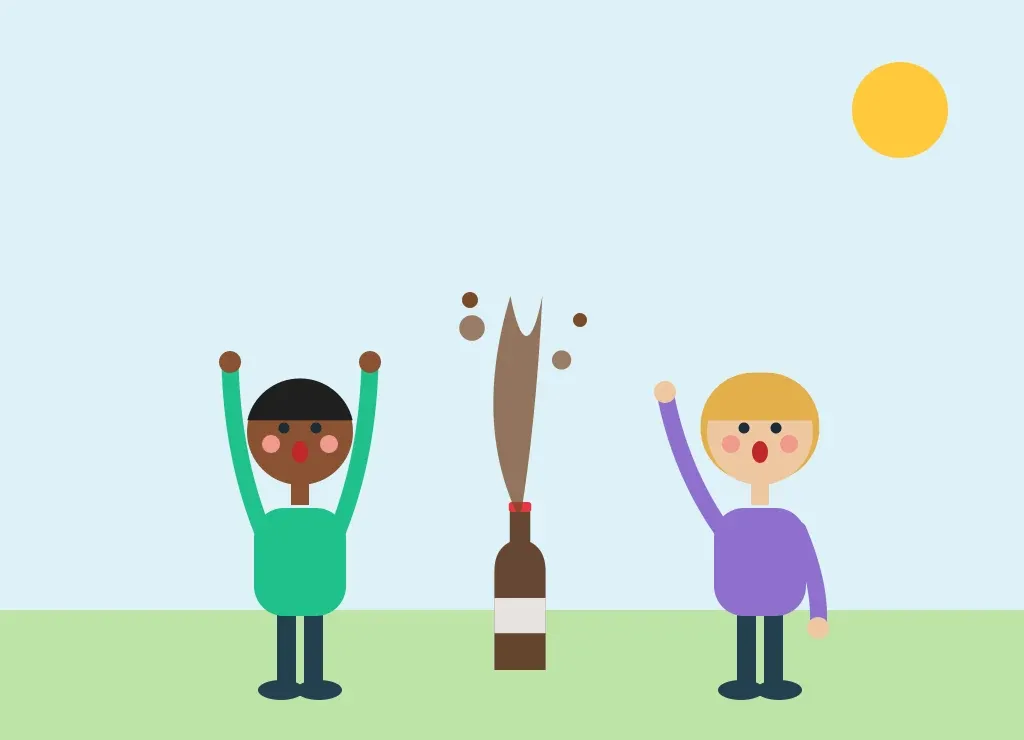
Illustration: Volcanic Eruption

Volcanic Eruption

Group
2 to 4 players at once
Age
8+
Duration
1 min per round
Where
Outdoors
How to play

Materials

  • 1 two-litre bottle of cola (diet works best) per player
  • Mint sweets like Mentos
  • Safety goggles (optional)
  • Timer

Setup

  • Stand the open bottles on the ground, outdoors, well apart.
  • Each player stands next to their bottle with the mints in hand.

Rules, step by step

  1. On the signal, each player drops the mints into the bottle from above, without touching the neck.
  2. Only one mint may be dropped at a time.
  3. When the mint goes in, the cola erupts.
  4. The first to make it erupt wins (or, alternatively, the highest fountain).

Variations and tips

  • Safety: always do it outdoors, keep faces away from the neck and wear goggles.
  • Easier: roll a sheet of paper into a tube to drop several mints at once.
Illustration: Roll the Dice

Roll the Dice

Group
Pairs (2 to 6 pairs at once)
Age
6+
Duration
1 min per round
Where
Indoors
How to play

Materials

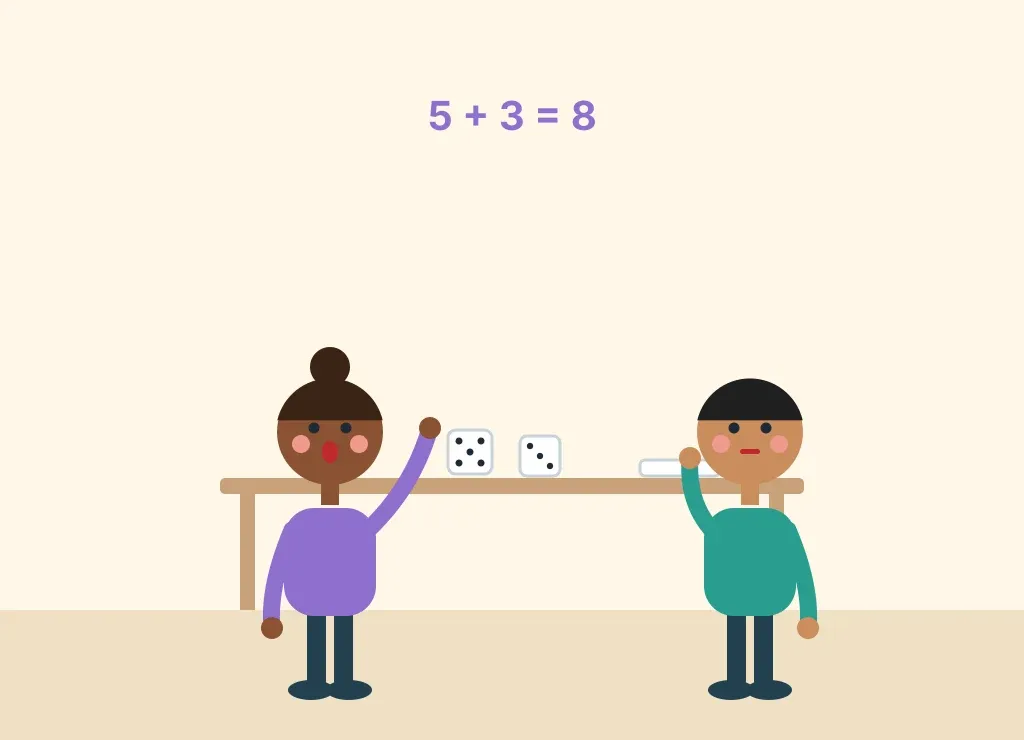
  • 2 dice per pair
  • Paper and pen per pair
  • Timer

Setup

  • One partner rolls, the other does the sums.

Rules, step by step

  1. On the signal, the roller throws the two dice as fast as they can, over and over.
  2. The partner adds the result of each roll to the total.
  3. Dice that fall off the table don't count and must be rolled again.
  4. The pair with the highest total after 1 minute wins (the judge can check the sums).

Variations and tips

  • Good mental-maths practice for children.
  • Harder: add up in your head, without paper.
Illustration: Unstack It

Unstack It

Group
1 to 2 players at once (one tower each)
Age
6+
Duration
1 min per round
Where
Indoors
How to play

Materials

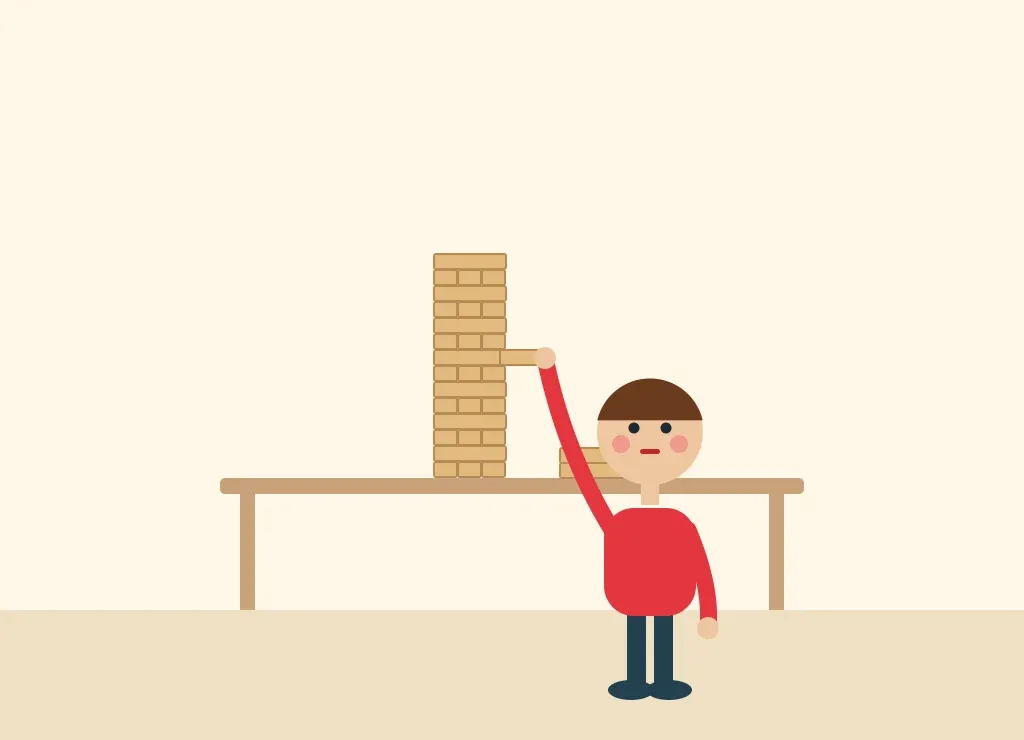
  • 1 block-tower game (like Jenga) per player
  • Timer

Setup

  • Build the complete tower in front of each player.

Rules, step by step

  1. On the signal, the player pulls blocks out of the tower, one at a time, with one hand.
  2. Each block pulled out is put down beside it (it doesn't go on top).
  3. If the tower falls, the round ends and the blocks pulled out so far count.
  4. Whoever pulls out the most blocks in 1 minute without the tower falling wins.

Variations and tips

  • Harder: only blocks from the middle of a layer may be pulled.
  • Play on a steady table, with nothing leaning on it.
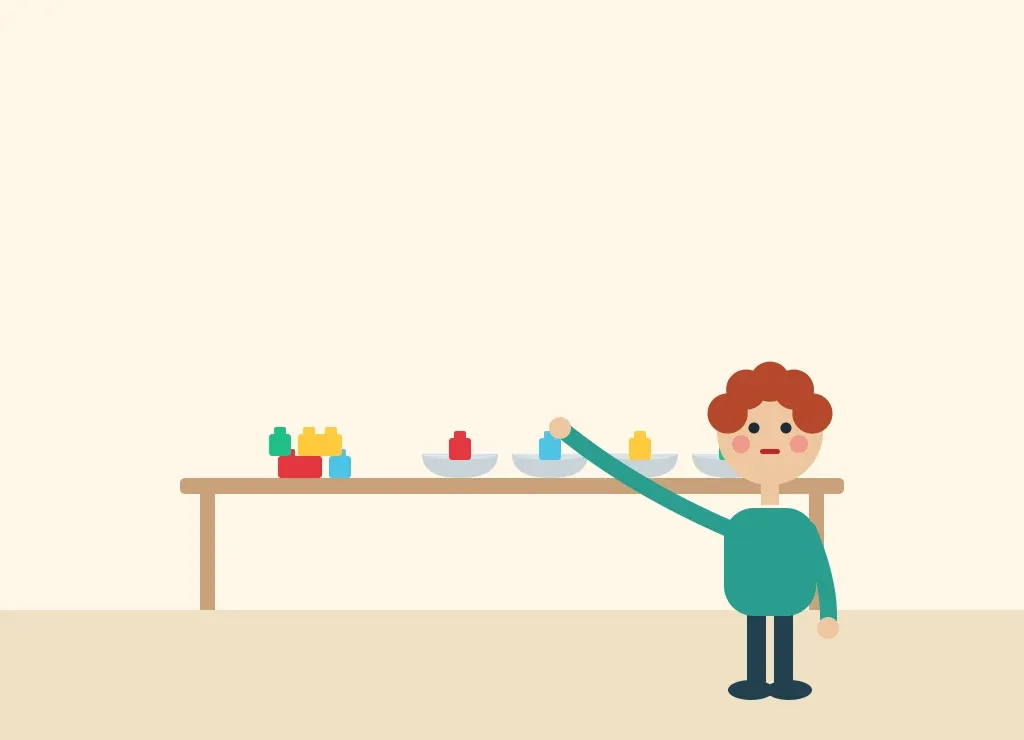
Illustration: Lego Builders

Lego Builders

Group
2 to 6 players at once
Age
6+
Duration
1 min per round
Where
Indoors
How to play

Materials

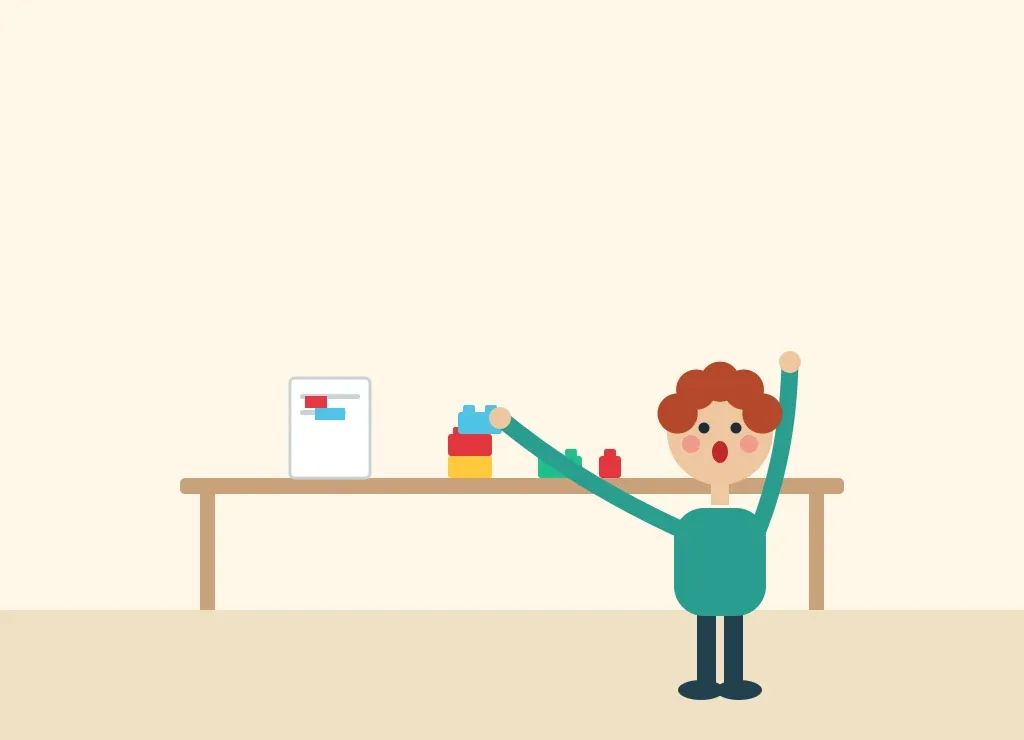
  • Identical sets of Lego pieces, one per player
  • Simple printed instructions (or a model already built)
  • Timer

Setup

  • Set aside the pieces each player needs and put the instructions next to them.

Rules, step by step

  1. On the signal, the players build the model following the instructions.
  2. When they finish, the player raises a hand and the judge checks.
  3. A build with mistakes doesn't count: the player has to fix it.
  4. The first to finish the right model within 1 minute wins.

Variations and tips

  • Harder: see the model for only 10 seconds and build it from memory.
  • In pairs: one sees the instructions and describes them, the other builds without seeing them.
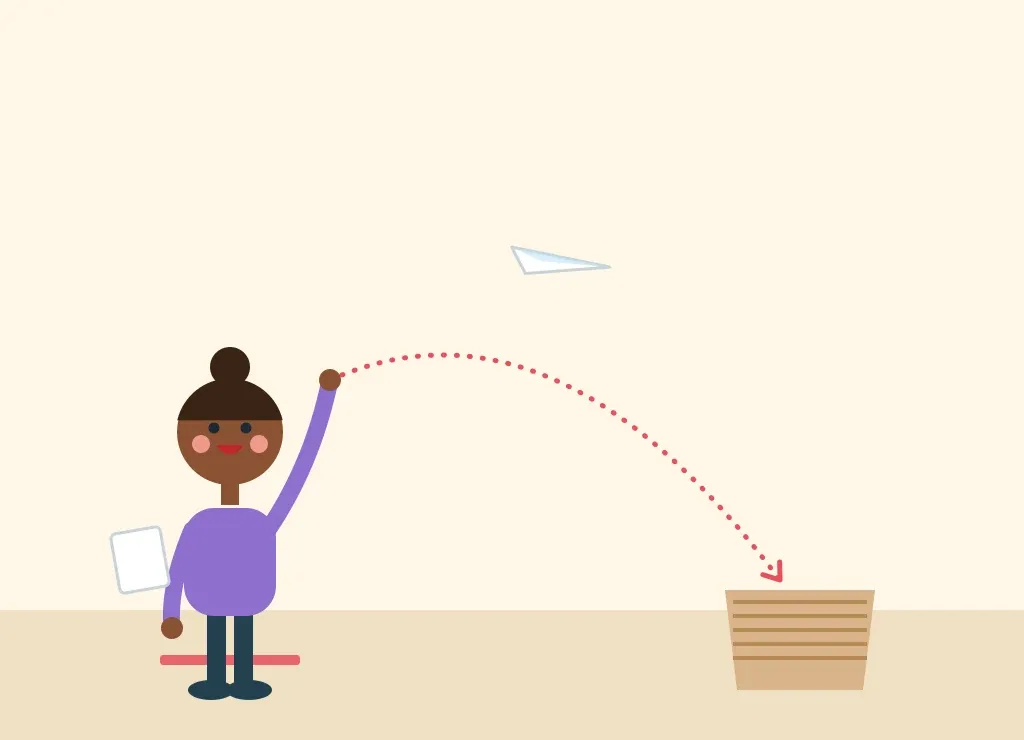
Illustration: Paper Plane Challenge

Paper Plane Challenge

Group
2 to 10 players
Age
6+
Duration
3 to 5 min
Where
Indoors or outdoors (no wind)
How to play

Materials

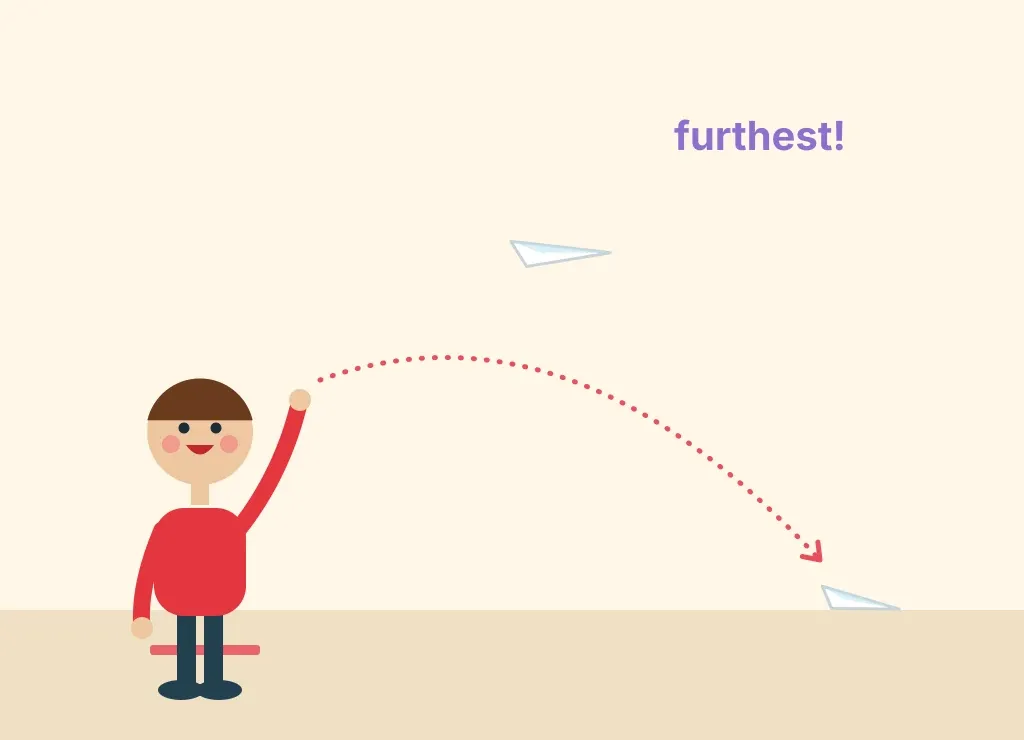
  • A4 sheets (one per player)
  • Tape to mark the launch line
  • Tape measure (optional)
  • Timer

Setup

  • Mark the launch line in a corridor or a long room.

Rules, step by step

  1. On the signal, each player has 1 minute to fold their plane.
  2. Then, in turn, everyone launches from the line, without stepping on it.
  3. Mark where each plane touches the floor.
  4. The plane that flies furthest wins.

Variations and tips

  • Extra prizes: the longest time in the air, the best stunt.
  • Harder: hit a target or land inside a hoop.
Illustration: Ball Drop Bounce

Ball Drop Bounce

Group
1 to 3 players at once
Age
7+
Duration
1 min per round
Where
Indoors
How to play

Materials

  • 6 to 8 plastic cups per player
  • 10 ping-pong balls per player
  • A table
  • Timer

Setup

  • Arrange the cups in a circle in the middle of the table, in front of each player.

Rules, step by step

  1. On the signal, the player throws the balls so they bounce once on the table before going into a cup.
  2. Balls that go in without bouncing don't count.
  3. They may pick up the balls that miss and throw them again.
  4. Whoever has the most balls in the cups after 1 minute wins.

Variations and tips

  • Like Ping-Pong in the Cups, but here the ball has to bounce first.
  • Harder: each cup may hold only one ball.
Illustration: Dice Roll Target

Dice Roll Target

Group
2 to 6 players
Age
5+
Duration
1 min per player
Where
Indoors
How to play

Materials

  • 3 dice per player
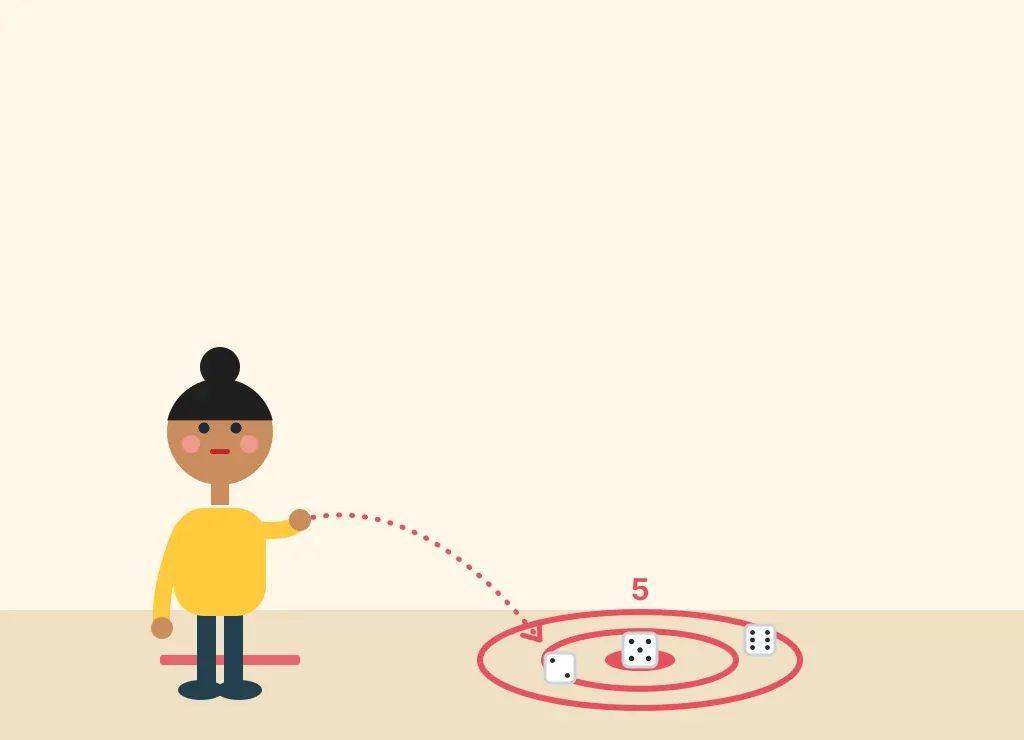
  • Tape to draw a target on the table or floor
  • Timer

Setup

  • Draw a square or concentric circles with tape, 1 metre from the throwing line.
  • Give the zones points: 5 in the centre, 3 in the middle, 1 outside.

Rules, step by step

  1. In turn, each player rolls the 3 dice from the line, with a gentle flick.
  2. Each die scores the points of the zone where it stops.
  3. If a die rolls off the table or the rug, it scores zero.
  4. Whoever scores the most points in 1 minute, or in a fixed number of rolls, wins.

Variations and tips

  • Harder: multiply the zone's points by the number on the die.
  • In pairs: one rolls, the other does the sums.
Illustration: Nut Stacker

Nut Stacker

Group
2 to 4 players at once
Age
8+
Duration
1 min per round
Where
Indoors
How to play

Materials

  • 1 pair of chopsticks per player
  • 15 metal hex nuts per player
  • A table
  • Timer

Setup

  • Spread each player's nuts on the table.

Rules, step by step

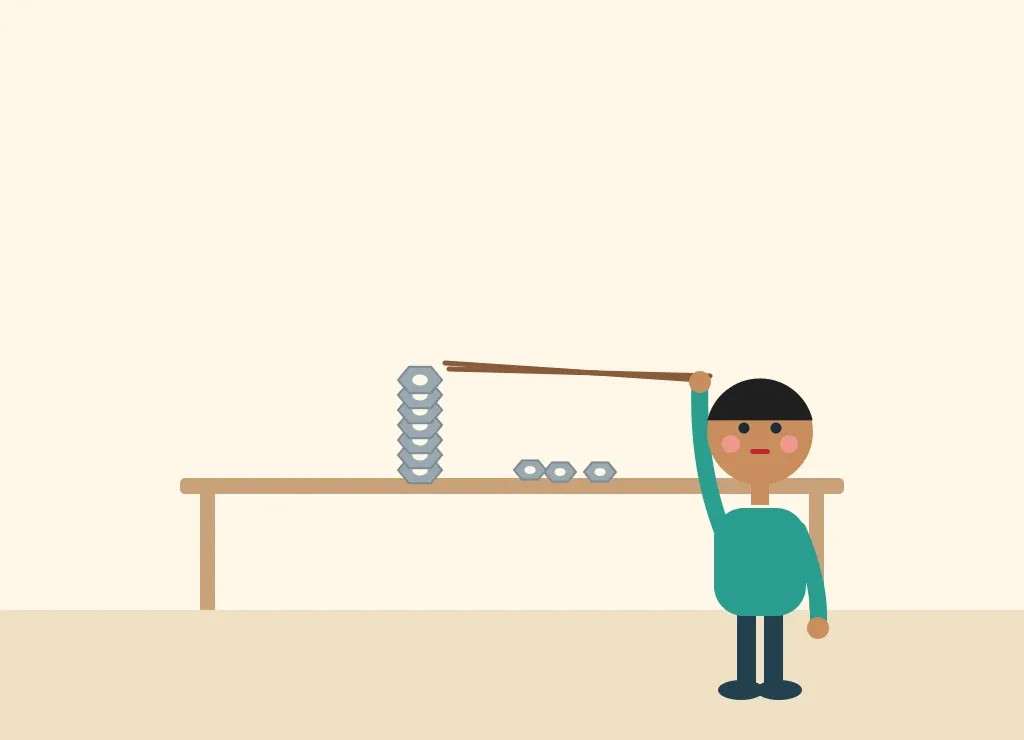
  1. On the signal, the player picks up the nuts with the chopsticks and stacks them on top of each other.
  2. They can't touch the nuts with their hands.
  3. If the tower falls, they start again from the base.
  4. The tallest tower after 1 minute wins.

Variations and tips

  • Like Chopstick Dice Tower, but with nuts, which slip even more.
  • Easier: big nuts.
Illustration: Water Bottle Flip

Water Bottle Flip

Group
1 to 6 players at once
Age
6+
Duration
1 min per player
Where
Indoors or outdoors
How to play

Materials

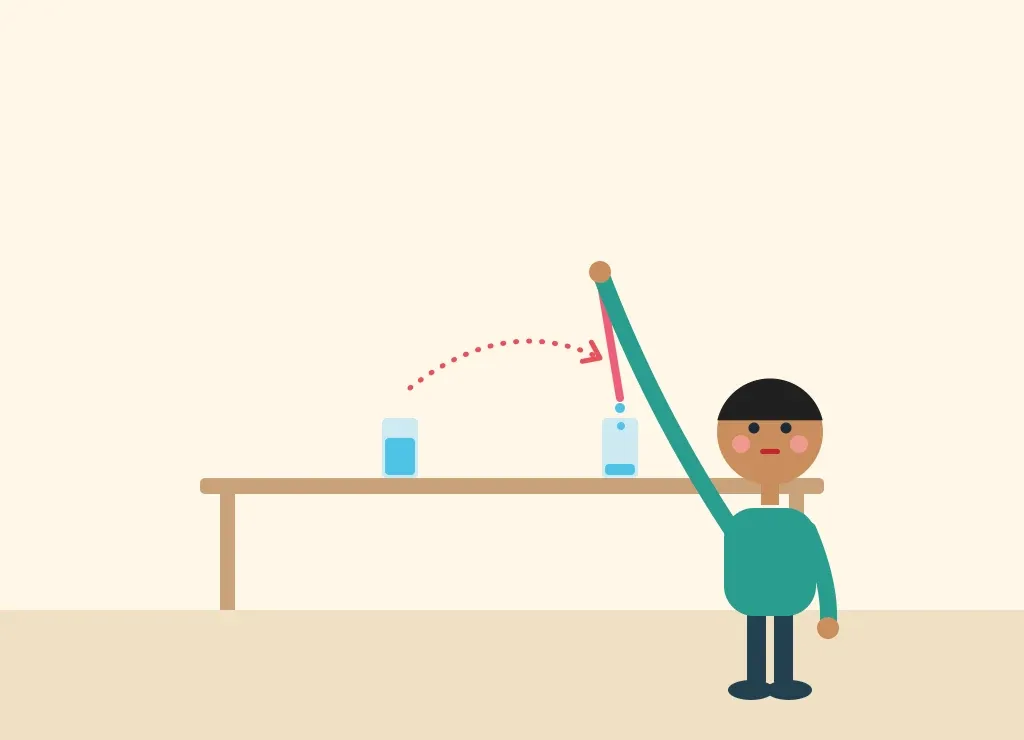
  • 1 plastic 0.5 l bottle per player, about a third full of water
  • A table or smooth floor
  • Timer

Setup

  • Fill each bottle to about a third and close it tightly.

Rules, step by step

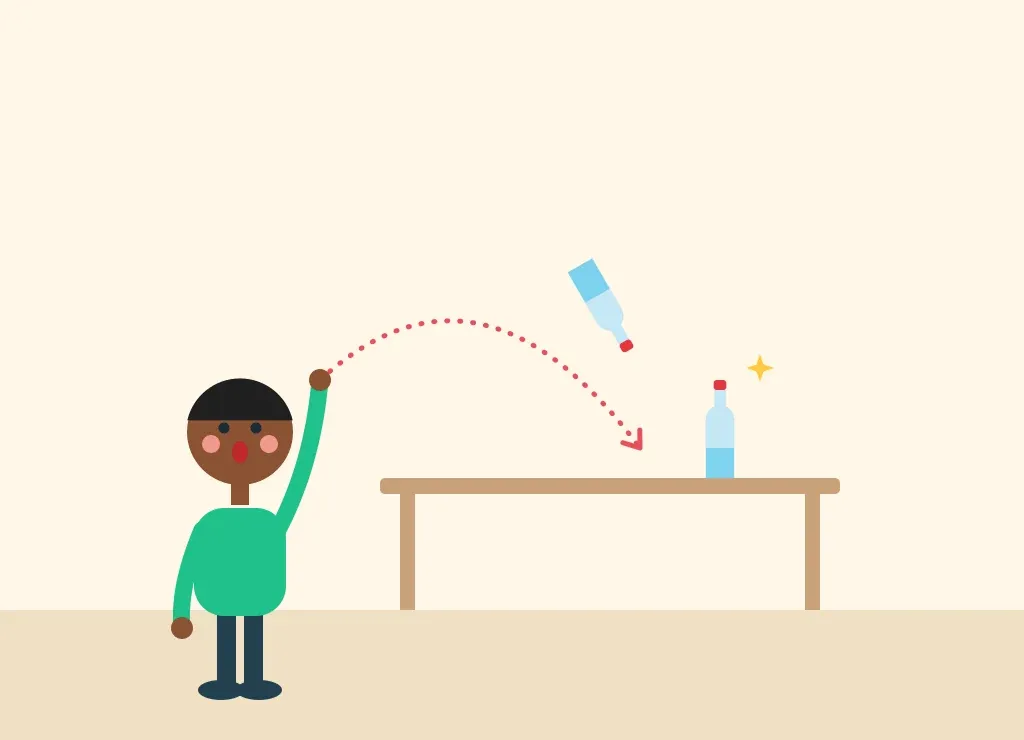
  1. On the signal, each player flips the bottle into the air, holding it by the neck, so it turns over once.
  2. Each time the bottle lands upright on the table and stays still scores 1 point.
  3. After each attempt, the player picks up the bottle and flips again.
  4. Whoever scores the most perfect landings in 60 seconds wins.

Variations and tips

  • Harder: landing the bottle cap-down scores 3 points.
  • Relay: each team member has to land it once before passing the bottle on.
  • Check the caps are tight so the room doesn't get wet.
Illustration: Spoon Frog

Spoon Frog

Group
1 to 4 players at once
Age
7+
Duration
1 min per player
Where
Indoors
How to play

Materials

  • 6 teaspoons per player
  • 3 cups per player
  • A table
  • Timer

Setup

  • Put 3 cups in a row about 30 cm from the edge of the table.

Rules, step by step

  1. The player lays one spoon on the table and puts another on top, its handle resting in the first spoon's bowl, like a catapult.
  2. They hit the handle of the bottom spoon to make the top one jump.
  3. The aim is to land the spoon inside a cup.
  4. Each cup needs only one spoon; then they move on to the next cup.
  5. Whoever gets a spoon into each of the 3 cups in 60 seconds wins.

Variations and tips

  • Easier: move the cups closer or use bowls.
  • Harder: put each cup a little further away than the last.
Illustration: Candelier

Candelier

Group
1 player at a time
Age
7+
Duration
1 min per player
Where
Indoors
How to play

Materials

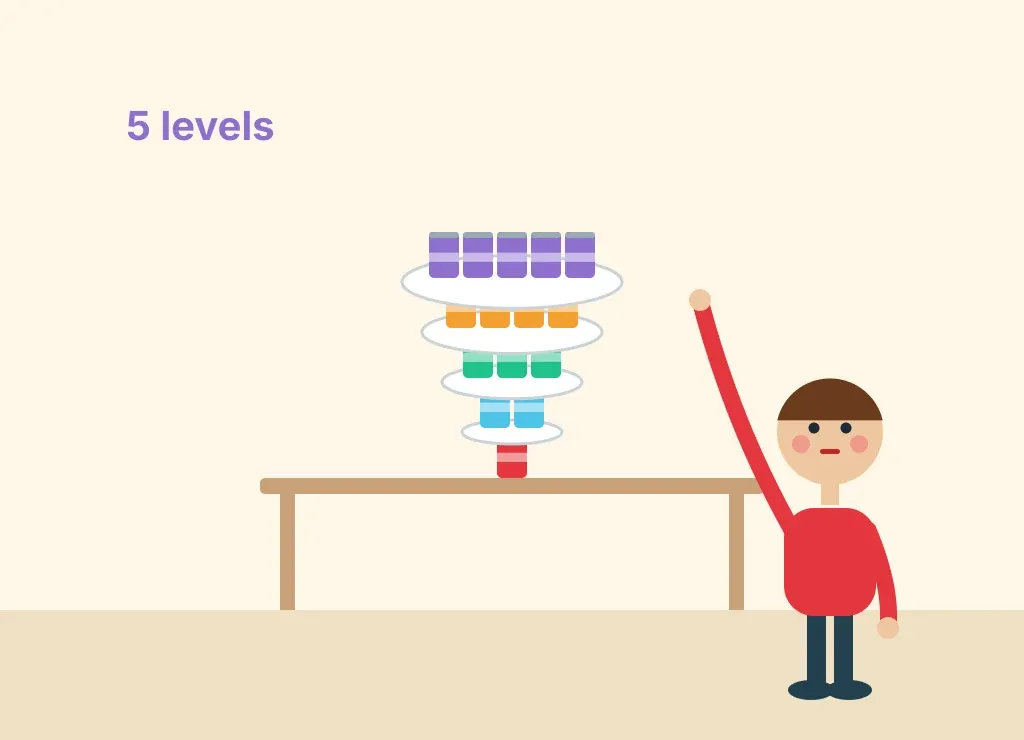
  • 15 empty drink cans
  • 4 paper plates
  • A table
  • Timer

Setup

  • Put the cans and the plates next to the table.

Rules, step by step

  1. On the signal, the player stands 1 can upright on the table and puts a paper plate on top.
  2. On top of the plate go 2 cans, another plate, 3 cans, another plate, 4 cans, another plate and finally 5 cans.
  3. The tower gets wider at the top, so the cans have to be well balanced.
  4. If the tower falls, they start again from the beginning.
  5. Whoever builds all 5 levels with the tower standing for 3 seconds before the minute is up wins.

Variations and tips

  • Easier: only 4 levels (10 cans, 3 plates).
  • Use plastic cups instead of cans for the little ones.
Illustration: Loner

Loner

Group
1 player at a time
Age
6+
Duration
1 min per player
Where
Indoors
How to play

Materials

  • 1 unsharpened pencil
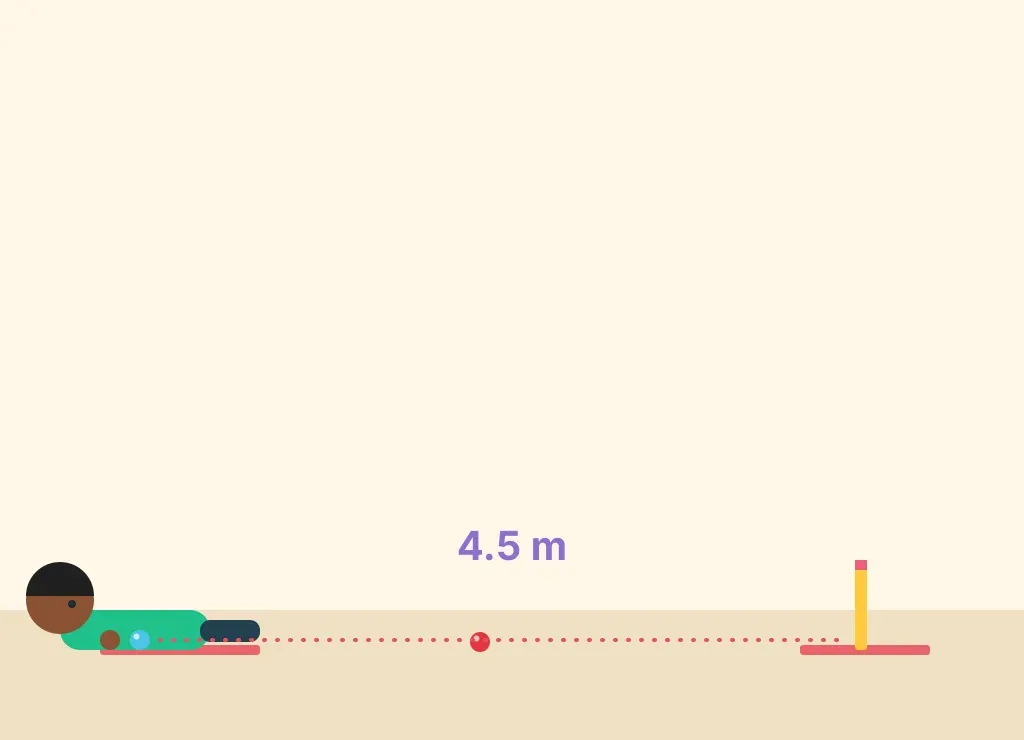
  • A handful of marbles
  • Tape to mark 2 lines
  • Timer

Setup

  • Mark two lines on the floor about 4.5 metres apart.
  • Stand the pencil upright, balanced on its flat end, on one of the lines.

Rules, step by step

  1. The player lies on their tummy behind the other line.
  2. They roll the marbles one at a time towards the pencil.
  3. They have to knock the pencil over before the minute is up.
  4. Whoever manages it wins; with several players, the fastest or whoever needs the fewest marbles.

Variations and tips

  • Easier: move the lines closer or use a small bottle instead of the pencil.
  • Play on a smooth floor, without a rug.
Illustration: Floatacious

Floatacious

Group
1 player at a time
Age
7+
Duration
1 min per player
Where
Indoors or outdoors
How to play

Materials

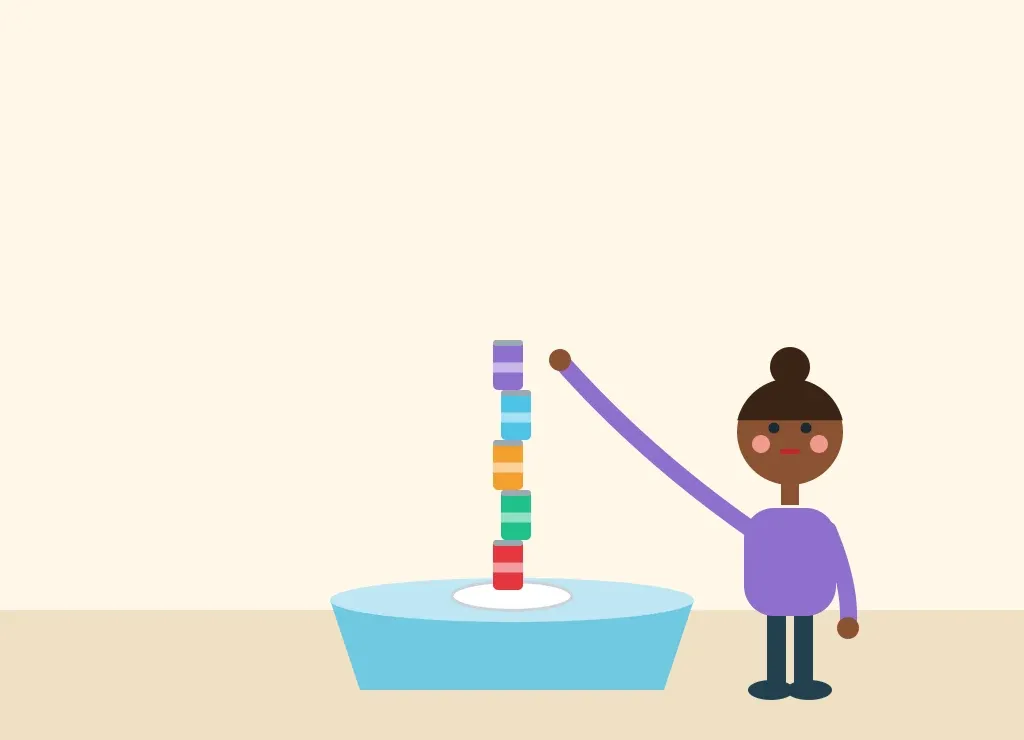
  • 1 plastic plate
  • 1 washing-up bowl or big bowl of water
  • 5 empty drink cans
  • Towel
  • Timer

Setup

  • Fill the bowl with water and float the plate on it.

Rules, step by step

  1. On the signal, the player stacks the 5 cans upright, one on top of the other, on the floating plate.
  2. The plate mustn't sink and the cans mustn't fall in the water.
  3. If the tower falls, they take the cans out, shake them dry and start again.
  4. Whoever builds the 5-can tower and keeps it up for 3 seconds within the minute wins.

Variations and tips

  • Easier: 3 cans.
  • Ideal outdoors on a hot day.
Illustration: Wheel of a Deal

Wheel of a Deal

Group
1 player at a time
Age
6+
Duration
1 min per player
Where
Indoors
How to play

Materials

  • 20 playing cards: 4 each of 5 different values (for example 4 aces, 4 kings…)
  • 1 central table
  • 5 chairs or small tables around it
  • Timer

Setup

  • Shuffle the 20 cards and put them in a pile on the central table, face down.
  • Put the 5 chairs in a circle around it, 1 or 2 metres away.

Rules, step by step

  1. On the signal, the player turns over the top card and takes it to one of the chairs.
  2. Each chair may only hold cards of the same value.
  3. Only one card may be carried at a time.
  4. Whoever sorts the 20 cards into 5 groups of 4 matching cards in 60 seconds wins.

Variations and tips

  • Easier: 3 groups of cards.
  • Harder: move the chairs further away and put the cards face down on the chairs, so they have to remember.
Illustration: Toilet Paper Cup Pull

Toilet Paper Cup Pull

Group
1 to 3 players at once
Age
6+
Duration
1 to 2 min per round
Where
Indoors
How to play

Materials

  • 1 smooth table
  • 1 roll of toilet paper
  • 1 plastic or paper cup of water per player
  • Timer

Setup

  • Unroll a strip of toilet paper (about 1 metre) per player, lengthwise along the table, with the end towards the player.
  • Stand a full cup of water on the far end of each strip.

Rules, step by step

  1. On the signal, each player slowly pulls their strip of paper to bring the cup to the edge of the table.
  2. They may only touch the paper, never the cup or the table.
  3. If the paper tears, or the cup spills and wets the paper, they're out (or start again with a new strip, if there's time).
  4. The first to get the cup to the edge of the table, whole and without spilling, wins.

Variations and tips

  • Harder: fuller cups or single-ply paper strips.
  • Easier for children: cups with little water, or empty with a weight inside.
  • Put a towel under the table to catch the drips.
Illustration: Reindeer Hooves Pickup

Reindeer Hooves Pickup

Group
2 to 4 players at once
Age
5+
Duration
1 min per round
Where
Indoors
How to play

Materials

  • 2 plastic cups per player
  • 10 to 15 folded slips of paper, sweets or little balls per player
  • 1 plate per player
  • Timer

Setup

  • Spread each player's objects on the table and put an empty plate next to them.

Rules, step by step

  1. Each player slips one hand into each cup: those are their "hooves".
  2. On the signal, they have 1 minute to pick up the objects and put them on the plate, using only the cups.
  3. They can't take their hands out of the cups or use any other part of the body.
  4. Anything that falls on the floor is out.
  5. Whoever has the most objects on the plate when time runs out wins.

Variations and tips

  • Easier: bigger objects, like balls of scrunched-up paper.
  • Harder: wrapped sweets or beans.
  • Put cardboard reindeer antlers on the players' heads for the photo.
Illustration: Plastic Wrap Ball

Plastic Wrap Ball

Group
4 to 12 players in a circle
Age
6+
Duration
15 to 30 min
Where
Indoors
How to play

Materials

  • 2 or 3 rolls of cling film
  • Small prizes (chocolates, sweets, toys, vouchers, notes)
  • 2 dice
  • Oven gloves (optional)

Setup

  • Before the party, wrap the film around a prize and keep adding prizes between the layers until it makes a big ball.
  • Leave the best prize in the centre.

Rules, step by step

  1. The players sit in a circle; the first holds the ball and their left-hand neighbour holds the dice.
  2. On the signal, whoever has the ball unwraps the film as fast as they can and keeps the prizes that come loose.
  3. Meanwhile, whoever has the dice rolls them non-stop until they get a double.
  4. On a double, the ball goes to whoever rolled the dice and the dice go to the next neighbour.
  5. The game ends when the ball is fully unwrapped; whoever reaches the centre takes the main prize.

Variations and tips

  • Harder: unwrap wearing oven gloves.
  • With little children: use a single die and pass the ball when a 6 comes up.
  • Lots of small prizes make the game livelier.
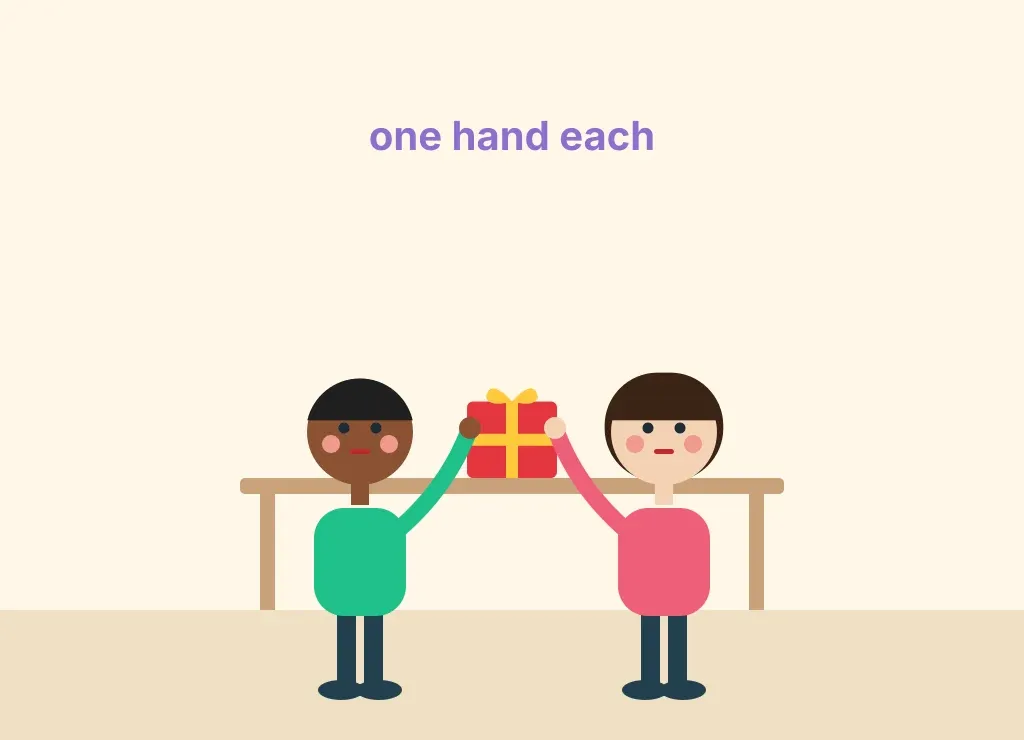
Illustration: One-Handed Team Gift Wrapping

One-Handed Team Gift Wrapping

Group
Teams of 2
Age
8+
Duration
3 to 5 min per round
Where
Indoors
How to play

Materials

  • 1 box or object to wrap per team
  • Wrapping paper
  • Tape
  • Scissors
  • Bow (optional)
  • Timer

Setup

  • Give each pair a box, a sheet of paper, tape and scissors.
  • Each player puts one hand behind their back: together, the two only have two hands (one each).

Rules, step by step

  1. On the signal, the two players wrap the present together, each using only their free hand.
  2. They can't use the hand behind their back at any point.
  3. The parcel has to be closed, with no box showing, and with a bow if there is one.
  4. The first pair to finish holds up the present; the host checks it is well done.
  5. The fastest pair with an acceptable parcel wins (or the prettiest, if in doubt).

Variations and tips

  • Like Wrapping Paper Race, but here the challenge is one-handed teamwork.
  • Harder: teams of 3, with one hand each.
  • Use oddly shaped boxes (a tube, a ball) to make it trickier.
Illustration: Christmas Scavenger Hunt

Christmas Scavenger Hunt

Group
3 to 20 players
Age
4+
Duration
15 to 30 min
Where
Indoors or outdoors
How to play

Materials

  • Small wrapped presents (at least 1 per player)
  • Cards with clues or riddles (optional)

Setup

  • The host hides the presents around the house (or the garden) before the guests arrive.
  • If they like, they write clues that lead from one hiding place to the next.

Rules, step by step

  1. On the signal, everyone searches for the hidden presents.
  2. Each player keeps the presents they find; once they have one, they can help the others.
  3. With clues: each clue solved says where the next present is, and whoever solves it first keeps it.
  4. The game ends when every present has been found; whoever found the most (or the special present) wins.

Variations and tips

  • For little children: easy hiding places and a present with each child's name.
  • Mark off-limits areas (bedrooms, kitchen) before starting.
  • Harder: the clues are riddles or word searches.
Illustration: Cup Catch

Cup Catch

Group
1 player at a time
Age
7+
Duration
1 min per player
Where
Indoors
How to play

Materials

  • 10 to 20 identical plastic cups
  • Timer

Setup

  • The player holds a cup in one hand; the rest are in a stack within reach.

Rules, step by step

  1. The player tosses a cup in the air with one hand and tries to catch it nested in the cup held in the other.
  2. Each cup caught stays on the stack; the next is tossed and caught on top of it.
  3. If a cup falls on the floor, they pick it up and try again.
  4. Whoever has the tallest stack after 60 seconds wins.

Variations and tips

  • Easier: toss at face height, not above the head.
  • Harder: switch hands with every cup.
Illustration: One-Handed Tower

One-Handed Tower

Group
1 to 6 players at once
Age
6+
Duration
1 min
Where
Indoors
How to play

Materials

  • 30 one-cent coins per player
  • Timer

Setup

  • Spread each player's coins on the table in front of them.

Rules, step by step

  1. On the signal, each player stacks coins into a tower using only one hand.
  2. The other hand stays behind their back the whole time.
  3. If the tower falls, they start from scratch with the same coins.
  4. After 60 seconds, the standing towers are counted: the tallest wins.

Variations and tips

  • Harder: use the weaker hand.
  • Coins of mixed sizes make the tower wobblier.
Illustration: Penny Drop

Penny Drop

Group
1 player at a time
Age
6+
Duration
1 min per player
Where
Indoors
How to play

Materials

  • 20 small coins
  • 1 tall cup or jar
  • Timer

Setup

  • Put the cup on the floor.

Rules, step by step

  1. The player stands next to the cup, with their arm stretched out at shoulder height.
  2. They drop the coins one at a time, trying to get them into the cup.
  3. They can't bend their arm or crouch down.
  4. Whoever gets the most coins into the cup in 60 seconds wins.

Variations and tips

  • Harder: a narrower cup or a small bottle.
  • Easier for children: a wide bowl.
Illustration: Rolling Coins

Rolling Coins

Group
1 to 4 players
Age
6+
Duration
1 min per player
Where
Indoors
How to play

Materials

  • 10 coins
  • 1 plastic cup
  • Tape
  • Timer

Setup

  • Tape the cup on its side to the far edge of the table, with the opening facing the players.

Rules, step by step

  1. The player rolls a coin on its edge along the table, from their end.
  2. The aim is to get the coin into the cup.
  3. A coin that falls off the table counts as a miss.
  4. Whoever gets the most coins in in 60 seconds wins.

Variations and tips

  • Easier: a wide cup or a short table.
  • Harder: the coin has to roll along a tape corridor without leaving it.
Illustration: Penny Pitch

Penny Pitch

Group
1 player at a time, or teams
Age
5+
Duration
1 min per player
Where
Indoors or outdoors
How to play

Materials

  • 20 coins
  • 5 small cups
  • Paper and pen for the score
  • Tape
  • Timer

Setup

  • Put the cups on the floor or on a table and mark a throwing line about 2 metres away.
  • Optional: give each cup a value (1, 2, 3, 5, 10 points).

Rules, step by step

  1. The player stands behind the line and tosses the coins, one by one, into the cups.
  2. Each coin that stays in a cup scores that cup's points.
  3. They can't cross the line.
  4. Whoever scores the most points in 60 seconds wins.

Variations and tips

  • For children: move the line closer.
  • Smaller cups further away are worth more points.
Illustration: Quarter Bounce

Quarter Bounce

Group
1 to 4 players
Age
8+
Duration
1 min per player
Where
Indoors
How to play

Materials

  • 10 big coins (2 euros or 50 cents)
  • 1 shallow bowl
  • Timer

Setup

  • Put the bowl on the table about 30 cm from the edge where the player stands.

Rules, step by step

  1. The player throws the coin against the table top so it bounces and lands in the bowl.
  2. The coin has to hit the table first; if it drops straight into the bowl it doesn't count.
  3. Whoever lands the most coins in 60 seconds wins.

Variations and tips

  • Hard tables (wood, glass) give better bounces.
  • Harder: use a cup instead of a bowl.
Illustration: Balloon Tennis

Balloon Tennis

Group
2 players or 2 teams
Age
4+
Duration
1 min per round
Where
Indoors
How to play

Materials

  • 1 inflated balloon
  • 1 paper plate per player (the rackets)
  • Timer

Setup

  • Optionally glue a lolly stick to the plate as a handle.

Rules, step by step

  1. The players hit the balloon back and forth using only their paper-plate rackets.
  2. Nobody may touch the balloon twice in a row.
  3. Count the hits in a row without the balloon touching the floor.
  4. The pair with the longest rally in 60 seconds wins (or the pair that keeps it up for the whole minute).

Variations and tips

  • Competitive version: a ribbon on the floor as the net; whoever lets the balloon drop on their side loses the point.
  • Harder: two balloons at once.
Illustration: Pyramid Pong

Pyramid Pong

Group
1 to 4 players
Age
6+
Duration
1 min per player
Where
Indoors
How to play

Materials

  • 10 plastic cups
  • 10 ping-pong balls
  • Tape
  • Timer

Setup

  • Set the cups out in a triangle on the floor or a table (4-3-2-1) and mark a throwing line 1.5 metres away.

Rules, step by step

  1. The player throws the balls without a bounce, one by one, into the cups.
  2. Each cup hit comes out of the triangle.
  3. When the balls run out, they may gather them up and carry on while there is time.
  4. Whoever empties the triangle fastest, or removes the most cups in 60 seconds, wins.

Variations and tips

  • Harder: stack the cups in a pyramid and only balls in the top cups count.
  • Team version: a relay, each person throws 2 balls.
Illustration: Spoon Bounce

Spoon Bounce

Group
1 to 4 players
Age
7+
Duration
1 min per player
Where
Indoors
How to play

Materials

  • 1 tablespoon
  • 5 ping-pong balls
  • 1 plastic cup
  • Timer

Setup

  • Put the cup on the table, about 50 cm from the player.

Rules, step by step

  1. The player drops the ball onto the spoon they hold in their hand.
  2. With a flick of the spoon, they make the ball bounce into the cup.
  3. The ball can't be thrown by hand.
  4. Whoever gets the most balls in in 60 seconds wins.

Variations and tips

  • Easier: a bigger cup or a bowl.
  • Harder: the spoon goes in the mouth instead of the hand.
Illustration: Chopstick Pickup

Chopstick Pickup

Group
1 to 4 players at once
Age
7+
Duration
1 min
Where
Indoors
How to play

Materials

  • 1 pair of chopsticks per player
  • 2 bowls per player
  • Chocolate beans (like Smarties)
  • Timer

Setup

  • Fill one bowl with chocolate beans and put the empty bowl 30 cm away.

Rules, step by step

  1. On the signal, each player moves chocolate beans from one bowl to the other with the chopsticks only.
  2. One bean at a time; any that fall on the table don't count and can't be picked up by hand.
  3. Whoever has the most beans in the finishing bowl after 60 seconds wins.

Variations and tips

  • For little children: training chopsticks or tweezers.
  • Harder: only beans of one colour.
Illustration: Sticky Note Toss

Sticky Note Toss

Group
1 to 4 players
Age
6+
Duration
1 min per player
Where
Indoors
How to play

Materials

  • 1 pad of sticky notes per player
  • Tape or a roll of paper for the target
  • Timer

Setup

  • Draw or mark a target on a wall or door (concentric circles).
  • Mark the throwing line 1.5 metres away.

Rules, step by step

  1. The player lightly scrunches a sticky note (without covering the glue) or folds it and throws it at the target.
  2. Only the notes that stay stuck inside the target count.
  3. They may throw as many as they like in 60 seconds.
  4. Whoever has the most notes stuck (or the most points, if the target has zones) wins.

Variations and tips

  • A different colour for each player makes counting easier.
  • Harder: move the line further back.
Illustration: Paperclip Chain

Paperclip Chain

Group
1 to 6 players at once
Age
6+
Duration
1 min
Where
Indoors
How to play

Materials

  • 1 box of paperclips per player
  • Timer

Setup

  • Tip each player's paperclips into a pile in front of them.

Rules, step by step

  1. On the signal, each player links paperclips together into a chain.
  2. Only clips linked in the same chain count.
  3. At the end, the chain is held up by one end: if it breaks, only the part still attached counts.
  4. The longest chain after 60 seconds wins.

Variations and tips

  • Harder: one hand only.
  • As a team: each person makes a section and they join it all at the end.
Illustration: Rubber Band Stack

Rubber Band Stack

Group
1 to 4 players at once
Age
6+
Duration
1 min
Where
Indoors
How to play

Materials

  • 1 plastic 1.5 l bottle per player
  • Lots of rubber bands
  • Timer

Setup

  • Give each player a bottle and a pile of rubber bands.

Rules, step by step

  1. On the signal, each player slips rubber bands around the bottle, from the bottom up, tight against each other.
  2. The aim is to cover the bottle up to the neck.
  3. Bands that ping off don't count.
  4. The first to reach the top, or whoever gets highest in 60 seconds, wins.

Variations and tips

  • Safety: flying rubber bands can hit eyes; never stretch them towards anyone.
  • Easier: a small 33 cl bottle.
Illustration: Post-It Cover

Post-It Cover

Group
1 to 4 players or teams
Age
5+
Duration
1 min
Where
Indoors
How to play

Materials

  • 1 to 2 pads of sticky notes per player
  • Tape to mark the area
  • Timer

Setup

  • Mark a square on the wall for each player with tape (for example, 50 x 50 cm).

Rules, step by step

  1. On the signal, each player sticks notes inside their square, one by one.
  2. The notes can't overlap.
  3. Whoever covers the square completely first, or has the most area covered at 60 seconds, wins.

Variations and tips

  • Harder: one hand only, or make a colour pattern (a chessboard).
  • Take care with freshly painted walls.
Illustration: Card Catch

Card Catch

Group
1 to 4 players
Age
7+
Duration
1 min per player
Where
Indoors
How to play

Materials

  • 1 deck of cards
  • 1 big bowl or bucket
  • Tape
  • Timer

Setup

  • Put the bowl on the floor and mark a throwing line about 2 metres away.

Rules, step by step

  1. The player throws the cards one at a time, spinning like a frisbee, into the bowl.
  2. They can't cross the line.
  3. Only the cards in the bowl at the end count.
  4. Whoever lands the most cards in 60 seconds wins.

Variations and tips

  • Easier: move the line closer or use a cardboard box.
  • Harder: a hat instead of the bowl.
Illustration: Sock Match

Sock Match

Group
1 to 4 players
Age
4+
Duration
1 min
Where
Indoors
How to play

Materials

  • 1 basket of odd socks (at least 15 pairs mixed up)
  • Timer

Setup

  • Tip the socks into a pile on the floor or the bed.

Rules, step by step

  1. On the signal, the player finds matching socks and pairs them up, folding each pair.
  2. Only correct pairs count; a mismatched pair cancels a point.
  3. Whoever matches the most pairs in 60 seconds wins.

Variations and tips

  • With several players at once: each with their own pile.
  • Bonus for the parents: the laundry ends up sorted.
Illustration: Button Sort

Button Sort

Group
1 to 4 players at once
Age
5+
Duration
1 min
Where
Indoors
How to play

Materials

  • 1 jar of assorted buttons
  • 3 to 5 small bowls per player
  • Timer

Setup

  • Give each player a handful of buttons and decide whether to sort by colour or by size.

Rules, step by step

  1. On the signal, each player sorts the buttons by the chosen rule, one kind per bowl.
  2. One button at a time.
  3. Buttons in the wrong bowl don't count.
  4. Whoever sorts the most buttons correctly in 60 seconds wins.

Variations and tips

  • Careful with little children: buttons can be swallowed.
  • Harder: sort by the number of holes.
Illustration: Puzzle Speed

Puzzle Speed

Group
1 to 4 players (each with their own puzzle) or pairs
Age
5+
Duration
1 to 2 min
Where
Indoors
How to play

Materials

  • 1 25-piece puzzle per player (the same, if possible)
  • Timer

Setup

  • Take the puzzles apart and shuffle the pieces, face up.

Rules, step by step

  1. On the signal, each player puts their puzzle together.
  2. Nobody may help the others.
  3. The first to finish wins; if nobody finishes in 60 seconds, whoever has the most pieces in place wins.

Variations and tips

  • For adults: pieces face down, or without seeing the picture on the box.
  • For little children: 12-piece puzzles.
Illustration: Toilet Paper Unroll

Toilet Paper Unroll

Group
1 to 4 players at once
Age
5+
Duration
1 min
Where
Indoors
How to play

Materials

  • 1 roll of toilet paper per player
  • Timer

Setup

  • Each player holds the roll in one hand; the other stays behind their back.

Rules, step by step

  1. On the signal, the player unrolls the whole roll using only one hand.
  2. If the paper tears, they carry on from the piece left on the roll.
  3. They can't use the other hand or their teeth, or put the roll down to pull it.
  4. The first to reach the cardboard tube, or whoever unrolls the most in 60 seconds, wins.

Variations and tips

  • Use cheap paper and reuse it afterwards.
  • Easier: half-used rolls.
Illustration: Ring Toss

Ring Toss

Group
1 player at a time, or teams
Age
4+
Duration
1 min per player
Where
Indoors or outdoors
How to play

Materials

  • 5 to 10 bottles (ideally full of water so they don't fall over)
  • 10 rings (or thick rubber bands, or cardboard rings)
  • Tape
  • Timer

Setup

  • Put the bottles in a group on the floor and mark a throwing line 2.5 metres away.

Rules, step by step

  1. The player throws the rings, one by one, trying to land them over a bottle's neck.
  2. When the rings run out, they may gather them up and throw again if there is time.
  3. Each ring that lands scores 1 point.
  4. Whoever lands the most rings in 60 seconds wins.

Variations and tips

  • For children: move the line closer.
  • Bottles with coloured ribbons can be worth different points.
Illustration: Shoe Toss

Shoe Toss

Group
1 player at a time, or teams
Age
5+
Duration
1 min per player
Where
Indoors or outdoors
How to play

Materials

  • 5 shoes or slippers
  • 1 laundry basket
  • Tape
  • Timer

Setup

  • Put the basket on the other side of the room and mark the throwing line.

Rules, step by step

  1. The player throws the shoes, one by one, into the basket.
  2. When they run out, they run to fetch them and go back to the line to throw again.
  3. Only the shoes that stay in the basket count.
  4. Whoever gets the most shoes in in 60 seconds wins.

Variations and tips

  • Fun version: launch the shoe with your foot, like a kick.
  • Use light shoes and move breakable things out of the way.
Illustration: Sock Ball Throw

Sock Ball Throw

Group
1 player at a time, or teams
Age
4+
Duration
1 min per player
Where
Indoors
How to play

Materials

  • 10 pairs of socks rolled into balls
  • 3 buckets or baskets
  • Paper and pen for the score
  • Timer

Setup

  • Put the buckets 1, 2 and 3 metres from the throwing line and give them 1, 3 and 5 points.

Rules, step by step

  1. The player throws the sock balls into the buckets.
  2. Each ball in a bucket scores that bucket's points.
  3. When the balls run out, they may fetch them and carry on.
  4. Whoever scores the most points in 60 seconds wins.

Variations and tips

  • A safe game for indoors: socks don't break anything.
  • Harder: throw backwards, over the shoulder.
Illustration: Lego Tower

Lego Tower

Group
1 to 6 players at once
Age
4+
Duration
1 min
Where
Indoors
How to play

Materials

  • A handful of Lego pieces (or similar) per player, all the same size
  • Tape measure
  • Timer

Setup

  • Give each player the same number and kind of loose pieces.

Rules, step by step

  1. On the signal, each player clicks pieces together to build the tallest tower they can.
  2. The tower has to stand on its own, without support, at the end of the minute.
  3. The tallest tower wins, measured with the tape measure.

Variations and tips

  • Harder: one hand only.
  • Team version: each member adds 5 pieces in turn.
Illustration: Straw Water Transfer

Straw Water Transfer

Group
1 to 4 players at once
Age
6+
Duration
1 min
Where
Indoors or outdoors
How to play

Materials

  • 2 bottles or cups per player (one full of water, one empty)
  • 1 straw per player
  • Timer

Setup

  • Put the two containers side by side, about 30 cm apart.

Rules, step by step

  1. The player dips the straw in the water and covers the top end with a finger to hold it in.
  2. They carry the straw to the empty container and uncover the end to let the water drop.
  3. They can't drink it or pour it directly.
  4. Whoever moves the most water in 60 seconds wins.

Variations and tips

  • Food colouring in the water makes it easier to see who won.
  • Harder: suck up the water and spit it into the empty cup (only for those old enough, with their own straws).
Illustration: Card House

Card House

Group
1 to 4 players at once
Age
8+
Duration
1 min
Where
Indoors
How to play

Materials

  • 1 deck of cards per player
  • Timer

Setup

  • Each player at a steady table, away from draughts.

Rules, step by step

  1. On the signal, each player leans cards together in pairs (like an upside-down "V") and lays cards flat on top to make floors.
  2. Nobody may touch the others' tables or blow towards them.
  3. After 60 seconds, the standing houses are counted: whoever has the most floors wins (or the most cards used, in a tie).

Variations and tips

  • It appears twice on the original page; here it is one game.
  • Easier: old cards slightly bent in the middle, or cards made of thin card.
Illustration: Cheerio Spaghetti

Cheerio Spaghetti

Group
1 to 4 players at once
Age
6+
Duration
1 min
Where
Indoors
How to play

Materials

  • 1 strand of uncooked spaghetti per player
  • 1 small bowl of hoop cereal per player
  • Modelling clay or a piece of polystyrene to hold the spaghetti
  • Timer

Setup

  • Stand each strand of spaghetti upright in the modelling clay.

Rules, step by step

  1. On the signal, the player threads cereal hoops onto the spaghetti, one at a time.
  2. They can't hold the spaghetti with the other hand.
  3. If the spaghetti breaks, the player starts again with a new one.
  4. The first to thread 10 hoops, or whoever has the most in 60 seconds, wins.

Variations and tips

  • Easier for little children: hold the spaghetti lying flat.
  • Harder: with the weaker hand.
Illustration: Bubble Catch

Bubble Catch

Group
1 to 4 players
Age
4+
Duration
1 min per player
Where
Indoors or outdoors
How to play

Materials

  • 1 pot of bubble mixture with a wand per player
  • Timer

Setup

  • Pick a spot without strong wind.

Rules, step by step

  1. The player blows bubbles.
  2. They have to catch a bubble on the (still wet) wand without popping it.
  3. Each bubble caught whole scores 1 point.
  4. Whoever catches the most bubbles in 60 seconds wins.

Variations and tips

  • Trick: wet the wand well; a wet surface doesn't pop the bubble.
  • Harder: balance the bubble on the wand for 3 seconds.
Illustration: Beans on a Knife

Beans on a Knife

Group
1 to 4 players at once
Age
6+
Duration
1 min
Where
Indoors
How to play

Materials

  • 1 butter knife (not serrated) per player
  • 2 bowls per player
  • A handful of dried beans
  • Timer

Setup

  • Fill one bowl with beans and put the empty one 30 cm away.

Rules, step by step

  1. On the signal, the player scoops beans onto the knife blade and carries them to the other bowl.
  2. They can't use the other hand or push the beans against the bowl with their fingers.
  3. Beans that fall on the table stay there.
  4. Whoever moves the most beans in 60 seconds wins.

Variations and tips

  • Harder: big round beans (chickpeas).
  • Only blunt, non-serrated knives.
Illustration: Hanger Stack

Hanger Stack

Group
1 to 4 players
Age
7+
Duration
1 min
Where
Indoors
How to play

Materials

  • 15 to 20 identical plastic hangers per player
  • Timer

Setup

  • The player holds a hanger by its hook, or hangs it by the hook on the edge of a table.

Rules, step by step

  1. On the signal, the player hangs hangers on each other, each new hanger hooked onto the one below (or above, in a chain).
  2. The structure may only be supported at the starting point.
  3. If it falls, they start again.
  4. Whoever hangs the most hangers in 60 seconds wins.

Variations and tips

  • Variation: balance the hangers in a fan on a single hanger's hook.
  • Not wire hangers: they poke.
Illustration: Straw Tower

Straw Tower

Group
Individually or teams of 2 to 4
Age
7+
Duration
1 to 5 min
Where
Indoors
How to play

Materials

  • 20 straws per player or team
  • Tape measure
  • Timer

Setup

  • Give everyone the same number of straws.

Rules, step by step

  1. On the signal, they build a tower using only the straws: they may bend them, slot them into each other or weave them together.
  2. No tape, glue or other materials.
  3. The tower has to stand on its own for 5 seconds after time is up.
  4. The tallest tower wins.

Variations and tips

  • More time (5 minutes) makes for more ambitious towers.
  • Limited-tape version: 30 cm per team.
Illustration: Red or Black

Red or Black

Group
1 to 4 players at once
Age
6+
Duration
1 min
Where
Indoors
How to play

Materials

  • 1 shuffled deck of cards per player
  • Timer

Setup

  • Each player holds their deck face down.

Rules, step by step

  1. On the signal, the player turns the cards over one by one and sorts them into two piles: red and black.
  2. At the end, the piles are checked; each wrong card loses 1 point.
  3. Whoever sorts the whole deck first with no mistakes, or has the most cards right at 60 seconds, wins.

Variations and tips

  • Harder: sort into the four suits.
  • Even harder: one hand only.
Illustration: Bottle Caps

Bottle Caps

Group
1 to 4 players at once
Age
5+
Duration
1 min
Where
Indoors
How to play

Materials

  • 6 to 10 plastic bottles with caps per player
  • Timer

Setup

  • Line up the closed bottles in front of each player.

Rules, step by step

  1. On the signal, the player unscrews all the caps and puts them down next to the bottles.
  2. Then they screw each cap back onto its bottle.
  3. The caps have to be done up tightly: the referee checks at the end.
  4. The first to finish, or whoever closes the most bottles in 60 seconds, wins.

Variations and tips

  • Harder: mix caps of several sizes in one pile.
  • Even harder: wearing thick gloves.
Illustration: Thread a Needle

Thread a Needle

Group
1 to 6 players at once
Age
10+
Duration
1 min
Where
Indoors
How to play

Materials

  • 5 wide-eyed sewing needles per player
  • Thread cut into 30 cm pieces
  • Timer

Setup

  • Give each player the needles and the pieces of thread.

Rules, step by step

  1. On the signal, the player threads the eye of each needle.
  2. A needle only counts when the thread goes right through.
  3. Whoever threads the most needles in 60 seconds wins.

Variations and tips

  • For children: plastic tapestry needles and wool.
  • Safety: count the needles at the end so none go missing.
Illustration: Tie Your Shoes

Tie Your Shoes

Group
2 to 6 players at once
Age
5+
Duration
1 min
Where
Indoors
How to play

Materials

  • 1 pair of lace-up shoes per player (worn, laces undone)
  • Timer

Setup

  • Everyone sitting or standing with their shoes on and the laces loose.

Rules, step by step

  1. On the signal, each player ties both shoes with a bow.
  2. The bows have to last two steps without coming undone.
  3. The first with both shoes tied properly wins.

Variations and tips

  • Great for children learning to tie their shoes.
  • Harder for adults: wearing gloves, or standing without leaning on anything.
Illustration: Sock Layers

Sock Layers

Group
2 to 6 players at once
Age
5+
Duration
1 min
Where
Indoors
How to play

Materials

  • 15 loose-fitting socks per player
  • Timer

Setup

  • Each player sits on the floor with one foot bare and the pile of socks beside them.

Rules, step by step

  1. On the signal, the player pulls on as many socks as they can over one foot, one on top of the other.
  2. Each sock has to be pulled right up over the heel to count.
  3. Whoever has the most socks on after 60 seconds wins.

Variations and tips

  • Big adults' socks help with the top layers.
  • Photos of the final foot are compulsory.
Illustration: Button Up

Button Up

Group
2 to 6 players at once
Age
6+
Duration
1 min
Where
Indoors
How to play

Materials

  • 1 big shirt with lots of buttons per player
  • Timer

Setup

  • Each player puts the shirt on over their clothes, unbuttoned.

Rules, step by step

  1. On the signal, the player does up all the buttons down the front, including the cuffs.
  2. Buttons in the wrong hole don't count.
  3. The first with the whole shirt buttoned correctly wins.

Variations and tips

  • Harder: wearing gardening gloves.
  • Pairs version: one buttons up the other's shirt, blindfolded.
Illustration: String Braid

String Braid

Group
1 to 6 players at once
Age
7+
Duration
1 min
Where
Indoors
How to play

Materials

  • 3 pieces of string or ribbon, 50 cm long, per player (in different colours)
  • Tape
  • Ruler
  • Timer

Setup

  • Tape the ends of the three strings to the table.

Rules, step by step

  1. On the signal, the player braids the three strings.
  2. The braid has to be even: strings crossed over alternately.
  3. After 60 seconds, the braided part is measured.
  4. The longest (correct) braid wins.

Variations and tips

  • Easier: wide ribbons.
  • Pairs variation: each holds only one string and they braid together.
Illustration: Paper Plane Target

Paper Plane Target

Group
1 to 6 players
Age
6+
Duration
1 to 2 min
Where
Indoors or outdoors
How to play

Materials

  • A4 sheets
  • 1 basket, box or hoop as the target
  • Tape
  • Timer

Setup

  • Put the target 3 to 4 metres away and mark the launch line.

Rules, step by step

  1. On the signal, each player folds a paper plane.
  2. As soon as it is ready, they launch it from the line towards the target.
  3. If they miss, they may fetch the plane (or make another) and try again.
  4. The first to hit the target within 60 seconds wins; or count total hits.

Variations and tips

  • For children: fold the planes beforehand and only play the launching part.
  • Variation: the plane that flies furthest.
Illustration: Coin Rolls

Coin Rolls

Group
1 to 4 players at once
Age
7+
Duration
1 min
Where
Indoors
How to play

Materials

  • A pile of identical coins per player
  • Paper strips 5 cm x 15 cm (or coin wrappers from the bank)
  • Tape
  • Timer

Setup

  • Agree how many coins go in each roll (for example, 10).

Rules, step by step

  1. On the signal, the player counts the coins, stacks them and rolls them up in a paper strip, closing the ends.
  2. Each roll has to hold exactly the agreed number of coins.
  3. At the end, the referee opens one of each player's rolls at random: if it's wrong, they lose that roll.
  4. Whoever makes the most complete rolls in 60 seconds wins.

Variations and tips

  • Good counting practice for older children.
  • Easier: rolls of 5 coins.
Illustration: Bubble Wrap Pop

Bubble Wrap Pop

Group
1 to 6 players at once
Age
4+
Duration
1 min
Where
Indoors
How to play

Materials

  • 1 identical sheet of bubble wrap per player
  • Timer

Setup

  • Cut sheets of the same size for everyone.

Rules, step by step

  1. On the signal, each player pops bubbles with their fingers only.
  2. No twisting, stepping or sitting on the sheet.
  3. At the end, the bubbles left whole are counted.
  4. Whoever has the fewest whole bubbles after 60 seconds wins.

Variations and tips

  • More fun: pop with your feet only, while dancing.
  • Counting the whole bubbles is quicker than counting the popped ones.
Illustration: Lego Sort

Lego Sort

Group
1 to 4 players at once
Age
4+
Duration
1 min
Where
Indoors
How to play

Materials

  • A handful of mixed Lego pieces per player
  • 1 box or bowl per colour
  • Timer

Setup

  • Tip each player's pieces into a pile.

Rules, step by step

  1. On the signal, the player sorts the pieces by colour, one colour per box.
  2. One piece at a time.
  3. Pieces in the wrong box don't count.
  4. Whoever sorts the most pieces correctly in 60 seconds wins.

Variations and tips

  • Bonus: at the end, the house's Lego is tidied away.
  • Harder: sort by colour and by size.
Illustration: Yarn Ball Wind

Yarn Ball Wind

Group
1 to 4 players at once
Age
6+
Duration
1 min
Where
Indoors
How to play

Materials

  • 1 skein or length of unwound wool (about 10 metres) per player
  • Timer

Setup

  • Lay each player's wool across the floor, with no knots.

Rules, step by step

  1. On the signal, the player winds the wool into a ball, without cutting it or tying knots.
  2. Nobody may help pull the wool.
  3. The first to wind all the wool, or the biggest ball at 60 seconds, wins.

Variations and tips

  • Harder: the wool runs under and around chairs.
  • Pairs version: one holds the skein stretched on their arms, the other winds.
Illustration: Phone Alphabet

Phone Alphabet

Group
1 to 6 players at once
Age
8+
Duration
1 min
Where
Indoors
How to play

Materials

  • 1 phone per player (with a notes app open)
  • Timer

Setup

  • Turn off autocorrect and word suggestions.

Rules, step by step

  1. On the signal, each player types the whole alphabet, A to Z, without spaces.
  2. A mistake means deleting back to it and correcting it.
  3. When they finish, they hold up the phone; the referee checks.
  4. The fastest with no mistakes wins.

Variations and tips

  • Harder: only with the thumb of the weaker hand, or backwards (Z to A).
  • Parents against children always starts an argument.
Illustration: Cup Pattern

Cup Pattern

Group
1 to 4 players at once
Age
6+
Duration
1 min
Where
Indoors
How to play

Materials

  • 15 to 20 paper or plastic cups (in two or three colours) per player
  • A card with the pattern drawn on it
  • Timer

Setup

  • Draw the pattern to copy on a card (for example, a 4-3-2-1 pyramid in alternating colours) and show it to everyone.

Rules, step by step

  1. On the signal, each player builds an exact copy of the pattern with their cups.
  2. If the structure falls, they start again.
  3. The copy has to be right in shape and in colours.
  4. The first to finish the copy with no mistakes within 60 seconds wins.

Variations and tips

  • Like Stack Attack, but with a colour pattern to copy.
  • Harder: the pattern is shown for only 10 seconds and then hidden.
Illustration: Musical Chairs

Musical Chairs

Group
6 to 20 players
Age
4+
Duration
10 to 20 min
Where
Indoors
How to play

Materials

  • Chairs (one fewer than the players)
  • Music and someone to stop it

Setup

  • Put the chairs in a row, back to back, alternating the side they face.
  • The players stand in a circle around the chairs.

Rules, step by step

  1. While the music plays, everyone walks around the chairs.
  2. When it stops, each player sits on the nearest free chair.
  3. Whoever is left standing is out.
  4. Take away one chair and start the music again.
  5. The last player sitting on the last chair wins.

Variations and tips

  • Nobody may touch the chairs while the music plays, or sit before it stops.
  • Gentler version for small children: nobody is out, the chairs just get fewer and everyone has to fit on them.
  • Christmas version: Christmas songs, and a small treat for whoever goes out.
Illustration: Hot Potato

Hot Potato

Group
6 to 25 players
Age
4+
Duration
10 to 15 min
Where
Indoors or outdoors
How to play

Materials

  • 1 small object to pass (a ball, a beanbag or a real potato)
  • Music and someone to stop it

Setup

  • Everyone sits or stands in a circle.
  • Someone in charge of the music stands with their back to the circle.

Rules, step by step

  1. While the music plays, the "potato" is passed from hand to hand as fast as possible, as if it burned.
  2. When the music stops, whoever is holding the potato is out.
  3. The game goes on until only one player is left, the winner.

Variations and tips

  • Without music: set a kitchen timer for a random time and pass it with the potato.
  • Nobody out: whoever is caught does a small dare or answers a question, and stays in.
  • Add a second potato going the other way.
Illustration: Pass the Parcel

Pass the Parcel

Group
6 to 20 players
Age
3+
Duration
10 to 20 min
Where
Indoors
How to play

Materials

  • 1 small present wrapped in many layers of paper (one per player)
  • Small treats or forfeits between the layers (optional)
  • Music and someone to stop it

Setup

  • Wrap the present beforehand, one layer per player, with a treat or a task between layers if you like.
  • Everyone sits in a circle.

Rules, step by step

  1. While the music plays, the parcel is passed around the circle.
  2. When it stops, whoever holds the parcel takes off one layer, and only one.
  3. If there is a treat or a task under it, they keep it or do it.
  4. The music starts again; whoever takes off the last layer keeps the present.

Variations and tips

  • With small children, the music-stopper makes sure everyone gets a turn to unwrap.
  • Use newspaper for the layers: it is cheap and tears easily.
  • Adult version: the tasks are dares or questions about the guest of honour.
Illustration: Pin the Nose on Rudolph

Pin the Nose on Rudolph

Group
4 to 20 players, one at a time
Age
3+
Duration
10 to 20 min
Where
Indoors
How to play

Materials

  • 1 big drawing of a reindeer without a nose, stuck to the wall
  • 1 red paper circle per player, with sticky tape or Blu Tack and their name
  • 1 blindfold

Setup

  • Hang the drawing at the height of the smallest player.

Rules, step by step

  1. The player is blindfolded, turned around three times and pointed towards the wall.
  2. They walk up and stick their nose where they think it belongs.
  3. The others may only cheer, not guide.
  4. When everyone has played, the nose closest to the right spot wins.

Variations and tips

  • The classic is pinning the tail on the donkey: any drawing works.
  • Team version: the team shouts directions to its blindfolded player.
  • Older players: stand them a few steps further away.
Illustration: White Elephant Gift Swap

White Elephant Gift Swap

Group
6 to 30 players
Age
8+
Duration
30 to 60 min
Where
Indoors
How to play

Materials

  • 1 wrapped present per player, within an agreed budget
  • Numbered slips of paper

Setup

  • Put all the presents in the middle.
  • Each player draws a number: that is their turn.

Rules, step by step

  1. Player 1 opens a present from the pile.
  2. Each next player either opens a new present or steals one already opened.
  3. Whoever is robbed opens a new one or steals from someone else (but not straight back).
  4. A present can be stolen at most three times; then it is "frozen" with its owner.
  5. At the end, player 1 may swap with anyone, and the game is over.

Variations and tips

  • Funny or useless presents make it better: a theme helps ("something red", "something under 10 euros").
  • Also known as Yankee Swap or Dirty Santa.
  • With children, make every present suitable for any of them.
Illustration: Left, Right Gift Pass

Left, Right Gift Pass

Group
6 to 30 players
Age
6+
Duration
5 to 10 min
Where
Indoors
How to play

Materials

  • 1 wrapped present per player
  • A short story full of the words "left" and "right" (made up or found online)

Setup

  • Everyone sits in a circle holding a present.
  • One person is the reader.

Rules, step by step

  1. The reader reads the story out loud, slowly.
  2. Every time they say "left", everyone passes their present to the left; every time they say "right", to the right.
  3. When the story ends, each player keeps the present in their hands.

Variations and tips

  • The faster the reader goes, the funnier it gets.
  • Hide traps in the story: "what was left", "right away".
  • A good way to hand out the presents of a Secret Santa.
Illustration: Spoons

Spoons

Group
3 to 12 players
Age
7+
Duration
15 to 30 min
Where
Indoors (around a table)
How to play

Materials

  • 1 deck of cards (two for big groups)
  • Spoons: one fewer than the players

Setup

  • Put the spoons in the middle of the table, within everyone's reach.
  • Deal 4 cards to each player; the dealer keeps the rest of the deck.

Rules, step by step

  1. The dealer draws a card, keeps it or passes a card face down to the left; everyone does the same, non-stop, always keeping 4 cards.
  2. The aim is to collect four of a kind (four kings, four 7s…).
  3. Whoever gets four of a kind quietly takes a spoon; as soon as anyone notices, they grab one too.
  4. Whoever is left without a spoon loses a life (or gets a letter of S-P-O-O-N).
  5. Take one spoon away each round; the last player left wins.

Variations and tips

  • The trick is to watch the spoons, not only the cards.
  • Use soft objects instead of spoons with small children (sweets, corks).
  • Bluff: fake a grab to see who flinches.
Illustration: The Chocolate Game

The Chocolate Game

Group
4 to 12 players
Age
6+
Duration
15 to 30 min
Where
Indoors (around a table)
How to play

Materials

  • 1 big bar of chocolate, still in its wrapper
  • 1 die
  • 1 hat, 1 scarf and 1 pair of gloves (oven gloves are best)
  • 1 knife and 1 fork

Setup

  • Put the chocolate, the clothes, the knife and the fork in the middle of the table.

Rules, step by step

  1. Players take turns rolling the die.
  2. Whoever rolls a 6 puts on the hat, the scarf and the gloves as fast as they can.
  3. Dressed, they unwrap the chocolate and eat it one square at a time, only with the knife and fork.
  4. Meanwhile the others keep rolling; as soon as someone else rolls a 6, they take the clothes and it is their turn to eat.
  5. The game ends when the chocolate is gone.

Variations and tips

  • Wrap the bar in several layers of paper and tape to make it harder.
  • Big groups: two dice going around at once.
  • Use a thin bar or break it in squares beforehand for small children.
Illustration: Candy Cane Hunt

Candy Cane Hunt

Group
4 to 30 players
Age
3+
Duration
10 to 20 min
Where
Indoors or outdoors
How to play

Materials

  • Candy canes or other small treats (about 5 per player)
  • 1 bag or basket per player

Setup

  • Hide the treats around the house or garden while the players wait in another room.
  • Count how many you hid.

Rules, step by step

  1. On the signal, everyone searches for the treats.
  2. Each player keeps what they find in their bag.
  3. When all have been found (or time is up), whoever found the most wins.

Variations and tips

  • Hide some low for the little ones and some high for the older ones.
  • One golden candy cane is worth a special prize.
  • At the end, share them out so nobody goes home empty-handed.
Illustration: Bobbing for Apples

Bobbing for Apples

Group
2 to 4 players at a time
Age
6+
Duration
1 min per round
Where
Outdoors, or indoors on a tarp
How to play

Materials

  • 1 large basin of water
  • Apples (more than the players)
  • Towels

Setup

  • Fill the basin and float the apples in it.
  • Players tie their hair back and put their hands behind their backs.

Rules, step by step

  1. On the signal, the players try to catch an apple with their teeth, without using their hands.
  2. Whoever lifts an apple out of the water first wins.
  3. Timed version: who catches the most apples in 1 minute?

Variations and tips

  • Apples with the stalk are easier: good for the little ones.
  • Dry version: apples hanging from a string, and you eat them without hands.
  • Hygiene: change the water between players, or one apple and basin each.

48 games

No-Hands and Skill Challenges

Short "no hands" or aiming challenges. They make great videos and work at any age.

Illustration: Shake It Off

Shake It Off

Original title: Quien se quite todos los papelitos primero, gana (ES)

Group
4 to 20 players
Age
6+
Duration
1 to 2 min
Where
Indoors
How to play

Materials

  • Post-its (10 to 20 per player)
  • Upbeat music

Setup

  • Stick the post-its on each player's clothes (arms, back, legs, head).

Rules, step by step

  1. On the signal (and with music), everyone tries to make the post-its fall off by shaking, dancing and jumping.
  2. No using hands or rubbing against objects or people.
  3. The first to be rid of all their notes wins.

Variations and tips

  • Teams with different-coloured post-its.
  • Stick the notes on with weak tape for adults (harder).
  • Tip: "super sticky" post-its are almost impossible; use the normal ones.

Original video: @fernandoelitecloser@AbilityInnovationstherapy

The original video
Illustration: Touch the Bottle with One Eye

Touch the Bottle with One Eye

Original title: New funny game unlocked (EN)

Group
1 player at a time
Age
5+
Duration
15 sec per player
Where
Indoors
How to play

Materials

  • 1 bottle with a cap

Setup

  • Put the bottle on a table.
  • The player stands about an arm and a half from the bottle.

Rules, step by step

  1. The player covers one eye with their hand.
  2. They stretch out their arm with the index finger pointing and, in a single movement, try to land the finger on top of the cap.
  3. They may not adjust the movement once it starts coming down.
  4. Almost everyone misses because of the lack of depth! Anyone who hits it scores a point.

Variations and tips

  • Make them spin around 3 times before trying.
  • Use a thinner bottle.
  • Tip: explain why at the end: with only one eye you lose your sense of distance.

Original video: @tasnimrahmanmithila

The original video
Illustration: Catch the Balloon

Catch the Balloon

Original title: Catch the balloon (EN)

Group
2 to 10 players
Age
6+
Duration
5 min
Where
Outdoors (grass)
How to play

Materials

  • Balloons (lots)

Setup

  • Choose a launcher.

Rules, step by step

  1. The launcher inflates a balloon and doesn't tie it.
  2. They let it go in the air: the balloon zigzags unpredictably.
  3. The catcher has to grab it before it touches the ground.
  4. Caught = point. Missed = ✗.
  5. Everyone gets 3 tries; whoever has the most points wins.

Variations and tips

  • Catch with one hand only.
  • Everyone against everyone: the launcher lets a balloon go and whoever catches it first wins.
  • Safety: soft grass, the dives are inevitable!

Original video: @rodnsam

The original video
Illustration: Nose Dive

Nose Dive

Group
1 to 4 players at a time
Age
6+
Duration
1 min per round
Where
Indoors
How to play

Materials

  • Cotton balls
  • Petroleum jelly (Vaseline)
  • 2 bowls per player
  • Timer

Setup

  • Put a bowl full of cotton balls at one end of the table and an empty bowl at the other.
  • Each player puts a dab of petroleum jelly on the tip of their nose.

Rules, step by step

  1. With hands behind their back, the player picks up a cotton ball with their nose.
  2. They carry it to the empty bowl and drop it in, still without hands.
  3. If a cotton ball falls on the way, it goes back to the start.
  4. Whoever moves the most cotton balls in 1 minute wins.

Variations and tips

  • Harder: put the bowls on chairs at different heights.
  • Have wet wipes ready for the noses at the end.
  • From the TV show "Minute to Win It".
Illustration: Balloon Waddle

Balloon Waddle

Group
2 to 8 players at once, or teams in a relay
Age
4+
Duration
1 to 2 min
Where
Indoors or outdoors
How to play

Materials

  • 1 inflated balloon per player
  • Tape or a cone to mark the finish

Setup

  • Mark a starting line and a finish 5 to 10 metres away.

Rules, step by step

  1. Each player holds a balloon between their knees, without using their hands.
  2. On the signal, they waddle to the finish line.
  3. If the balloon falls or pops, they go back to the start.
  4. The first to cross the finish with the balloon wins.

Variations and tips

  • Relay: at the finish, pass the balloon to the next teammate without hands.
  • In pairs: the balloon goes between two foreheads or two backs.
Illustration: Find the Worm

Find the Worm

Group
2 to 6 players at once
Age
5+
Duration
1 min per round
Where
Indoors (or outdoors, because of the mess)
How to play

Materials

  • 1 plate per player
  • Spray cream
  • Gummy worms (5 to 10 per plate)
  • Towels or napkins
  • Timer

Setup

  • Put the worms on each plate and cover them with a mound of cream.
  • Protect the table and clothes.

Rules, step by step

  1. The players put their hands behind their backs.
  2. On the signal, they hunt for the worms in the cream with their mouths only.
  3. Each worm caught is put (with the mouth) next to the plate, or eaten.
  4. Whoever has found the most worms after 1 minute wins.

Variations and tips

  • Check for allergies and intolerances first.
  • Less sweet version: jelly or yoghurt instead of cream.
  • Have a bucket of water and towels ready to clean faces.
Illustration: Bubble Battle

Bubble Battle

Group
2 to 6 players at once
Age
4+
Duration
1 min per round
Where
Indoors or outdoors (no wind)
How to play

Materials

  • 1 pot of bubble mixture per player
  • 1 hoop (hula hoop) per player
  • Tape to mark the start
  • Timer

Setup

  • Hang up or hold each hoop upright, 3 to 4 metres from the starting line.

Rules, step by step

  1. On the signal, each player blows bubbles at the starting line.
  2. After that, they may only push the bubbles along by blowing, without touching them or fanning anything.
  3. They may walk behind the bubble, but can't get in front of it.
  4. The first to get a bubble through the hoop wins.

Variations and tips

  • Easier: move the hoop closer.
  • Harder: the hoop lies on the floor and the bubble has to land inside it.
Illustration: Suck It Up

Suck It Up

Group
2 to 4 players at once
Age
6+
Duration
1 min per round
Where
Indoors
How to play

Materials

  • 1 plastic straw per player
  • 2 plates per player
  • 25 chocolates like M&Ms or Smarties per player
  • Timer

Setup

  • Put the 25 chocolates on one plate and the empty plate a hand-span away.

Rules, step by step

  1. The player holds the straw in one hand and puts the other behind their back.
  2. On the signal, they suck a chocolate onto the end of the straw and carry it to the other plate.
  3. Only one chocolate may be carried at a time; any that fall on the table don't count.
  4. The first to move all 25, or whoever has the most on the second plate after 1 minute, wins.

Variations and tips

  • Like Marshmallows with a Straw: pick just one of the two for the same party.
  • Wide straws make it easier; thin straws make it harder.
  • Everyone has their own straw (hygiene).
Illustration: Flying Feather

Flying Feather

Group
2 to 4 players at once
Age
4+
Duration
1 min per round
Where
Indoors
How to play

Materials

  • 1 feather per player
  • 1 bucket or basket per player
  • Tape to mark the start
  • Timer

Setup

  • Put the buckets on the other side of the room, 3 or 4 metres from the starting line.

Rules, step by step

  1. On the signal, each player tosses the feather up and keeps it flying by blowing only.
  2. They can't touch the feather with any part of the body.
  3. If the feather falls on the floor, they start again from there by tossing it up again.
  4. Whoever gets the feather into the bucket wins; if nobody manages in 1 minute, whoever is closest wins.

Variations and tips

  • Trick: tip your head back and blow upwards.
  • Close the windows and switch off fans.
Illustration: Elephant March

Elephant March

Group
1 to 3 players at once
Age
6+
Duration
1 min per round
Where
Indoors
How to play

Materials

  • 1 old pair of tights per player
  • 1 tennis ball or baseball per player
  • 6 empty water bottles per player
  • Timer

Setup

  • Put the ball in one leg of the tights and tie the waist of the tights around the head, like a trunk.
  • Line up the 6 bottles upright on the floor in front of each player.

Rules, step by step

  1. The player puts their hands behind their back.
  2. On the signal, they swing their head so the trunk hits the bottles and knocks them over.
  3. They can't use their hands or feet.
  4. Whoever knocks over all the bottles first, or the most bottles after 1 minute, wins.

Variations and tips

  • Harder: put a little water in the bottles.
  • Safety: keep the players apart so the ball hits nobody.
Illustration: Pencil Flip

Pencil Flip

Group
1 to 4 players at once
Age
7+
Duration
1 min per round
Where
Indoors or outdoors
How to play

Materials

  • 10 pencils per player
  • Timer

Rules, step by step

  1. The player holds out a hand palm down and puts a pencil on the back of it.
  2. They flip the pencil into the air, turn the hand over quickly and catch it with the same hand.
  3. If they catch it, they add another pencil and repeat with two; if they miss, they try again with the same number.
  4. Whoever catches the most pencils at once after 1 minute wins.

Variations and tips

  • Use pencils without sharp points (safety).
  • Harder: with the weaker hand.
Illustration: Build a Unicorn

Build a Unicorn

Group
Pairs (2 to 4 pairs at once)
Age
6+
Duration
1 min per round
Where
Indoors
How to play

Materials

  • Small doughnuts, cupcakes or biscuits per pair
  • Timer

Setup

  • One partner sits and tips their head back, face up.

Rules, step by step

  1. On the signal, the other partner stacks the treats on their partner's forehead, one at a time.
  2. The "unicorn" can't use their hands or move their head to hold the tower.
  3. If the tower falls, they start from scratch.
  4. The pair with the tallest tower after 1 minute wins (it has to stand for 3 seconds).

Variations and tips

  • Biscuits are easier to stack than cupcakes.
  • Keep napkins handy: the unicorn ends up covered in crumbs.
Illustration: Candy Stack

Candy Stack

Group
2 to 4 players at once
Age
6+
Duration
1 min per round
Where
Indoors
How to play

Materials

  • 1 big lolly stick per player
  • Flat sweets or gummies (20 per player)
  • Timer

Setup

  • Put the sweets in a bowl next to each player.

Rules, step by step

  1. The player holds the lolly stick in their teeth, flat.
  2. On the signal, they stack sweets on the end of the stick, one at a time, with one hand.
  3. If the sweets fall, they start the stack again.
  4. Whoever has the most sweets balanced on the stick after 1 minute wins.

Variations and tips

  • Easier: put the sweets in the middle of the stick instead of the end.
  • Harder: no hands, the partner does the stacking.
Illustration: Wanna Spoon?

Wanna Spoon?

Group
2 to 4 players at once
Age
6+
Duration
1 min per round
Where
Indoors
How to play

Materials

  • 1 tablespoon per player
  • 6 ping-pong balls per player
  • 2 bowls per player
  • Timer

Setup

  • Put the balls in one bowl and the empty bowl 1 metre away.

Rules, step by step

  1. The player holds the spoon by the handle in their teeth and puts their hands behind their back.
  2. On the signal, they scoop up a ball with the spoon and carry it to the other bowl.
  3. If the ball falls, they may pick it up by hand and put it back in the starting bowl.
  4. Whoever moves the most balls in 1 minute wins.

Variations and tips

  • Easier: cotton balls.
  • Hygiene: a spoon for each player.
Illustration: Party Hat Stack

Party Hat Stack

Group
2 to 4 players at once
Age
5+
Duration
1 min per round
Where
Indoors
How to play

Materials

  • 10 cone party hats per player
  • Timer

Setup

  • Put one hat on each player's head and the rest on a table in front of them.

Rules, step by step

  1. The player can't use their hands to hold the hats on their head.
  2. On the signal, they fit the hats, one by one, on top of the one on their head (hands may be used only to put each hat down).
  3. If the tower falls, they start again with one hat.
  4. Whoever has the most hats on their head after 1 minute wins (the tower has to stand for 3 seconds).

Variations and tips

  • Harder: walk 3 metres with the tower on your head.
  • Take the elastic off the hats so they fit together better.
Illustration: Sweet Potato Roll

Sweet Potato Roll

Group
2 to 4 players at once
Age
5+
Duration
1 min per round
Where
Indoors
How to play

Materials

  • 1 sweet potato (or orange) per player
  • Tape to mark the start and finish
  • Timer

Setup

  • Mark the start and the finish 3 metres apart, on a smooth, clean floor.

Rules, step by step

  1. The players get on all fours at the start, hands behind their backs or on the floor, without touching the potato.
  2. On the signal, they push the potato to the finish with their nose only.
  3. Touching the potato with any other part of the body sends them back to the start.
  4. The first across the finish with their potato wins.

Variations and tips

  • Use knee pads or mats on a hard floor.
  • A crooked sweet potato rolls in a zigzag and makes the game funnier.
Illustration: Cotton Ball Race

Cotton Ball Race

Group
2 to 4 players at once
Age
5+
Duration
1 min per round
Where
Indoors
How to play

Materials

  • 1 party blower per player
  • 5 cotton balls per player
  • A long table
  • Tape to mark the finish
  • Timer

Setup

  • Put the cotton balls at one end of the table and mark the finish at the other.

Rules, step by step

  1. On the signal, the player blows the party blower so that, as it unrolls, it pushes a cotton ball.
  2. They can't touch the cotton with their hands or the blower.
  3. They move the balls one at a time until they cross the finish.
  4. Whoever gets the most balls past the finish in 1 minute wins.

Variations and tips

  • Like Party Blower Cup Knockdown, but here you push cotton.
  • Hygiene: one blower per person.
Illustration: Spin Doctor

Spin Doctor

Group
Pairs
Age
7+
Duration
1 min per pair
Where
Indoors
How to play

Materials

  • 1 coin per pair (1 or 2 euro coins work well)
  • A smooth table
  • Timer

Setup

  • Each pair sits or stands at a smooth table.

Rules, step by step

  1. One player sets the coin spinning on its edge on the table.
  2. The other tries to stop it with one fingertip against the rim, so it ends up standing still on its edge.
  3. If the coin falls flat, either of them sets it spinning again and they try again.
  4. The pair beats the challenge when they keep the coin standing still on its edge for 3 seconds before the minute is up.
  5. With several pairs, the first to manage it wins.

Variations and tips

  • Easier: big coins and a table without a cloth.
  • Harder: count how many times the pair manages it in 60 seconds.
Illustration: Hangover

Hangover

Group
1 player at a time
Age
8+
Duration
1 min per player
Where
Indoors
How to play

Materials

  • 6 wire hangers
  • 1 rail, a broom handle resting between two chairs, or a clothes airer
  • Timer

Setup

  • Hang the rail at chest height and put the hangers on a table beside it.

Rules, step by step

  1. On the signal, the player hangs the first hanger on the rail.
  2. Each following hanger has to hang from the one before, making a chain downwards.
  3. The hook can't sit in the corner of the hanger above; it has to hang from its bottom bar.
  4. If the chain falls, they start again from the rail.
  5. Whoever hangs all 6 hangers in under 60 seconds wins; with several players, the fastest.

Variations and tips

  • Easier: 4 hangers.
  • Harder: one hand only.
Illustration: Go the Distance

Go the Distance

Group
1 player at a time
Age
8+
Duration
1 min per player
Where
Indoors
How to play

Materials

  • 1 rigid (builder's) tape measure
  • 3 ping-pong balls
  • 3 shot glasses or small plastic cups
  • Timer

Setup

  • Put the 3 cups in a row on a table, at increasing distances (for example 50 cm, 1 m and 1.5 m).

Rules, step by step

  1. The player holds the tape measure by its case, pulls it out and puts a ball on the tape.
  2. They have to roll the ball along the tape until it drops into a cup, without touching the ball with their hands.
  3. After landing in the first cup, they move on to the second and third, each further away.
  4. If the ball falls outside, they pick it up and try again.
  5. Whoever fills all 3 cups in 60 seconds wins; with several players, the fastest.

Variations and tips

  • Easier: bigger cups.
  • Take care to retract the tape slowly: metal tapes have sharp edges.
Illustration: Caddy Stack

Caddy Stack

Group
1 to 4 players at once
Age
8+
Duration
1 min per player
Where
Indoors
How to play

Materials

  • 3 golf balls per player
  • A level table
  • Timer

Setup

  • Each player has their 3 balls on a steady, flat table.

Rules, step by step

  1. On the signal, the player tries to stack the 3 golf balls on top of each other.
  2. It only counts if the tower stands on its own, hands off, for 3 seconds.
  3. If the tower falls, they start again.
  4. Whoever manages it within 60 seconds wins; with several players, the first.

Variations and tips

  • Easier: 2 balls, or allow a bottle cap as the base.
  • Patience is everything: the balls' dimples help them sit.
Illustration: Bobble Head

Bobble Head

Group
1 to 4 players at once
Age
6+
Duration
1 min per player
Where
Indoors
How to play

Materials

  • 1 pedometer (or a phone with a step counter) per player
  • 1 headband
  • Timer

Setup

  • Fix the pedometer to the player's forehead with the band and reset it to zero.

Rules, step by step

  1. On the signal, the player shakes their head to record "steps" on the pedometer.
  2. They can't touch the pedometer or fiddle with it by hand.
  3. After 60 seconds, the counter is read.
  4. Whoever reaches 125 steps wins; with several players, whoever has the most.

Variations and tips

  • Shaking in a rhythm works better than shaking hard.
  • Safety: stop if you feel dizzy, and never play with neck problems.
Illustration: Cantagious

Cantagious

Group
1 player at a time
Age
8+
Duration
1 min per player
Where
Indoors
How to play

Materials

  • 3 empty cans
  • 3 full (unopened) cans
  • Timer

Setup

  • The player holds a stack of 3 empty cans in one hand and a stack of 3 full cans in the other.

Rules, step by step

  1. On the signal, they have to swap the stacks between hands: the empty ones go to the hand with the full ones and vice versa.
  2. They can't put any can down or lean them against their body.
  3. They may move one can at a time between hands, as long as the stacks never disappear.
  4. If a can falls, they start again.
  5. Whoever completes the swap in 60 seconds wins.

Variations and tips

  • Easier: 2 cans in each hand.
  • Play over a rug and with unopened cans, to avoid accidents.
Illustration: Fist or Palm

Fist or Palm

Group
2 to 6 players, in turn
Age
6+
Duration
5 to 10 min
Where
Indoors
How to play

Materials

  • 8 square sheets of paper
  • Marker
  • 1 table
  • Timer

Setup

  • Draw an open hand on 4 sheets and a circle on the other 4.
  • Shuffle the sheets and lay them on the table in two columns of four.

Rules, step by step

  1. The player stands facing the sheets, hands on the table.
  2. They go down the sheets from top to bottom, one row at a time: the left hand reacts to the left column and the right to the right.
  3. Circle = make a fist; drawn hand = open the hand.
  4. At the first mistake or long hesitation they are out; whoever gets through all four rows without a mistake goes again with the sheets shuffled, faster.
  5. Whoever gets to the end with no mistakes in the shortest time wins.

Variations and tips

  • Harder: swap the rule (circle = open hand) halfway through.
  • Easier for little ones: one column and one hand.
  • A referee alongside helps catch mistakes.
Illustration: Santa's Balloon Lift

Santa's Balloon Lift

Group
2 to 6 players at once
Age
6+
Duration
1 to 2 min per round
Where
Indoors
How to play

Materials

  • Uninflated balloons (1 to 3 per player)
  • 1 table
  • 1 whistle
  • Timer

Setup

  • Put the uninflated balloons on the table.
  • The players stand about 3 metres away, with their backs to the table.
  • Choose the round's body part: head, knees or elbows.

Rules, step by step

  1. At the whistle, each player runs to the table, blows up a balloon and ties it.
  2. Then they have to keep it in the air touching it only with the chosen body part.
  3. If the balloon touches the floor, or they use their hands (after tying it), they're out.
  4. The last with their balloon in the air wins (or whoever lasts until time is up).

Variations and tips

  • Harder: two or three balloons at once.
  • Change the body part halfway through the round, at the whistle.
  • Like Balloon in the Air! (the American Camp Association group version).
Illustration: Blow the Cup

Blow the Cup

Group
1 to 4 players at once
Age
5+
Duration
1 min per round
Where
Indoors
How to play

Materials

  • 1 light plastic cup per player
  • 1 straw per player
  • Tape to mark the finish
  • Timer

Setup

  • Stand the cups upside down at one end of the table and mark the finish with tape at the other end.

Rules, step by step

  1. On the signal, each player blows through the straw to push their cup along the table.
  2. They can't touch the cup with their hands, the straw or their face.
  3. If the cup falls off the table, it goes back to the start.
  4. Whoever gets their cup to the finish first, within 60 seconds, wins.

Variations and tips

  • Harder: put obstacles (books, bottles) along the way.
  • Easier: very light paper cups or a shorter table.
Illustration: Blow the Ball

Blow the Ball

Group
1 to 4 players at once
Age
5+
Duration
1 min
Where
Indoors
How to play

Materials

  • 1 ping-pong ball per player
  • 1 straw per player
  • Timer

Setup

  • Put each ball at one end of the table; the finish is the opposite end.

Rules, step by step

  1. On the signal, the players blow through the straw to move the ball to the other end.
  2. No hands, and no touching the ball with the straw.
  3. If the ball falls off the side, it goes back to the start.
  4. The first to get the ball to the edge at the finish without dropping it wins.

Variations and tips

  • Like Blow the Ball from Cup to Cup, but here the ball crosses the table and can't fall off the sides.
  • Harder: a zigzag course marked with tape.
Illustration: Marshmallow Toss

Marshmallow Toss

Group
Pairs
Age
5+
Duration
1 min per pair
Where
Indoors or outdoors
How to play

Materials

  • 1 plastic cup
  • Tape or elastic to fix it to the head
  • 1 bag of mini marshmallows
  • Timer

Setup

  • Fix the cup to the top of one player's head (wide tape or elastic under the chin).
  • Mark the throwing line about 2.5 metres away.

Rules, step by step

  1. One player throws the marshmallows, one by one, from the line.
  2. The partner with the cup on their head moves to catch them, but can't use their hands.
  3. Only the ones still in the cup at the end count.
  4. The pair with the most marshmallows in the cup in 60 seconds wins.

Variations and tips

  • Easier: a plastic bowl instead of the cup.
  • Marshmallows can be swapped for little balls of paper.
Illustration: Donut on a String

Donut on a String

Group
2 to 6 players at once
Age
5+
Duration
1 to 2 min
Where
Indoors or outdoors
How to play

Materials

  • 1 small doughnut per player
  • Kitchen string
  • 1 pole, broom handle or stretched rope
  • Timer

Setup

  • Tie each doughnut to a string and hang it from the pole at each player's mouth height.

Rules, step by step

  1. The players put their hands behind their backs.
  2. On the signal, they try to eat the hanging doughnut with their mouths only.
  3. They can't hold the string or the doughnut with their hands or shoulders.
  4. The first to eat the whole doughnut wins (or whoever eats the most in 60 seconds).

Variations and tips

  • Watch for allergies and little children: small pieces and supervision.
  • Savoury version: small pretzels or bagels.
Illustration: Spoon Balance

Spoon Balance

Group
Everyone at once
Age
6+
Duration
1 min
Where
Indoors
How to play

Materials

  • 1 metal spoon per player
  • Timer

Rules, step by step

  1. Each player warms the spoon with their breath and tries to hang it on the tip of their nose, with the hollow facing the face.
  2. Once the spoon sticks, they let go and start timing.
  3. If the spoon falls, the player is out (or starts the count again).
  4. Whoever keeps the spoon on for 60 seconds wins; if several do, there is a tie-break walking around the room.

Variations and tips

  • Harder: a spoon on the nose and another on each cheek.
  • Tip: a nose without cream and a grease-free spoon stick better.
Illustration: Book on Head

Book on Head

Group
2 to 6 players at once, or teams in a relay
Age
5+
Duration
1 min
Where
Indoors
How to play

Materials

  • 1 hardback book per player
  • Tape to mark the turning point
  • Timer

Setup

  • Mark a starting point and a turning point on the other side of the room.

Rules, step by step

  1. Each player balances a book on their head, without touching it.
  2. On the signal, they walk to the other side, turn around and come back.
  3. If the book falls, they go back to the start.
  4. Whoever completes the there-and-back fastest within 60 seconds wins.

Variations and tips

  • Harder: two books, or weaving around chairs.
  • Relay: the book passes from head to head without using hands (hard!).
Illustration: Egg and Spoon Race

Egg and Spoon Race

Group
2 to 8 players at once
Age
4+
Duration
1 min
Where
Indoors or outdoors
How to play

Materials

  • 1 tablespoon per player
  • 1 boiled (or plastic) egg per player
  • Tape for the start and finish

Setup

  • Mark the start and the finish 5 to 10 metres apart.

Rules, step by step

  1. Each player holds the spoon by the handle with the egg on it.
  2. On the signal, they walk (or run) to the finish without touching the egg with the other hand.
  3. If the egg falls, they go back to the start.
  4. The first across the finish with the egg on the spoon wins.

Variations and tips

  • Boiled eggs spare the floor.
  • Harder: spoon in the mouth and hands behind the back.
Illustration: Cup Pyramid Walk

Cup Pyramid Walk

Group
1 to 4 players
Age
6+
Duration
1 min
Where
Indoors
How to play

Materials

  • 6 plastic cups per player
  • 1 tray or sturdy paper plate per player
  • Timer

Setup

  • Mark the starting point and the finishing table on the other side of the room.

Rules, step by step

  1. Each player builds a 6-cup pyramid (3-2-1) on the tray.
  2. On the signal, they carry it to the finishing table.
  3. If the pyramid falls, they rebuild it where it fell and carry on.
  4. The first to arrive with the pyramid intact, within 60 seconds, wins.

Variations and tips

  • Easier: carry the pyramid on the palms, without a tray, only if the cups are heavy.
  • Harder: 10 cups or an obstacle course.
Illustration: Spaghetti Pick-Up

Spaghetti Pick-Up

Group
1 to 4 players at once
Age
7+
Duration
1 min
Where
Indoors
How to play

Materials

  • 1 strand of uncooked spaghetti per player (and some spares)
  • 6 uncooked penne per player
  • 1 cup per player
  • Timer

Setup

  • Stand the penne upright on the table with the empty cup beside them.

Rules, step by step

  1. The player holds the spaghetti between their teeth, hands behind their back.
  2. On the signal, they thread the spaghetti into the penne and pick them up.
  3. Then they carry them to the cup and drop them in.
  4. If the spaghetti breaks, they may ask for a new one (losing time).
  5. The first to move all 6 penne, or whoever moves the most in 60 seconds, wins.

Variations and tips

  • Harder: pick up all the penne on the spaghetti before dropping them in the cup.
  • Easier: penne lying flat with the opening facing the player.
Illustration: Dizzy Line

Dizzy Line

Group
1 player at a time
Age
6+
Duration
1 min per player
Where
Indoors or outdoors
How to play

Materials

  • Tape to mark a 3 to 4 metre line on the floor
  • Timer

Setup

  • Mark the line in a clear space, with no furniture around.

Rules, step by step

  1. The player puts their forehead on a broom handle (or just spins standing up) and turns around 10 times.
  2. Straight away, they try to walk along the line to the end.
  3. Each foot off the line counts as a fault.
  4. Whoever reaches the end fastest and with the fewest faults wins.

Variations and tips

  • Safety: someone walks alongside to catch falls; no slippery floors.
  • Not for anyone who gets motion sick easily.
Illustration: Pass the Orange

Pass the Orange

Group
Teams of 5 to 10
Age
8+
Duration
5 to 10 min
Where
Indoors or outdoors
How to play

Materials

  • 1 orange per team

Setup

  • Each team stands in a line.

Rules, step by step

  1. The first player holds the orange between their chin and their neck.
  2. They pass it to the next player, who has to take it the same way: no hands.
  3. If the orange falls, it goes back to the start of the line.
  4. The first team to get the orange to the end of the line wins.

Variations and tips

  • Mix tall and short players: it gets much harder.
  • Try a balloon or a tennis ball instead.
  • Hands stay behind backs the whole time.
Illustration: Cereal Box Challenge

Cereal Box Challenge

Group
3 to 15 players, one at a time
Age
8+
Duration
10 to 20 min
Where
Indoors
How to play

Materials

  • 1 empty cereal box
  • Scissors

Setup

  • Stand the box upright on the floor.

Rules, step by step

  1. Each player in turn picks up the box with their mouth, standing on one or two feet; only the feet may touch the floor.
  2. After everyone has played, cut 3 to 5 cm off the top of the box.
  3. Whoever fails (touches the floor with a hand or knee, or falls) is out.
  4. Keep cutting until only one player is left: the champion of flexibility.

Variations and tips

  • When the box is too low, flatten it into a plain sheet of cardboard.
  • A soft floor or a mat avoids bumps.
  • Children against adults: the little ones are often better.
Illustration: Toothpick Mint Relay

Toothpick Mint Relay

Group
Teams of 5 to 10
Age
8+
Duration
5 to 10 min
Where
Indoors or outdoors
How to play

Materials

  • 1 toothpick per player
  • Ring-shaped mints or ring sweets (3 per team)

Setup

  • Each team stands in a line.
  • Everyone holds a toothpick in their teeth.
  • The first player of each team has a mint hooked on their toothpick.

Rules, step by step

  1. The mint is passed from toothpick to toothpick down the line, without hands.
  2. If it falls, it goes back to the first player.
  3. When it reaches the end, the next mint starts; the first team to pass all three wins.

Variations and tips

  • Hands behind backs.
  • Use straws and a paper ring with small children: toothpicks are sharp.
  • Hygiene: a new toothpick for each player.
Illustration: Ice Cube Race

Ice Cube Race

Group
2 to 10 players at once
Age
6+
Duration
3 to 10 min
Where
Indoors or outdoors
How to play

Materials

  • 1 ice cube per player, all the same size
  • Towels or kitchen paper

Setup

  • Hand out the ice cubes at the same moment.

Rules, step by step

  1. On the signal, each player tries to melt their ice cube as fast as possible.
  2. They may use their hands, breath and body heat, but not their mouth, tools or hot water.
  3. Whoever melts it completely first wins.

Variations and tips

  • Freeze a small toy inside each cube for children: whoever frees it first wins.
  • Great for a hot day outside.
  • Gloves allowed on cold hands after a while.
Illustration: Thumb Wrestling Tournament

Thumb Wrestling Tournament

Group
Pairs (as a tournament for groups)
Age
5+
Duration
1 min per duel
Where
Indoors or outdoors
How to play

Materials

  • A sheet to draw the tournament bracket

Setup

  • The two players face each other and lock the fingers of their right hands, thumbs up.

Rules, step by step

  1. Together they chant: "One, two, three, four, I declare a thumb war!", tapping thumbs side to side.
  2. Then each tries to pin the other's thumb down for a count of three.
  3. The fingers must stay locked; only the thumb moves.
  4. Best of three; the winner goes through to the next round.

Variations and tips

  • Final with the other hand.
  • Draw faces on the thumbs with a pen: they become wrestlers.
  • A medal made of a bottle cap for the champion.
Illustration: Hot Hands

Hot Hands

Group
Pairs
Age
7+
Duration
1 to 3 min per duel
Where
Indoors or outdoors
How to play

Setup

  • The players face each other: one holds their hands out palms up, the other rests their hands on top, palms down.

Rules, step by step

  1. The player underneath tries to slap the back of the other's hands.
  2. The player on top tries to pull away in time.
  3. A hit: the attacker goes again. A miss: they swap roles.
  4. A flinch with no slap counts as a free slap for the attacker.
  5. First to 10 hits wins.

Variations and tips

  • Gentle slaps: speed counts, not strength.
  • Fake attacks are part of the fun.
  • Also known as Red Hands.
Illustration: Sock Wrestling

Sock Wrestling

Group
Pairs, or 4 to 10 players at once
Age
5+
Duration
1 to 3 min per round
Where
Indoors (on a mat or carpet)
How to play

Materials

  • Socks: everyone wears a pair
  • A soft area (mats, carpet, mattress)

Setup

  • The players kneel inside the soft area, wearing only their socks on their feet.

Rules, step by step

  1. On the signal, each player tries to pull the socks off the others while protecting their own.
  2. Everyone stays on their knees: no standing up.
  3. Whoever loses both socks is out.
  4. The last player with a sock on wins.

Variations and tips

  • Rules of honour: no hitting, scratching or pulling hair.
  • Odd socks make the photos better.
  • Team version: two teams, last team with a sock on wins.
Illustration: Broom Balance

Broom Balance

Group
2 to 10 players at once
Age
7+
Duration
1 to 3 min per round
Where
Indoors (high ceiling) or outdoors
How to play

Materials

  • 1 broom (or long stick) per player
  • Timer

Setup

  • Leave plenty of space between the players.

Rules, step by step

  1. Each player balances the broom upright on the palm of one hand, bristles up.
  2. They may walk to keep it up, but may not grab it.
  3. Whoever lets it fall or grabs it is out.
  4. The last one balancing wins.

Variations and tips

  • Tip: look at the top of the broom, not at your hand.
  • Harder: balance it on one finger, or on the other hand.
  • Keep away from lamps and windows.
Illustration: Keepy-Uppy

Keepy-Uppy

Group
1 to 10 players at once
Age
6+
Duration
1 to 3 min per round
Where
Outdoors, or a sports hall
How to play

Materials

  • 1 football (soccer ball) per player

Setup

  • Each player takes a ball and a bit of space.

Rules, step by step

  1. On the signal, each player keeps the ball in the air with their feet, knees, chest or head.
  2. Hands and arms are not allowed.
  3. Count the touches until the ball falls.
  4. Whoever makes the most touches in a row wins.

Variations and tips

  • Beginners may let the ball bounce once between touches.
  • Pairs: pass the ball between the two without it touching the ground.
  • A balloon instead of a ball for small children.
Illustration: Elbow Coin Catch

Elbow Coin Catch

Group
1 to 6 players at once
Age
8+
Duration
1 min per round
Where
Indoors or outdoors
How to play

Materials

  • A pile of coins (or bottle caps)

Setup

  • The player bends one arm back so that the hand is by the shoulder and the elbow points forward, forearm flat.

Rules, step by step

  1. Stack coins on the flat of the forearm, near the elbow.
  2. In one quick move, the player drops the elbow and catches the coins in the same hand, in the air.
  3. Only the coins caught count.
  4. Each round, add more coins; whoever catches the biggest stack wins.

Variations and tips

  • Start with 3 coins to learn the move.
  • Try it with both arms.
  • Record: the world record is over 300 coins.
Illustration: Paper Football

Paper Football

Group
Pairs (as a tournament for groups)
Age
7+
Duration
5 to 10 min per match
Where
Indoors (around a table)
How to play

Materials

  • 1 sheet of paper folded into a small, tight triangle
  • 1 table

Setup

  • The players sit at opposite ends of the table.

Rules, step by step

  1. In turn, each player flicks the triangle with a finger towards the other end, in up to three flicks.
  2. If the triangle stops hanging over the edge of the opponent's side, without falling: touchdown, 6 points.
  3. After a touchdown, the player tries a goal kick: the opponent makes posts with their fingers and the player flicks the triangle between them for 1 point.
  4. If it falls off the table, it is the other player's turn.
  5. First to 30 points wins.

Variations and tips

  • To fold it: a strip of paper folded into triangles, like a flag, with the end tucked in.
  • Shorter version: a fixed time of 5 minutes per match.
  • A classic for school breaks.

57 games

Guess, Communicate and Trust

Games where one or more players don't know what to do (or can't see) and the group has to communicate with very limited rules.

Illustration: Guess by the Noises (Duo Edition)

Guess by the Noises (Duo Edition)

Original title: THE funniest game in history – duo edition (EN)

Group
6 to 20 players (2 guess)
Age
10+
Duration
5 to 10 min per round
Where
Indoors
How to play

Materials

  • Paper and pen to write the secret task
  • Helmets or funny hats (optional, just for fun)

Setup

  • Two players leave the room.
  • The group chooses a secret task for the two of them (e.g. swap shoes with each other, dance holding hands, put a cushion on their head).

Rules, step by step

  1. The two players come back into the room without knowing the task.
  2. The group may only communicate with noises: applause and "Hey!" when they are doing well, "Aaaah" or "Booo" when they are doing badly.
  3. No talking, pointing or gesturing.
  4. The two keep trying actions until they get the whole task right.
  5. When they manage it, the group erupts in celebration and the next pair is chosen.

Variations and tips

  • Solo version: only 1 player leaves the room.
  • Time limit of 3 minutes per task.
  • Choose tasks that suit the group (in the video, the task was swapping trousers, only for adults who are comfortable with it!).

Original video: @mazzyseddon

The original video
Illustration: Dolphin Training

Dolphin Training

Original title: Dolphin training game (EN)

Group
8 to 40 players
Age
8+
Duration
3 to 5 min per round
Where
Indoors (large room)
How to play

Materials

  • Objects in the room (bin, chairs, cushions)
  • Paper to write the task

Setup

  • One person (the "dolphin") leaves the room.
  • The group chooses a random task (e.g. put the bin on their head).

Rules, step by step

  1. The dolphin comes back and starts moving around and touching things.
  2. The group may only say "YES" (when they get closer to the task) or "NO" (when they move away from it).
  3. The closer they get, the louder and more excited the "YES!".
  4. The dolphin keeps fine-tuning until they complete the task.
  5. A new dolphin is chosen.

Variations and tips

  • Use only claps (fast = warm, slow = cold).
  • Two-part tasks (pick up the object AND take it to someone).
  • Tip: start with simple tasks so the group gets the hang of it.

Original video: @mttgrindrod

The original video
Illustration: Find Your Herd

Find Your Herd

Original title: Find Your Herd – Filipino parlor game (EN)

Group
12 to 60 players
Age
6+
Duration
5 to 10 min
Where
Indoors or outdoors (open space)
How to play

Materials

  • 1 blindfold per player
  • Slips of paper with animal names or drawings (cow, cat, duck, dog, sheep…)

Setup

  • Hand each person a secret slip: several players get the same animal (groups of 3 to 6).
  • Everyone puts on their blindfold.

Rules, step by step

  1. On the signal, players walk around the room making their animal's sound.
  2. When they hear someone with the same sound, they link arms and keep looking for the rest together.
  3. No talking: animal sounds only.
  4. The first complete herd to link arms and sit on the floor wins.
  5. It can be used to form teams for the next game.

Variations and tips

  • Very similar animals (hen vs duck) to confuse people.
  • At the bachelor party in the video, each team had an animal and the blindfolded players had to find the rest of their team.
  • Safety: move the furniture and have "angels" without blindfolds protecting the players.

Original video: @rainabells@paulonsousa

The original video
Illustration: Crossed Hands on the Table

Crossed Hands on the Table

Original title: Chi ricorda questo gioco? (IT)

Group
5 to 12 players
Age
8+
Duration
5 to 10 min
Where
Indoors
How to play

Materials

  • 1 table everyone can reach around

Setup

  • Everyone around the table with their hands flat on top.
  • Each player crosses arms with their neighbours: the left hand goes over the right hand of the neighbour on the left, so the hands end up interleaved.

Rules, step by step

  1. One player starts by slapping the table once with their hand.
  2. The next hand around the circle (not necessarily the same player's!) slaps next, and so on.
  3. A double slap reverses the direction.
  4. Whoever slaps out of turn or hesitates too long takes that hand out of the game.
  5. The last player with a hand on the table wins.

Variations and tips

  • Slap with a fist = skip the next hand.
  • Speed up the rhythm each round.
  • Tip: start slowly until everyone works out which hands are theirs.

Original video: @eugenioflaccovio

The original video
Illustration: Minefield

Minefield

Group
Teams of 2 (several pairs at once)
Age
8+
Duration
5 to 10 min
Where
Indoors or outdoors (open space)
How to play

Materials

  • 1 blindfold per pair
  • Lots of "mines": cups, cones, cushions, shoes
  • Rope or tape to mark the field

Setup

  • Mark a rectangular field and scatter the mines all over it.
  • Blindfold one player in each pair and stand them at one end.

Rules, step by step

  1. The guide stays outside the field and may only give instructions with their voice.
  2. The blindfolded player has to cross the field without touching any mine.
  3. Touching a mine sends them back to the start (or out).
  4. Every pair plays at once, so guides have to make themselves heard over the others.
  5. The first pair to get across wins; then they swap roles.

Variations and tips

  • Harder: the guide stands with their back to the field and gets told what is happening by a third player.
  • Treasure version: the blindfolded player also has to pick up an object in the middle.
  • Safety: soft mines only, and no running.
Illustration: Charades

Charades

Group
2 teams of 3 or more
Age
6+
Duration
20 to 40 min
Where
Indoors
How to play

Materials

  • Slips of paper with films, books, songs, animals or jobs
  • 1 bowl or hat
  • Timer

Setup

  • Each team writes 10 to 20 slips for the other team and puts them in the bowl.

Rules, step by step

  1. In turn, a player draws a slip and has 1 minute to get their team to guess it with gestures only.
  2. No talking, no sounds and no pointing at objects that give the answer away.
  3. Agreed signs help: the number of words on your fingers, "film" by cranking an old camera, "book" by opening your hands.
  4. Each word guessed is worth 1 point; if the team misses, the other team can try to steal the point.
  5. The team with the most points at the end of the rounds wins.

Variations and tips

  • For big groups: several circles playing at once.
  • Quick version: as many slips as the team can guess in 1 minute.
  • For children: only animals and jobs.
Illustration: I Packed My Suitcase

I Packed My Suitcase

Group
5 to 20 players in a circle
Age
6+
Duration
15 to 30 min
Where
Indoors or outdoors
How to play

Setup

  • The group sits or stands in a circle.

Rules, step by step

  1. The first player says "I'm going on a trip and in my suitcase I'm packing…", adds an object and mimes putting it in the suitcase.
  2. The next player repeats the sentence and every object so far, in order (with the mimes), then adds a new one.
  3. Whoever forgets an object, mixes up the order or misses a mime leaves the circle (or does a small forfeit).
  4. The last one still in the game wins.

Variations and tips

  • Easier: no mimes.
  • Alphabet: each object starts with the next letter (apple, ball, cap…).
  • Works well as a memory game on a car or coach trip.
Illustration: Mr. President

Mr. President

Group
1 player at a time, or everyone in writing
Age
10+
Duration
1 min per player
Where
Indoors or outdoors
How to play

Materials

  • Timer
  • Paper and pen (optional)
  • A list of presidents to check against

Setup

  • Choose the list: presidents of Portugal, kings of Portugal or presidents of the United States.

Rules, step by step

  1. On the signal, the player says out loud (or writes) as many names from the chosen list as they can.
  2. A judge ticks off the right names; repeats don't count.
  3. After 60 seconds, the total is counted.
  4. Whoever gets the most names right wins.

Variations and tips

  • Bonus of 1 point for each name said in the right order.
  • Easier: accept the surname alone.
Illustration: Name Dropper

Name Dropper

Group
1 player at a time, or everyone in writing
Age
10+
Duration
1 min per player
Where
Indoors or outdoors
How to play

Materials

  • Timer
  • Paper and pen for the judge

Rules, step by step

  1. On the signal, the player names as many famous people as they can (first name and surname).
  2. The judge counts the valid names; no repeating or making them up.
  3. After 60 seconds, the total is recorded.
  4. Whoever names the most famous people wins.

Variations and tips

  • Harder: limit it to one category (Portuguese singers, TV presenters, Olympic athletes).
  • In teams: the teams take turns saying a name; whoever hesitates more than 5 seconds loses the round.
Illustration: State of Affairs

State of Affairs

Group
Everyone at once, in writing
Age
10+
Duration
1 min per round
Where
Indoors
How to play

Materials

  • Paper and pen per player
  • Timer
  • A list of answers to check against

Setup

  • Choose the list: Portuguese district capitals, European capitals or US state capitals.

Rules, step by step

  1. On the signal, each player writes down as many capitals from the chosen list as they can.
  2. After 60 seconds, everyone puts their pens down.
  3. The sheets are swapped and marked against the list; mistakes and repeats don't count.
  4. Whoever has the most capitals right wins.

Variations and tips

  • Harder: write the full pair (country and capital).
  • Writing is easier than saying them out loud: your mind goes blank less.
Illustration: Name That Tune

Name That Tune

Group
Large groups, individually or in teams
Age
8+
Duration
5 to 15 min
Where
Indoors
How to play

Materials

  • A speaker and a phone with a playlist
  • Paper and pen per player or team

Setup

  • Prepare 12 five-second clips of well-known songs (1 minute in total).

Rules, step by step

  1. The host plays the clips back to back, without long pauses.
  2. The players write down the title (or the artist) of each song they recognise.
  3. At the end, the answers are revealed.
  4. Whoever has the most songs right wins.

Variations and tips

  • Team version: play one song at a time; the first team to say the right title scores 1 point.
  • Pick a theme (the 80s, cartoons, Eurovision) to suit the crowd.
Illustration: Toothpick Words

Toothpick Words

Group
2 to 6 players at once
Age
8+
Duration
1 min per round
Where
Indoors
How to play

Materials

  • 1 box of toothpicks per player
  • A table
  • Timer

Setup

  • Give each player a pile of toothpicks.

Rules, step by step

  1. On the signal, the players make three-letter words with the toothpicks, letter by letter.
  2. The toothpicks can't be broken or bent.
  3. Each word has to be readable and a real word.
  4. Whoever has made the most words after 1 minute wins.

Variations and tips

  • Straight letters are quicker: "LIT", "ELF", "TIE".
  • Harder: four-letter words.
Illustration: Rhyming Hats

Rhyming Hats

Group
2 to 4 players or teams
Age
6+
Duration
1 min per round
Where
Indoors
How to play

Materials

  • Red and white card strips shaped like hat bands (20 per player)
  • Marker
  • Timer

Setup

  • Write pairs of rhyming words: one word on a red strip and the rhyme on a white strip (cat/hat, sun/bun…).
  • Shuffle each player's strips.

Rules, step by step

  1. On the signal, the player finds a rhyming pair and stacks the two strips, alternating red and white.
  2. They keep building upwards, like the striped hat in "The Cat in the Hat".
  3. Only strips stacked in pairs that really rhyme count.
  4. The tallest hat after 1 minute wins.

Variations and tips

  • For those who can't read yet: pictures instead of words.
  • Harder: three-word rhymes.
Illustration: Word Shout

Word Shout

Group
1 player at a time
Age
7+
Duration
1 min per player
Where
Indoors or outdoors
How to play

Materials

  • Cards with words that are easy to rhyme
  • Timer

Setup

  • Prepare a card per player (e.g. "dog", "window", "smile").

Rules, step by step

  1. The host shows the player the word and starts the timer.
  2. The player shouts out as many words that rhyme with it as they can.
  3. A judge counts the valid rhymes; repeats and made-up words don't count.
  4. Whoever says the most rhymes in 1 minute wins.

Variations and tips

  • Words ending in "-at" give lots of rhymes: good for the youngest.
  • Harder: the rhymes have to be animals or foods.
Illustration: Unscramble Race

Unscramble Race

Group
Everyone at once, in writing
Age
8+
Duration
1 min per round
Where
Indoors
How to play

Materials

  • A sheet with 10 to 15 words with jumbled letters per player
  • Pen
  • Timer

Setup

  • Prepare the sheets with jumbled words (e.g. "TAC" → "CAT").

Rules, step by step

  1. On the signal, the players turn the sheet over and work out the words.
  2. They write each right word next to the jumbled one.
  3. After 1 minute, they put their pens down and the sheets are marked.
  4. Whoever has the most words right wins.

Variations and tips

  • At school: use spelling or English vocabulary words.
  • Give a clue (a theme) for each word for the youngest.
Illustration: Pattern Palooza

Pattern Palooza

Group
2 to 4 players at once
Age
5+
Duration
1 min per round
Where
Indoors
How to play

Materials

  • 1 twelve-egg carton per player
  • 6 to 12 ping-pong balls per player
  • A poster with 8 to 10 patterns drawn on it (a 2 x 6 grid with dots)
  • Timer

Setup

  • Draw the patterns on the poster and put it up where everyone can see it.

Rules, step by step

  1. On the signal, the player copies the first pattern by putting balls in the right holes of the carton.
  2. They show the judge; if it's right, they empty the carton and move on to the next pattern.
  3. The patterns are done in the poster's order.
  4. Whoever completes the most patterns in 1 minute wins.

Variations and tips

  • Harder: show each pattern for only 5 seconds and then cover it (memory).
  • Painting the cartons helps tell the players apart.
Illustration: Name Game

Name Game

Group
Pairs
Age
8+
Duration
1 to 3 min per duel
Where
Indoors or outdoors
How to play

Setup

  • Each pair picks a letter (or someone draws one).

Rules, step by step

  1. The two players take turns saying a person, place or thing that starts with that letter.
  2. Nothing that has already been said may be repeated.
  3. Whoever hesitates more than 3 seconds or repeats loses.
  4. The winner goes through to the next round against another opponent.

Variations and tips

  • Harder: limit it to one category (food, cities, animals).
  • As a tournament: the overall winner is the last one unbeaten.
Illustration: Blind Food Guessing

Blind Food Guessing

Group
1 player at a time
Age
6+
Duration
1 min per player
Where
Indoors
How to play

Materials

  • Blindfold
  • 8 to 10 foods in little bowls (fruit, cheese, biscuits, mild spices)
  • Spoons
  • Timer

Setup

  • Prepare the foods without the player seeing.
  • Check everyone's allergies and intolerances.

Rules, step by step

  1. The player puts on the blindfold.
  2. On the signal, the others give them one food at a time to taste.
  3. The player says what it is; if they don't know, they may pass.
  4. Whoever guesses the most foods in 1 minute wins.

Variations and tips

  • Harder: hold the nose too.
  • Nothing spicy, nothing raw and nothing the player doesn't like.
Illustration: Blind Portraits

Blind Portraits

Group
Pairs (as many as there are)
Age
6+
Duration
1 min per round
Where
Indoors
How to play

Materials

  • Paper and pen per player
  • Timer

Setup

  • Partners sit facing each other.

Rules, step by step

  1. On the signal, each draws their partner's portrait without looking at the paper.
  2. The pen can't leave the paper and they may only look at the model's face.
  3. After 1 minute, everyone shows their portraits.
  4. The group votes for the best likeness (or the funniest).

Variations and tips

  • A good icebreaker for groups who don't know each other.
  • Variation: draw with the weaker hand.
Illustration: Topic Songs

Topic Songs

Group
Everyone at once, in writing
Age
10+
Duration
1 min per round
Where
Indoors
How to play

Materials

  • Paper and pen per player
  • Timer

Setup

  • Choose a topic: love, colours, cities, animals, days of the week…

Rules, step by step

  1. On the signal, each player writes down song titles related to the topic.
  2. After 1 minute, everyone reads out their list.
  3. Titles written by two players are crossed off both lists.
  4. Whoever has the most valid titles wins.

Variations and tips

  • To settle disputes, the writer has to sing a line.
  • Easier: accept songs in any language.
Illustration: Guess Who

Guess Who

Group
2 players at a time, plus a reader
Age
8+
Duration
1 min per duel
Where
Indoors or outdoors
How to play

Materials

  • Cards with 4 or 5 clues about a famous person or film character

Setup

  • Prepare the cards, from the hardest clue to the easiest.

Rules, step by step

  1. The reader reads a card's clues, one at a time.
  2. The two opponents try to guess who it is; whoever knows taps the table and answers.
  3. Wrong answer: that player sits out until the next clue.
  4. The first to get it right wins the card; whoever has the most cards at the end wins.

Variations and tips

  • Extra scoring: 5 points for getting it on the first clue, 1 point on the last.
  • In teams: one member of each team at a time.
Illustration: Finish the Line

Finish the Line

Group
Individually or in teams
Age
10+
Duration
10 to 20 min
Where
Indoors
How to play

Materials

  • A list of famous lines from films, songs, books or speeches, with part covered up
  • Paper and pen

Setup

  • Prepare 10 to 20 lines and delete the end of each one.

Rules, step by step

  1. The host reads the start of the line out loud.
  2. The players (or teams) write down the rest.
  3. After each line, the answer is revealed.
  4. Each right answer scores 1 point; whoever has the most points wins.

Variations and tips

  • Good themes: Portuguese proverbs, well-known song choruses, advertising slogans.
  • For children: lines from cartoons.
Illustration: Chain Reaction

Chain Reaction

Group
1 player at a time, or everyone in writing
Age
10+
Duration
1 min per player
Where
Indoors or outdoors
How to play

Materials

  • Timer
  • Paper and pen for the judge

Rules, step by step

  1. On the signal, the player names as many brands or chains of shops and restaurants as they can.
  2. No repeating and no made-up brands.
  3. The judge counts the valid answers.
  4. Whoever names the most brands in 1 minute wins.

Variations and tips

  • Harder: only Portuguese brands, or only supermarkets.
  • In teams: take turns answering until someone fails.
Illustration: Marshmallow Mouth

Marshmallow Mouth

Group
2 or more teams of 3 to 6
Age
10+
Duration
1 min per round
Where
Indoors
How to play

Materials

  • Big marshmallows
  • Cards with words or phrases
  • Timer

Setup

  • Prepare a pile of cards per team.

Rules, step by step

  1. One team member puts 2 marshmallows in their mouth.
  2. On the signal, they draw a card and try to say the word out loud for the team to guess.
  3. They can't gesture or write; only speak with their mouth full.
  4. Each word guessed scores 1 point; the team with the most points in 1 minute wins.

Variations and tips

  • Safety: 2 marshmallows at most, always sitting down, and never with little children (choking risk).
  • Safer alternative: speak with a big cork between the front teeth.
Illustration: Anagrams

Anagrams

Group
Everyone at once, in writing
Age
10+
Duration
1 min per round
Where
Indoors
How to play

Materials

  • Paper and pen per player
  • Timer

Setup

  • Choose a long word or phrase (e.g. "BIRTHDAY PARTY").

Rules, step by step

  1. On the signal, each player writes down words made from the letters of the chosen word.
  2. Each letter may only be used as many times as it appears in the original word.
  3. After 1 minute, the lists are read out; words that don't exist don't count.
  4. Whoever has the most valid words wins.

Variations and tips

  • Score by length: 1 point per letter.
  • For the youngest: 2- or 3-letter words count too.
Illustration: Good Sports

Good Sports

Group
Everyone at once, in writing
Age
10+
Duration
1 min per round
Where
Indoors
How to play

Materials

  • Paper and pen per player
  • Timer
  • A list of clubs to check against

Setup

  • Choose a league: Portuguese football, the NBA, the Champions League…

Rules, step by step

  1. On the signal, each player writes down as many clubs from that league as they can, with their city.
  2. After 1 minute, the lists are marked against the list.
  3. Club and city right score 2 points; the club alone scores 1.
  4. Whoever has the most points wins.

Variations and tips

  • For those who don't like football: Euro countries, Formula 1 teams.
  • Harder: leagues in other sports.
Illustration: Battle of the Bands

Battle of the Bands

Group
Everyone at once, in writing
Age
10+
Duration
1 min per round
Where
Indoors
How to play

Materials

  • Paper and pen per player
  • Timer

Setup

  • Draw a letter.

Rules, step by step

  1. On the signal, the players write down bands or singers starting with that letter.
  2. After 1 minute, everyone reads out their list.
  3. Names someone else also wrote are worth less (or crossed off).
  4. Whoever has the longest valid list wins.

Variations and tips

  • To settle disputes, the writer sings a bit of one of the artist's songs.
  • Portuguese artists only: harder.
Illustration: Backward ABCs

Backward ABCs

Group
1 player at a time
Age
8+
Duration
1 min per player
Where
Indoors or outdoors
How to play

Materials

  • Timer
  • The alphabet written backwards for the judge

Rules, step by step

  1. On the signal, the player says the alphabet from Z to A, out loud.
  2. If they slip up or skip a letter, they start again from Z (the clock doesn't stop).
  3. The judge follows on the sheet.
  4. Whoever reaches A in the shortest time wins; anyone who doesn't finish in 1 minute doesn't score.

Variations and tips

  • Easier: only from Z to M.
  • Harder: also say a word for each letter.
Illustration: Wordsmith

Wordsmith

Group
2 to 6 players or teams
Age
8+
Duration
1 min per round
Where
Indoors
How to play

Materials

  • Letter tiles (like Scrabble or Bananagrams), 20 per player
  • Paper for the score
  • Timer

Setup

  • Give each player the same number of letters, face down.

Rules, step by step

  1. On the signal, the players turn the letters over and make as many words as they can.
  2. Each letter may be in only one word.
  3. After 1 minute, the points are counted: 1 point per letter of each valid word.
  4. Whoever has the most points wins.

Variations and tips

  • No tiles: write letters on squares of card.
  • Harder: the words have to cross like a grid.
Illustration: Cup Shuffle

Cup Shuffle

Group
1 shuffler and 1 or more guessers
Age
4+
Duration
5 to 10 min
Where
Indoors
How to play

Materials

  • 3 identical opaque cups
  • 1 small object (ball, marble, button)

Setup

  • Put the 3 cups upside down on a table and hide the object under one, in full view.

Rules, step by step

  1. The shuffler swaps the cups around, quickly but without lifting them, for 10 to 20 seconds.
  2. The guessers can't touch the cups.
  3. At the end, each guesser points to the cup they think hides the object.
  4. Each right guess scores 1 point; after 5 rounds, whoever has the most points wins and the shuffler changes.

Variations and tips

  • Easier: swap slowly, only 5 times.
  • Harder: 4 or 5 cups.
Illustration: Secret Santa

Secret Santa

Group
5 to 20 players
Age
8+
Duration
30 to 45 min
Where
Indoors
How to play

Materials

  • Slips of paper with everyone's names
  • 1 bowl
  • 1 present per player (with an agreed maximum price)
  • 1 extra prize (optional)

Setup

  • A few days before, each player draws a name from the bowl, in secret: that's who they will give a present to.
  • On the day, the presents arrive wrapped and without the giver's name.

Rules, step by step

  1. In turn, each player opens their present in front of everyone.
  2. Before finding out who gave it, they try to guess who their Secret Santa is, explaining why.
  3. The others can't give hints or pull faces.
  4. If they guess right, they score a point (or a small extra prize); only then does the Secret Santa reveal themselves.
  5. Whoever guessed right wins a final prize; in a tie, rock, paper, scissors decides.

Variations and tips

  • Set a maximum price for the presents so nobody feels uncomfortable.
  • Variation: each present comes with a riddle about who gave it.
  • For those far away, the draw can be done with a phone app.
Illustration: Christmas Trivia

Christmas Trivia

Group
2 to 5 teams of 2 to 6
Age
8+
Duration
20 to 40 min
Where
Indoors
How to play

Materials

  • A list of 20 to 40 questions about Christmas (origins, songs, films, traditions)
  • Paper and pen for each team
  • 1 prize

Setup

  • The host prepares the questions, by category, with the answers on a separate sheet.
  • Split the guests into teams and give them names.

Rules, step by step

  1. The host reads one question at a time, out loud.
  2. Each team talks it over quietly and writes the answer on its sheet (30 seconds per question).
  3. At the end of each category, the host reads out the right answers and the teams swap sheets to mark them.
  4. Each right answer scores 1 point.
  5. The team with the most points at the end wins and takes the prize.

Variations and tips

  • Mix easy questions for the kids with some hard ones for the adults.
  • Online version (Naboo): the teams answer in a shared document, on a video call.
  • Bonus round: play 5 seconds of a Christmas song and guess the title.
Illustration: Two Truths and a Lie

Two Truths and a Lie

Group
4 to 20 players
Age
8+
Duration
15 to 30 min
Where
Indoors or outdoors
How to play

Setup

  • Each player thinks of three statements about themselves: two true and one false.

Rules, step by step

  1. In turn, each player says their three statements, in any order.
  2. The group may ask up to three questions and then everyone votes for the one they think is the lie.
  3. The player reveals the lie.
  4. Whoever guessed right scores 1 point; the player scores 1 point for each person they fooled.
  5. Whoever has the most points after everyone has played wins.

Variations and tips

  • The best lies are believable and the best truths are surprising.
  • Works well on a video call.
  • A set theme (travel, childhood, food) for groups who already know each other well.
Illustration: Wink Murder

Wink Murder

Group
6 to 25 players
Age
8+
Duration
15 to 30 min
Where
Indoors or outdoors
How to play

Materials

  • Folded slips of paper (one with a cross) or a deck of cards

Setup

  • Pick a detective, who leaves the room or stands in the middle.
  • The others sit in a circle and draw a slip in secret: whoever gets the cross is the murderer.

Rules, step by step

  1. The murderer "kills" discreetly by winking at someone.
  2. Whoever gets winked at waits a few seconds and dies dramatically, leaving the game.
  3. The detective has three guesses to find the murderer.
  4. If they get it right, the detective wins; if the murderer kills everyone or the detective runs out of guesses, the murderer wins.
  5. In the next round, the murderer becomes the detective.

Variations and tips

  • Version without a detective: any player may accuse, but if they are wrong they die.
  • With large groups: two murderers.
  • Also known as Killer Wink (Surf Office).
Illustration: Guess Whose Workspace

Guess Whose Workspace

Group
5 to 30 players
Age
10+
Duration
15 to 30 min
Where
Indoors (online or in person)
How to play

Materials

  • A photo of each participant's desk or workspace
  • A screen or slideshow to show them

Setup

  • Each person privately sends the organiser a photo of their workspace, with no faces or names.
  • The organiser numbers the photos.

Rules, step by step

  1. The organiser shows the photos one by one.
  2. Each participant writes on paper (or in a private chat) whose they think each one is.
  3. At the end, each workspace's owner is revealed.
  4. Each right guess scores 1 point; whoever has the most points wins.

Variations and tips

  • Variation: photos of the view from the window, a favourite mug or the fridge.
  • Ask people to remove papers with confidential information from the photo.
  • Each workspace's owner can share a curious detail after the reveal.
Illustration: Group Storytelling

Group Storytelling

Group
4 to 20 players
Age
6+
Duration
10 to 20 min
Where
Indoors or outdoors
How to play

Setup

  • The group stands in a circle and the facilitator chooses a theme or the first sentence ("Once upon a time there was a penguin who hated the cold…").

Rules, step by step

  1. The first player starts the story with two or three sentences.
  2. The next carries on from exactly where the last one stopped.
  3. Nobody may contradict what has already been said.
  4. The last player in the circle has to give the story an ending.
  5. There is no winner: the aim is to build a story together that makes sense.

Variations and tips

  • Harder: one word per person.
  • Each player gets a secret word they have to fit into their part.
  • Record the story on a phone and listen to it at the end.
Illustration: Heads Up Seven Up

Heads Up Seven Up

Group
14 to 35 players
Age
6+
Duration
15 to 30 min
Where
Indoors
How to play

Materials

  • Tables or chairs for everyone

Setup

  • Pick 7 players (fewer, if the group is small) to stand at the front.

Rules, step by step

  1. The others sit down, put their heads down, close their eyes and put a thumb up.
  2. The chosen ones walk around the room in silence and each touches one person's thumb, who puts it down.
  3. They go back to the front and say "Heads up, seven up!".
  4. Whoever was touched stands up and has one guess at who touched them.
  5. Whoever guesses right swaps places with that person; the ones nobody caught win the round.

Variations and tips

  • With small groups: 3 or 4 chosen.
  • Ask the chosen ones to swap shoes or go barefoot so they can't be recognised by sound.
  • A school classic, great for rainy days.
Illustration: Country Ambassadors

Country Ambassadors

Group
4 to 20 players
Age
10+
Duration
15 to 30 min
Where
Indoors or outdoors
How to play

Materials

  • Slips of paper with country names
  • 1 bowl

Setup

  • Write a country on each slip and put them in the bowl.

Rules, step by step

  1. Each player draws a country in secret.
  2. In turn, they describe the country without saying its name or capital (food, weather, customs, flag…).
  3. The others try to guess; whoever gets it first scores 1 point.
  4. If nobody guesses in 1 minute, the country is revealed and nobody scores.
  5. Whoever has the most points at the end wins.

Variations and tips

  • Easier: well-known countries, or Portuguese cities.
  • Harder: ban words like "beach", "food" and "language".
  • In international teams, everyone describes their own country.
Illustration: Work Haiku

Work Haiku

Group
3 to 30 players
Age
10+
Duration
15 to 30 min
Where
Indoors (online or in person)
How to play

Materials

  • Paper and pen
  • Timer

Setup

  • Explain the haiku form: three lines of 5, 7 and 5 syllables.

Rules, step by step

  1. Each person has 5 minutes to write a haiku about work (or the theme of the party).
  2. It can be funny, observant or heartfelt.
  3. In turn, each person reads their haiku out loud.
  4. Optional: everyone votes and the most creative haiku wins.

Variations and tips

  • Variation: read the haikus without saying who wrote them and guess the author.
  • Themes for parties: the birthday person, Christmas, the end-of-school trip.
  • No need to count syllables strictly: the fun is in what it says.
Illustration: Vocabulary Chain

Vocabulary Chain

Group
3 to 20 players
Age
7+
Duration
10 to 20 min
Where
Indoors or outdoors
How to play

Materials

  • A sheet with the alphabet (optional)

Setup

  • Choose a broad theme: food, animals, cities, films…

Rules, step by step

  1. The first player says a word from the theme.
  2. The next says another word from the theme that starts with the last letter of the one before (banana → apple → egg…).
  3. No repeating words; everyone has 5 seconds.
  4. Whoever fails leaves the circle (or loses one of three lives).
  5. The last one still in the game wins.

Variations and tips

  • Cooperative version: cross off the letters used and try to get the group to use as many letters as possible.
  • Easier: no theme, any word will do.
  • A good game for car journeys.
Illustration: Baby Photo Guessing

Baby Photo Guessing

Group
4 to 30 players
Age
8+
Duration
15 to 30 min
Where
Indoors
How to play

Materials

  • 1 baby or childhood photo of each guest
  • Number stickers
  • Paper and pen

Setup

  • Each guest secretly hands their photo to the organiser, who numbers them and puts them on display.

Rules, step by step

  1. The bride (or all the guests) tries to guess who each baby is.
  2. They write their guesses on a sheet, next to each number.
  3. At the end, the answers are revealed.
  4. Each right guess scores 1 point; whoever has the most points wins.

Variations and tips

  • Works at any party: birthdays, baby showers, family Christmas.
  • Harder: teenage photos.
  • Digital version: show the photos on the TV screen.
Illustration: Alphabet Cereal Words

Alphabet Cereal Words

Group
1 to 6 players at once
Age
7+
Duration
1 min
Where
Indoors
How to play

Materials

  • 1 bowl of letter-shaped cereal or pasta per player
  • Timer

Setup

  • Tip the letters onto the table in front of each player.

Rules, step by step

  1. On the signal, the player makes words with the letters, lining them up on the table.
  2. The words have to be real and at least 3 letters long.
  3. Each letter may be used in only one word.
  4. Whoever has the most letters used in valid words after 60 seconds wins.

Variations and tips

  • Harder: only words from a theme (animals, food).
  • Uncooked alphabet pasta will do if there's no cereal.
Illustration: Broken Telephone

Broken Telephone

Group
6 to 30 players
Age
5+
Duration
5 to 15 min
Where
Indoors or outdoors
How to play

Setup

  • Everyone sits or stands in a line or a circle.

Rules, step by step

  1. The first player thinks of a sentence and whispers it, only once, into the ear of the next one.
  2. Each player whispers what they understood to the next, with no repeats.
  3. The last player says the sentence out loud, and the first says the original.
  4. The fun is in how much it changed along the way.

Variations and tips

  • Long sentences with names and numbers get the funniest results.
  • Two lines at once, with the same sentence: which one gets it closer?
  • Mime version: pass a short mime instead of a sentence.
Illustration: Draw and Pass

Draw and Pass

Group
5 to 12 players
Age
8+
Duration
15 to 30 min
Where
Indoors (around a table)
How to play

Materials

  • 1 small notebook (or stack of stapled sheets) per player
  • 1 pen per player
  • Timer

Setup

  • Everyone sits in a circle with their notebook.

Rules, step by step

  1. Each player writes a sentence on the first page (a film, a proverb, a made-up situation) and passes the notebook to the left.
  2. The next player reads it, turns the page and draws it, in 1 minute.
  3. The next one sees only the drawing, turns the page and writes what they think it is.
  4. Keep alternating drawing and writing until each notebook comes back to its owner.
  5. Each owner shows their notebook page by page, from start to finish.

Variations and tips

  • No letters or numbers in the drawings.
  • There is no winner, but you can vote for the best transformation.
  • Also known as Telestrations or Eat Poop You Cat.
Illustration: Who Am I?

Who Am I?

Group
4 to 20 players
Age
8+
Duration
15 to 30 min
Where
Indoors or outdoors
How to play

Materials

  • Sticky notes and pens

Setup

  • Each player writes a famous person (or character) on a sticky note and sticks it on the forehead of the player to their right, without them seeing it.

Rules, step by step

  1. In turn, each player asks a yes-or-no question about who they are ("Am I a woman?", "Am I alive?").
  2. If the answer is yes, they ask another; if it is no, the turn passes.
  3. Whoever guesses who they are takes off the sticky note and keeps helping the others.
  4. The last to guess loses (or does a forfeit).

Variations and tips

  • Themes make it easier: Disney characters, footballers, animals.
  • Families: pick names everyone knows, grandparents included.
  • Also known as the Headband Game, or Heads Up.
Illustration: 20 Questions

20 Questions

Group
2 to 15 players
Age
6+
Duration
5 to 10 min per round
Where
Anywhere (perfect for car trips)
How to play

Setup

  • One player thinks of a thing, an animal or a person, and says only which kind it is.

Rules, step by step

  1. The others take turns asking yes-or-no questions to find out what it is.
  2. Count the questions out loud: there are only 20.
  3. Whoever guesses thinks of the next one; if nobody guesses in 20, the same player goes again.

Variations and tips

  • Smart questions cut the options in half: "Is it bigger than a shoebox?"
  • A wrong guess counts as a question.
  • For small children: 30 questions and only animals.
Illustration: Would You Rather

Would You Rather

Group
3 to 40 players
Age
6+
Duration
10 to 20 min
Where
Indoors or outdoors
How to play

Materials

  • A list of dilemmas (made up or printed)

Setup

  • For big groups, mark one side of the room for each option.

Rules, step by step

  1. The leader reads a dilemma: "Would you rather be able to fly or be invisible?"
  2. Everyone picks one option, with no "neither" or "both"; in big groups, they move to that side of the room.
  3. One or two players from each side explain their choice.
  4. Then comes the next dilemma.

Variations and tips

  • There are no right answers: it is a great icebreaker.
  • Let the players make up dilemmas too.
  • Team version: guess which option the majority will pick.
Illustration: Fishbowl

Fishbowl

Group
2 teams of 3 to 10
Age
10+
Duration
30 to 60 min
Where
Indoors
How to play

Materials

  • Slips of paper and pens
  • 1 bowl or hat
  • Timer

Setup

  • Each player writes 3 to 5 names (famous people, characters, objects) on slips, folds them and puts them in the bowl.
  • Form two teams.

Rules, step by step

  1. The game has three rounds with the same slips. Round 1: describe the name with any words except the name itself.
  2. Round 2: say only one word per slip.
  3. Round 3: mime only, no sound.
  4. In each turn, a player has 1 minute to get their team to guess as many slips as possible; the teams alternate.
  5. A round ends when the bowl is empty; put all the slips back for the next one. The team with the most slips at the end wins.

Variations and tips

  • The magic is that by round 3 everyone remembers the names, and the clues from earlier rounds become jokes.
  • A pass costs 1 point.
  • Also known as Celebrity or Salad Bowl.
Illustration: Forbidden Words

Forbidden Words

Group
2 teams of 2 to 8
Age
10+
Duration
20 to 40 min
Where
Indoors
How to play

Materials

  • Cards with a word to guess and 4 or 5 forbidden words under it (made up beforehand)
  • Timer

Setup

  • Form two teams and shuffle the cards.

Rules, step by step

  1. A player has 1 minute to get their team to guess as many words as possible.
  2. They may not say the word itself, nor any of the forbidden words on the card, nor use gestures.
  3. A player from the other team watches the card: if a forbidden word slips out, they shout "Buzz!" and the card is lost.
  4. Each guessed word is worth 1 point; the teams alternate, and the first to 30 wins.

Variations and tips

  • Example: "Beach" with the forbidden words sand, sea, sun, summer, towel.
  • Make the cards together at the start: half the fun is choosing the forbidden words.
  • Inspired by the board game Taboo.
Illustration: Mafia

Mafia

Group
7 to 20 players, plus a narrator
Age
10+
Duration
30 to 60 min
Where
Indoors (in a circle)
How to play

Goal

The townspeople must find the mafia before the mafia outnumbers them.

Materials

  • Role cards: playing cards work (e.g. black aces for the mafia, the queen of hearts for the doctor, the jack for the detective)

Setup

  • The narrator hands out the cards in secret: about 1 mafia per 4 players, 1 doctor, 1 detective; everyone else is a townsperson.

Rules, step by step

  1. Night: everyone closes their eyes. The narrator wakes the mafia, who silently choose a victim; then the doctor, who points at someone to save; then the detective, who points at a suspect and is told by a nod whether they are mafia.
  2. Day: everyone opens their eyes and the narrator tells, as a story, who was killed (unless the doctor saved them). The victim is out and does not talk any more.
  3. The survivors discuss and vote on someone to eliminate; that player reveals their card.
  4. Night and day alternate until all the mafia are out (the town wins) or the mafia equal the townspeople (the mafia wins).

Variations and tips

  • A good narrator with dramatic stories makes the game.
  • Music in the background covers the noises of the night.
  • Also known as Werewolf, with werewolves and villagers.
Illustration: The Imposter

The Imposter

Group
4 to 12 players
Age
10+
Duration
5 to 10 min per round
Where
Indoors or outdoors
How to play

Materials

  • Slips of paper: all with the same word, except one marked "imposter"

Setup

  • Someone prepares the slips with a secret word (a place, a food, an animal) and hands them out face down.
  • Each player reads theirs in secret.

Rules, step by step

  1. In turn, each player says one word related to the secret word, without making it too obvious.
  2. The imposter, who does not know the word, has to bluff from what they hear.
  3. After two rounds of words, everyone points at the suspect at the same time.
  4. If the imposter is caught, they can still win by guessing the secret word; otherwise the group wins. If they are not caught, the imposter wins.

Variations and tips

  • Too vague and the group suspects you; too clear and the imposter guesses the word.
  • With a phone, a free "imposter" app hands out the words.
  • Big groups: two imposters.
Illustration: Kim's Game

Kim's Game

Group
2 to 30 players
Age
5+
Duration
10 to 15 min
Where
Indoors
How to play

Materials

  • 1 tray with 15 to 25 small everyday objects
  • 1 cloth to cover it
  • Paper and pen per player

Setup

  • Arrange the objects on the tray and cover them.

Rules, step by step

  1. Uncover the tray for 1 minute: everyone looks without touching.
  2. Cover it again; each player writes down every object they remember.
  3. Whoever remembers the most objects wins.

Variations and tips

  • Variation: secretly take one object away and ask what is missing.
  • Christmas version: Christmas ornaments and small presents on the tray.
  • Small children draw instead of writing, or answer out loud.
Illustration: Mystery Bag

Mystery Bag

Group
2 to 20 players
Age
4+
Duration
10 to 20 min
Where
Indoors
How to play

Materials

  • 1 cloth bag (or a box with a hole for the hand)
  • 10 to 15 objects with interesting textures (a sponge, a key, a peeled grape, a toothbrush…)

Setup

  • Put one object in the bag without anyone seeing it.

Rules, step by step

  1. In turn, each player puts a hand in the bag, without looking, and feels the object.
  2. They have 15 seconds to say what it is.
  3. A right answer earns 1 point; then a new object goes in for the next player.

Variations and tips

  • Halloween version: cold spaghetti "worms", peeled grape "eyes".
  • Several objects at once: name as many as you can in 30 seconds.
  • Nothing sharp or prickly in the bag.
Illustration: Guess the Smell

Guess the Smell

Group
2 to 20 players
Age
5+
Duration
10 to 20 min
Where
Indoors
How to play

Materials

  • 8 to 12 opaque, numbered pots or cups, each with something that smells (coffee, cinnamon, lemon, garlic, vanilla, mint…)
  • Kitchen foil with holes to cover them
  • 1 blindfold (optional)
  • Paper and pen per player

Setup

  • Fill and cover the pots in secret.

Rules, step by step

  1. The pots go round the group; each player smells them through the holes, without looking.
  2. Each writes down what they think is in each one.
  3. At the end, uncover them: each right answer is worth 1 point.

Variations and tips

  • Christmas version: orange, clove, pine, cinnamon, chocolate.
  • Coffee beans between pots "reset" the nose.
  • Avoid strong spices like pepper and chilli.
Illustration: What's Changed?

What's Changed?

Group
Pairs, or a whole group around one player
Age
5+
Duration
10 to 15 min
Where
Indoors or outdoors
How to play

Setup

  • The players face each other in pairs and look at each other carefully for 30 seconds.

Rules, step by step

  1. They turn their backs to each other.
  2. Each player changes 3 things about their appearance (unties a shoelace, takes off a watch, rolls up a sleeve).
  3. They turn round and try to spot the other's changes.
  4. Each change found is worth 1 point; the next round, 5 changes.

Variations and tips

  • Group version: one player leaves the room and the group changes places or swaps objects.
  • A good warm-up for observation games.
  • Nobody takes off more than they would on a beach.
Illustration: Stop! (Categories)

Stop! (Categories)

Group
2 to 12 players
Age
8+
Duration
15 to 30 min
Where
Indoors (around a table)
How to play

Materials

  • Paper and pen per player

Setup

  • Each player draws a table with columns: name, country or city, animal, fruit or vegetable, object, colour, brand (choose 5 to 8).

Rules, step by step

  1. A letter is chosen (one player says the alphabet in their head until another says "stop").
  2. Everyone fills in one word per column starting with that letter, as fast as possible.
  3. The first to fill every column shouts "Stop!" and everyone puts their pen down.
  4. Scoring: 10 points for a word nobody else has, 5 for a repeated word, 0 for a blank.
  5. After 5 to 10 letters, the highest score wins.

Variations and tips

  • Make up columns to suit the group: footballers, songs, things in a fridge.
  • The group decides on doubtful answers by vote.
  • Skip hard letters (K, W, Y) with children.
Illustration: Who's the Leader?

Who's the Leader?

Group
8 to 30 players
Age
6+
Duration
10 to 20 min
Where
Indoors or outdoors (in a circle)
How to play

Setup

  • Everyone stands or sits in a circle.
  • One player (the detective) leaves the room; the group secretly chooses a leader.

Rules, step by step

  1. The leader starts a movement (clapping, tapping knees, nodding) and the whole group copies it.
  2. The detective comes back and stands in the middle; the leader changes the movement every so often, without being seen.
  3. The detective has three guesses to find the leader.
  4. If they find them, the leader becomes the next detective.

Variations and tips

  • The group should not all stare at the leader: it gives them away.
  • Play music and make the movements dance moves.
  • A classic of scout camps.

17 games

Movement and Team Games

For the gym, sports hall or grass: more running and (moderate) contact. Great for youth groups.

Illustration: Don't Touch the Bin

Don't Touch the Bin

Original title: Don't Touch the Can (EN)

Group
3 to 6 players per round
Age
10+
Duration
1 to 2 min per round
Where
Indoors or outdoors (soft floor)
How to play

Materials

  • 1 large empty bin (or large cone)
  • 1 strong rope with the ends tied (a ring) or several ropes tied to a hoop

Setup

  • Put the bin in the centre.
  • Each player grabs the rope with both hands, forming a circle around the bin.

Rules, step by step

  1. On the signal, everyone pulls the rope to try to make the others touch the bin.
  2. Whoever touches the bin (or knocks it over) is out.
  3. Whoever lets go of the rope is out too.
  4. The rest carry on until one is left.
  5. The last player standing wins.

Variations and tips

  • Teams of 2 (each pair shares one spot on the rope).
  • Use a big balloon instead of the bin: whoever pops it loses.
  • Safety: soft ground (grass, mats), take off watches and rings.

Original video: @dewzcrew

The original video
Illustration: Ball Up High in Pairs

Ball Up High in Pairs

Original title: The most ruthless game to play in pairs (EN)

Group
10 to 40 players, in pairs
Age
10+
Duration
5 to 10 min
Where
Indoors (sports hall) or outdoors
How to play

Materials

  • 1 soft ball per pair (rubber or foam)

Setup

  • Form pairs.
  • The two members of each pair hold hands (or link arms).
  • Each pair holds its ball up high with their free hands.

Rules, step by step

  1. On the signal, all the pairs move around the court, always holding hands.
  2. The aim is to knock down (or steal) the other pairs' balls, using only the free hand.
  3. At the same time, the pair has to protect its own ball, holding it up or passing it between them.
  4. If the pair lets go of each other's hands or drops the ball, they are out (leave the court).
  5. The last pair with a ball wins.

Variations and tips

  • Whoever steals a ball can keep it and then has two to defend.
  • Teams of 3 holding hands.
  • Safety: only touch the ball, never push the person.

Original video: @vive18_

The original video
Illustration: Musical Statues

Musical Statues

Group
5 to 40 players
Age
3+
Duration
10 to 15 min
Where
Indoors or outdoors
How to play

Materials

  • Music and someone to stop it

Setup

  • Clear a space to dance.

Rules, step by step

  1. While the music plays, everyone dances.
  2. When it stops, everyone freezes like a statue, in whatever pose they are in.
  3. Whoever moves, wobbles or laughs is out (and helps spot the others).
  4. The last statue standing wins.

Variations and tips

  • Themes: freeze as an animal, a superhero, a Christmas tree.
  • The judges can try to make the statues laugh, without touching them.
  • Musical bumps: sit on the floor when the music stops; the last one down is out.
Illustration: Simon Says

Simon Says

Group
5 to 40 players
Age
4+
Duration
5 to 15 min
Where
Indoors or outdoors
How to play

Setup

  • One player is Simon and stands facing the group.

Rules, step by step

  1. Simon gives orders: "Simon says touch your nose", "Simon says jump on one leg".
  2. The players only obey orders that start with "Simon says".
  3. Whoever obeys an order without "Simon says", or does the wrong thing, is out.
  4. The last player in becomes the next Simon.

Variations and tips

  • Speed up the orders as the game goes on.
  • Simon can do one move and say another to catch them out.
  • Nobody out with small children: whoever gets it wrong just does a spin.
Illustration: Red Light, Green Light

Red Light, Green Light

Group
5 to 30 players
Age
4+
Duration
10 to 20 min
Where
Outdoors, or a long room
How to play

Setup

  • One player stands at a wall, with their back to the others.
  • The rest line up 10 to 20 metres away.

Rules, step by step

  1. The player at the wall says "Green light!" (or "One, two, three, monkey!") with their back turned, and the others move forward.
  2. At "Red light!" they turn round: everyone must freeze.
  3. Whoever is caught moving goes back to the start.
  4. The first to touch the wall wins and takes their place.

Variations and tips

  • Saying the phrase fast or slow is the whole trick.
  • Also known as Grandmother's Footsteps; it is the doll game from Squid Game, without the consequences.
  • Add "yellow light": move in slow motion.
Illustration: What's the Time, Mr Wolf?

What's the Time, Mr Wolf?

Group
5 to 30 players
Age
4+
Duration
10 to 20 min
Where
Outdoors, or a sports hall
How to play

Setup

  • One player is the wolf and stands at one end, with their back to the others.
  • The rest stand in a line at the other end (their home).

Rules, step by step

  1. The players call out together: "What's the time, Mr Wolf?"
  2. The wolf answers a time ("Three o'clock!") and the players take that many steps forward.
  3. When the wolf answers "Dinner time!", they turn and chase the players back home.
  4. Whoever is caught becomes the next wolf.

Variations and tips

  • The wolf can turn round at any moment.
  • Mark "home" clearly with cones or a line.
  • Every player caught joins the wolf pack.
Illustration: Duck, Duck, Goose

Duck, Duck, Goose

Group
8 to 30 players
Age
3+
Duration
10 to 20 min
Where
Outdoors (grass) or a sports hall
How to play

Materials

  • 1 handkerchief (optional)

Setup

  • Everyone sits in a circle, facing in.
  • One player walks around the outside.

Rules, step by step

  1. The walker taps each head saying "duck", and at some point says "goose" (or drops the handkerchief behind someone).
  2. The "goose" gets up and chases the walker around the circle.
  3. The walker tries to sit in the goose's place before being caught.
  4. If they make it, the goose walks next; if they are caught, they go round again.

Variations and tips

  • Running in the same direction only.
  • Make sure everyone gets to be the goose at least once.
  • Hot weather version: a wet sponge instead of the "goose".
Illustration: Sack Race

Sack Race

Group
2 to 8 players at once
Age
4+
Duration
2 to 5 min per heat
Where
Outdoors (grass)
How to play

Materials

  • 1 big sack per player (potato sacks or strong bin bags)
  • A start and a finish line

Setup

  • Mark the lines 10 to 20 metres apart.
  • Each player steps into their sack and holds it at the waist.

Rules, step by step

  1. On the signal, everyone jumps towards the finish line.
  2. Whoever falls gets up and carries on from there.
  3. The first to cross the finish line wins.

Variations and tips

  • Relay version: teams pass the sack to the next player.
  • Soft grass only: falls are part of the game.
  • Pillowcases work for small children.
Illustration: Three-Legged Race

Three-Legged Race

Group
Pairs, 2 to 8 pairs at once
Age
6+
Duration
2 to 5 min per heat
Where
Outdoors (grass)
How to play

Materials

  • 1 scarf or soft strap per pair
  • A start and a finish line

Setup

  • The partners stand side by side and tie the inside leg of one to the inside leg of the other, at the ankle.

Rules, step by step

  1. On the signal, the pairs run to the finish line.
  2. If the strap comes off, they stop and tie it again.
  3. The first pair to cross the finish line wins.

Variations and tips

  • Tip: count "inside, outside" out loud to keep in step.
  • Mix pairs of very different heights.
  • Harder: groups of three or four tied in a row.
Illustration: Wheelbarrow Race

Wheelbarrow Race

Group
Pairs, 2 to 8 pairs at once
Age
6+
Duration
2 to 5 min per heat
Where
Outdoors (grass)
How to play

Materials

  • A start and a finish line

Setup

  • In each pair, one player puts their hands on the ground and the other holds their legs by the ankles or knees: the wheelbarrow.

Rules, step by step

  1. On the signal, the wheelbarrow walks on its hands while the partner pushes.
  2. Halfway (or at a cone), they swap places.
  3. The first pair to cross the finish line wins.

Variations and tips

  • The pusher follows the wheelbarrow's pace, never the other way round.
  • Short distances: arms tire quickly.
  • Soft grass, and no pushing too hard.
Illustration: Tug of War

Tug of War

Group
2 teams of 4 to 15
Age
6+
Duration
1 to 3 min per pull
Where
Outdoors (grass)
How to play

Materials

  • 1 long, thick rope
  • 1 ribbon to mark the middle of the rope

Setup

  • Mark a centre line on the ground and two lines 2 metres either side of it.
  • The teams hold the rope on either side, with the ribbon over the centre line.

Rules, step by step

  1. On the signal, both teams pull.
  2. The team that pulls the ribbon past its own line wins the pull.
  3. Best of three pulls.

Variations and tips

  • Never wrap the rope around hands or wrists.
  • Balance the teams by weight, not just by number.
  • Gloves, and soft ground for the falls.
Illustration: Limbo

Limbo

Group
4 to 30 players
Age
5+
Duration
10 to 20 min
Where
Indoors or outdoors
How to play

Materials

  • 1 broom, pole or rope
  • Two people to hold it
  • Music (calypso is traditional)

Setup

  • The holders start with the pole at chest height.

Rules, step by step

  1. One at a time, each player goes under the pole leaning backwards, face up.
  2. Only the feet may touch the floor; touching the pole or falling is out.
  3. After each round, the pole goes down a few centimetres.
  4. The last player to get under wins.

Variations and tips

  • Warm up first: backs suffer.
  • A soft pole (a pool noodle) is safer.
  • Team version: everyone in a conga line.
Illustration: Egg Toss

Egg Toss

Group
Pairs, 2 to 15 pairs at once
Age
6+
Duration
10 to 15 min
Where
Outdoors (grass)
How to play

Materials

  • 1 raw egg per pair
  • Old clothes or aprons

Setup

  • The pairs line up facing each other, 1 metre apart, in two rows.

Rules, step by step

  1. On the signal, everyone throws their egg to their partner.
  2. Pairs whose egg breaks (or falls) are out.
  3. After each throw, everyone takes a step back.
  4. The last pair with a whole egg wins.

Variations and tips

  • Catch with soft hands, pulling back as the egg arrives.
  • Summer version: water balloons.
  • Hard-boiled eggs for small children.
Illustration: Balloon Stomp

Balloon Stomp

Group
6 to 30 players
Age
5+
Duration
3 to 5 min per round
Where
Indoors (sports hall) or outdoors
How to play

Materials

  • 1 balloon per player
  • String

Setup

  • Each player ties a blown-up balloon to one ankle with a 30 cm string.
  • Mark the playing area.

Rules, step by step

  1. On the signal, everyone tries to stomp on the others' balloons and pop them, while protecting their own.
  2. Whoever loses their balloon is out.
  3. Hands may not be used.
  4. The last player with a whole balloon wins.

Variations and tips

  • Team version: one balloon colour per team.
  • Trainers on, no pushing.
  • Have spare balloons for a second round.
Illustration: Stuck in the Mud

Stuck in the Mud

Group
8 to 30 players
Age
5+
Duration
10 to 20 min
Where
Outdoors, or a sports hall
How to play

Materials

  • Bibs or ribbons for the catchers

Setup

  • Choose 1 or 2 catchers (one per 8 players).
  • Mark the playing area.

Rules, step by step

  1. The catchers chase the others; whoever is tagged is "stuck in the mud" and freezes with their legs apart and arms out.
  2. A free player unsticks them by crawling between their legs.
  3. The catchers win if everyone is stuck at once; otherwise, swap catchers after 3 minutes.

Variations and tips

  • Easier unsticking for younger players: a high five.
  • Add catchers if the game drags on.
  • A classic of school playgrounds.
Illustration: Obstacle Course

Obstacle Course

Group
2 to 30 players, one or two at a time
Age
4+
Duration
20 to 40 min
Where
Outdoors, or a sports hall
How to play

Materials

  • Whatever you have: cones, hoops, chairs, ropes, a table to crawl under, a mat to roll on
  • Timer

Setup

  • Set out 6 to 10 stations in a loop: zigzag the cones, jump in the hoops, crawl under the table, walk along a rope on the ground…
  • Walk everyone through it once.

Rules, step by step

  1. One at a time, each player does the course against the clock.
  2. A skipped or failed station costs 5 seconds (or going back to it).
  3. The fastest time wins.

Variations and tips

  • Two identical courses side by side make it a race.
  • Add a task: carry an egg on a spoon the whole way.
  • Let the children design the next course.
Illustration: Sardines

Sardines

Group
6 to 20 players
Age
5+
Duration
20 to 40 min
Where
Indoors (a big house) or a garden
How to play

Setup

  • One player hides while the others count to 60 with their eyes closed.

Rules, step by step

  1. Everyone looks for the hidden player, each on their own.
  2. Whoever finds them hides with them, in silence, squeezed in like sardines.
  3. The hiding place fills up until only one searcher is left.
  4. The last to find the group hides first in the next round.

Variations and tips

  • Choose a hiding place with room for several people.
  • Even better at dusk, with the lights off.
  • Agree beforehand which rooms are out of bounds.

44 games

Games for Large Groups (Camps, etc.)

From the video "we need 3 hours of games for 250 teenage girls": a circuit of stations for huge groups. Split the group into teams of 10 to 15 and rotate them through the stations.

Illustration: Balloon Caterpillar

Balloon Caterpillar

Original title: Caterpillar relay (EN)

Group
Teams of 6 to 12
Age
6+
Duration
5 min
Where
Outdoors
How to play

Materials

  • 1 balloon per player (minus one)
  • Cones for the course

Setup

  • Each team forms a line, everyone facing forward.
  • Put a balloon between each player's belly and the back of the person in front.

Rules, step by step

  1. On the signal, the caterpillar walks the course (there and back) without dropping any balloons.
  2. Nobody may touch the balloons with their hands (hands on the shoulders of the person in front).
  3. If a balloon falls, the caterpillar stops and puts it back before moving on.
  4. The first caterpillar back at the start in one piece wins.

Variations and tips

  • A course with bends and obstacles.
  • Balloons between backs (standing back to back).
  • Tip: balloons that aren't too full pop less.

Original video: @campcutler

The original video
Illustration: Giant Group Maze

Giant Group Maze

Original title: Giant group maze (EN)

Group
8 to 16 per team
Age
8+
Duration
5 to 10 min
Where
Outdoors
How to play

Materials

  • 1 large tarp or strong sheet
  • Pool noodles or cardboard tubes to make the maze walls
  • Wide tape
  • 1 small ball

Setup

  • Tape the noodles to the tarp to form a maze, with a start and a finish (or trap holes).
  • The team holds the tarp all the way around its edge.

Rules, step by step

  1. The ball is placed at the start.
  2. By tilting the tarp together, the team has to steer the ball through the maze to the finish.
  3. If the ball falls into a hole or off the tarp, it goes back to the start.
  4. The fastest team wins (or whoever gets furthest in the time).

Variations and tips

  • Only one leader may talk.
  • Two balls at once.
  • Tip: build the maze in advance; use hot glue on the noodles.

Original video: @campcutler

The original video
Illustration: Ladder in the Air

Ladder in the Air

Original title: Ladder in the air challenge (EN)

Group
Teams of 6 to 10
Age
10+
Duration
5 min
Where
Outdoors (grass)
How to play

Materials

  • 1 wooden ladder or two long planks with crosspieces (a straight ladder with no feet)

Setup

  • Players hold the ladder horizontally at waist height, half on each side.

Rules, step by step

  1. One player climbs onto the ladder and crosses it from end to end, stepping on the rungs.
  2. Their teammates hold the ladder steady and may keep moving to the front so the ladder "walks".
  3. Whoever is crossing may not touch the ground.
  4. Every team member has to cross.
  5. The team that finishes in the shortest time wins.

Variations and tips

  • Carry the person to a finish line 10 metres away by moving the ladder.
  • Whoever crosses is blindfolded and guided by the team.
  • Safety: a sturdy ladder, soft grass, adults watching, no jumping.

Original video: @campcutler

The original video
Illustration: Emoji Movie Challenge

Emoji Movie Challenge

Original title: Emoji-movie challenge (EN)

Group
Teams of 3 to 10
Age
8+
Duration
10 min
Where
Indoors or outdoors (table)
How to play

Materials

  • Sheets with sequences of emojis representing films (e.g. 🦁👑 = The Lion King)
  • Pens

Setup

  • Prepare and print a sheet with 15 to 20 "emoji movies" per team.

Rules, step by step

  1. Each team gets the sheet and a pen.
  2. They have 5 minutes to write down the names of as many films as they can.
  3. At the end, go through the answers together.
  4. The team with the most right answers wins (in the video, the prize was ice cream).

Variations and tips

  • Themes: Disney films, songs, Portuguese TV series.
  • Teams create emoji movies for the others to guess.
  • Tip: there are emoji movie generators online to save time.

Original video: @campcutler

The original video
Illustration: Birthday Line-Up Without Talking

Birthday Line-Up Without Talking

Original title: Birthday order lineup, no talking (EN)

Group
10 to 40 per team
Age
8+
Duration
5 min
Where
Indoors or outdoors
How to play

Materials

  • Nothing (optional: a bench or a line on the floor)

Setup

  • Explain that from the signal on, nobody may talk or write.

Rules, step by step

  1. The team has to line up in order of birthday (1 January at one end, 31 December at the other).
  2. They may only use gestures, fingers and mime.
  3. When they think they are ready, they raise their arms.
  4. Each person says their date, in order; count how many are in the right place.
  5. The fastest and most accurate team wins.

Variations and tips

  • Line up by height with eyes closed.
  • Do it on top of a bench: nobody may fall off.
  • Tip: it is a great ice-breaker on the first day.

Original video: @campcutler

The original video
Illustration: Musical Plates

Musical Plates

Original title: Musical paper plates (EN)

Group
10 to 100 players
Age
5+
Duration
10 min
Where
Outdoors
How to play

Materials

  • Paper plates (one fewer than the players)
  • Speaker with music

Setup

  • Spread the plates over the ground across a wide area.

Rules, step by step

  1. While the music plays, everyone walks/dances between the plates without touching them.
  2. When the music stops, everyone has to put a foot on a plate.
  3. Only one player per plate. Whoever is left without a plate is out.
  4. Remove one or more plates each round.
  5. The last player wins.

Variations and tips

  • Cooperative version: plates are removed but nobody is out; the group has to fit on the plates that are left.
  • Coloured plates: the leader says which colour you may step on.
  • Tip: in big groups, remove 5 to 10 plates at a time.

Original video: @campcutler

The original video
Illustration: Nuke'em (Throwing Volleyball)

Nuke'em (Throwing Volleyball)

Original title: Nuke'em (EN)

Group
2 teams of 6 to 15
Age
8+
Duration
15 to 20 min
Where
Outdoors (volleyball court)
How to play

Materials

  • Volleyball net
  • 1 or 2 volleyballs (or soft balls)

Setup

  • One team on each side of the net, as in volleyball.

Rules, step by step

  1. Instead of hitting, players catch the ball and throw it over the net (the "nuke").
  2. If the ball touches the ground on a team's side, the other team scores a point.
  3. Whoever catches the ball may take at most 3 steps and has to throw within 5 seconds (or pass to a teammate).
  4. If the opponents catch the ball before it touches the ground, play goes on.
  5. Play to 15 points.

Variations and tips

  • Two balls at once (chaotic!).
  • Whoever drops the ball moves to the other team.
  • Tip: a great way into volleyball for people who can't play.

Original video: @campcutler

The original video
Illustration: String Cup Pyramid

String Cup Pyramid

Original title: Group pyramid going up (EN)

Group
Teams of 4 to 8
Age
8+
Duration
5 to 10 min
Where
Indoors or outdoors (table)
How to play

Materials

  • 6 to 10 plastic cups per team
  • 1 rubber band
  • 1 string per player (about 1 m) tied to the rubber band

Setup

  • Tie the strings around the rubber band, like the rays of a sun.
  • Spread the cups upside down on the table.

Rules, step by step

  1. Each player holds the end of one string.
  2. Pulling the strings together opens the rubber band; letting go closes it and grips a cup.
  3. The team has to build a pyramid of cups (3-2-1, then 4-3-2-1) without touching the cups with their hands.
  4. The team that finishes the pyramid first wins.

Variations and tips

  • Once it is built, take the pyramid apart without letting it fall.
  • No talking.
  • Tip: use identical cups and a smooth table.

Original video: @campcutler

The original video
Illustration: Outward Pyramid (Reach the Bottles)

Outward Pyramid (Reach the Bottles)

Original title: Group pyramid going out (EN)

Group
Teams of 5 to 12
Age
10+
Duration
5 to 10 min
Where
Outdoors (marked ground)
How to play

Materials

  • Water bottles (10 to 15)
  • Chalk or tape to mark the zone

Setup

  • Mark a starting line and a forbidden zone in front of it.
  • Spread the bottles over the forbidden zone, some near and some far.

Rules, step by step

  1. Only one player may enter the zone: their teammates' feet always stay behind the line.
  2. The team holds on to them (hands, waist, legs) so they can stretch further and further.
  3. The stretched player has to grab a bottle and come back without touching the ground in the zone with any other part of their body.
  4. Each bottle brought back is worth points (further = more points).
  5. The team with the most points when time is up wins.

Variations and tips

  • Change the stretched player for each bottle.
  • Standing bottles that may not be knocked over.
  • Safety: control the force; nobody should fall on their face.

Original video: @campcutler

The original video
Illustration: Flip the Sheet

Flip the Sheet

Original title: Flip the sheet (and popcorn) (EN)

Group
Teams of 8 to 15
Age
8+
Duration
5 to 10 min
Where
Indoors or outdoors
How to play

Materials

  • 1 sheet or tarp per team
  • Popcorn (optional, for the variation)

Setup

  • Spread the sheet on the ground.
  • The whole team steps onto the sheet.

Rules, step by step

  1. Goal: turn the sheet over without anyone stepping on the ground.
  2. Players keep rearranging themselves, folding and pulling the sheet from under their feet.
  3. If anyone touches the ground, the team starts again (or takes a 10-second penalty).
  4. The first team to flip the sheet wins.

Variations and tips

  • Sheet folded in half to make it smaller.
  • Popcorn: put popcorn on the sheet and the team has to bounce it like a parachute without dropping any (or toss it in the air and catch it in their mouths!).
  • Tip: the lightest players help a lot by going over their teammates' shoulders.

Original video: @campcutler

The original video
Illustration: Four Corners

Four Corners

Original title: 4 corners (EN)

Group
10 to 100 players
Age
5+
Duration
10 min
Where
Indoors or outdoors
How to play

Materials

  • 4 corners marked with colours or numbers
  • 1 blindfold

Setup

  • Mark 4 corners of the room (1, 2, 3, 4).
  • One person stands blindfolded in the centre.

Rules, step by step

  1. The blindfolded player counts out loud to 10 while everyone runs to a corner.
  2. At the end of the count, nobody may move.
  3. The blindfolded player calls a corner number: everyone in it is out.
  4. Repeat until one player is left, who becomes the blindfolded one.

Variations and tips

  • The blindfolded player calls two corners at a time when there are lots of people.
  • Each corner has a task (5 star jumps) before choosing.
  • Tip: great for calming down at the end of the day.

Original video: @campcutler

The original video
Illustration: Group Dances

Group Dances

Original title: Learn group dances (EN)

Group
20 to 300 players
Age
6+
Duration
10 to 20 min
Where
Indoors (hall)
How to play

Materials

  • Speaker with music
  • 1 leader who knows the choreography

Setup

  • Choose 2 or 3 songs with simple, repetitive choreographies (in the video: Forrest Frank and "Church Clap").
  • The leader stands on a stage or bench, clearly visible.

Rules, step by step

  1. The leader teaches the steps in parts, first without music.
  2. Then they add the music slowly.
  3. Repeat the full choreography 2 or 3 times.
  4. At the end, a team contest: who dances most in sync?

Variations and tips

  • Each team invents a new step and teaches it to the others.
  • Circle dance with one person in the middle improvising.
  • Tip: choose songs everyone already knows.

Original video: @campcutler

The original video
Illustration: Human Knot

Human Knot

Group
Groups of 8 to 12
Age
8+
Duration
10 to 15 min
Where
Indoors or outdoors
How to play

Setup

  • Each group stands in a tight circle, shoulder to shoulder.

Rules, step by step

  1. Everyone reaches into the middle with their right hand and holds the hand of someone across the circle.
  2. Then they do the same with their left hand, holding a different person.
  3. Nobody may hold hands with the person right next to them.
  4. Without letting go, the group untangles itself by stepping over, ducking under and turning around.
  5. The knot is undone when everyone forms one big circle (some may face outwards). The first group to finish wins.

Variations and tips

  • If a hand lets go, the group starts again (or loses 30 seconds).
  • Harder: in silence.
  • Sometimes the knot becomes two circles: that also counts.
Illustration: Pass It!

Pass It!

Group
2 teams of 8 to 20
Age
6+
Duration
10 to 15 min
Where
Indoors or outdoors
How to play

Materials

  • 1 small object per team (a ball, a beanbag, an orange)

Setup

  • Each team forms a circle (or a line) and gets its object.

Rules, step by step

  1. On the signal, each team passes its object all the way around the circle and back to the first player.
  2. Every player must touch the object.
  3. The leader announces a new way of passing each round: over the head, between the legs, elbows only, chin to chin…
  4. If the object falls, it goes back to the first player.
  5. The first team to complete the round wins a point.

Variations and tips

  • Several objects at once, going in opposite directions.
  • Water version: pass a full cup over the head and see who has the most water left at the end.
Illustration: Marshmallow Windstorm

Marshmallow Windstorm

Group
2 teams of 2 to 6
Age
6+
Duration
1 min per round
Where
Indoors
How to play

Materials

  • 1 straw per player
  • 1 bag of mini marshmallows
  • Tape
  • A table
  • Timer

Setup

  • Mark a line across the middle of the table with tape.
  • Each team sits on one side, with the same number of marshmallows in its half.

Rules, step by step

  1. On the signal, everyone blows through their straws to push the marshmallows onto the other team's side.
  2. The marshmallows can't be touched with hands or straws.
  3. Any that fall off the table are out of the game.
  4. After 1 minute, the team with the fewest marshmallows on its side wins.

Variations and tips

  • Like Marshmallows with a Straw, but in teams and blowing.
  • Cotton balls or pompoms work just the same.
Illustration: Human Ring Toss

Human Ring Toss

Group
Pairs (2 to 6 pairs at once)
Age
5+
Duration
1 min per round
Where
Indoors or outdoors
How to play

Materials

  • 5 hoops (hula hoops) or inflatable rings per pair
  • Tape or chalk to mark distances
  • Timer

Setup

  • Mark two lines 2 metres apart; the partners stand facing each other.

Rules, step by step

  1. One partner is the "peg": they stand still, arms against their body.
  2. The other throws the hoops, one at a time, trying to land them around their partner.
  3. Nobody may cross the line; the peg can't move to catch the hoops.
  4. The pair with the most hoops around the peg after 1 minute wins.

Variations and tips

  • Easier: move the lines closer.
  • Swap roles for the second round and add up the points.
Illustration: Candy Toss

Candy Toss

Group
Pairs (2 to 10 pairs at once)
Age
5+
Duration
1 min per round
Where
Indoors or outdoors
How to play

Materials

  • 1 big paper cup per pair
  • 1 bowl of popcorn, mini marshmallows or sweets per pair
  • Timer

Setup

  • The partners stand facing each other 1 metre (or more) apart.

Rules, step by step

  1. One partner holds the cup; the other has the bowl of sweets.
  2. On the signal, the thrower tosses the sweets one by one into the cup.
  3. The catcher may move the cup, but can't move from their spot.
  4. The pair with the most sweets in the cup after 1 minute wins.

Variations and tips

  • Harder: move the pair a step apart after each round.
  • Popcorn is lighter and harder to land than sweets.
Illustration: Balloon Race

Balloon Race

Group
Pairs (2 to 6 pairs at once)
Age
6+
Duration
1 min per round
Where
Indoors
How to play

Materials

  • 1 inflated balloon per pair
  • Tape to mark 4 or 5 lines on the floor
  • Timer

Setup

  • Mark lines on the floor every 2 metres.

Rules, step by step

  1. On the signal, the pair tosses the balloon up and keeps it flying by blowing only.
  2. The two take turns blowing to carry it over the lines.
  3. Nobody may touch the balloon; if it falls, they start again from the last line crossed.
  4. The pair that crosses the most lines in 1 minute wins.

Variations and tips

  • Easier: allow one header per line.
  • Small, lightly inflated balloons fly better.
Illustration: Tissue Teamwork

Tissue Teamwork

Group
2 or more teams of 4 to 10
Age
6+
Duration
1 min per round
Where
Indoors
How to play

Materials

  • 1 straw per player
  • 1 square of tissue per team
  • Timer

Setup

  • Each team stands in a line, shoulder to shoulder.

Rules, step by step

  1. The first in line sucks through their straw to hold the tissue on its end.
  2. They turn to the next, who sucks through their own straw to take the tissue.
  3. Nobody may touch the tissue with their hands; if it falls, it goes back to the first in line.
  4. The team that gets the tissue furthest (or to the end of the line) in 1 minute wins.

Variations and tips

  • Everyone has their own straw (hygiene).
  • Harder: down the line and back.
Illustration: T-Shirt Party

T-Shirt Party

Group
2 or more teams of 3 to 6
Age
6+
Duration
1 min per round
Where
Indoors
How to play

Materials

  • 20 loose T-shirts per team (the biggest size possible)
  • Timer

Setup

  • Each team picks a model and puts the T-shirts in a pile beside them.

Rules, step by step

  1. On the signal, the team puts T-shirts on the model, one over the other.
  2. Each T-shirt has to be on properly: head and both arms through.
  3. The model may help get the arms in.
  4. The team that gets the most T-shirts on in 1 minute wins.

Variations and tips

  • Like Sweater Without Dropping the Balloon, but here it is the number that counts.
  • Safety: stop if the model gets hot or struggles to move.
Illustration: Jump Rope Line

Jump Rope Line

Group
2 or more teams of 4 to 8
Age
6+
Duration
1 min per round
Where
Outdoors (or indoors with space)
How to play

Materials

  • 1 skipping rope per team
  • Timer

Setup

  • Each team forms a line.

Rules, step by step

  1. On the signal, the first in line skips 10 times in a row.
  2. They pass the rope to the next, who does the same.
  3. If they miss a skip, that player's count starts again.
  4. The team with the most players finishing their 10 skips in 1 minute wins.

Variations and tips

  • Easier: 5 skips per player.
  • Harder: skip with feet together or on one foot.
Illustration: Balloon in the Air!

Balloon in the Air!

Group
5 to 30 players
Age
4+
Duration
5 to 15 min
Where
Indoors or outdoors (no wind)
How to play

Materials

  • 1 or 2 inflated balloons
  • Timer

Setup

  • A clear space, with no furniture with sharp corners.

Rules, step by step

  1. The whole group has to keep the balloon in the air as long as possible, tapping it.
  2. Nobody may catch the balloon or tap it twice in a row.
  3. When the balloon touches the floor, the timer stops.
  4. The group tries to beat its own record each time.

Variations and tips

  • Harder: two balloons at once, or only feet may touch it.
  • Each person may only tap once until everyone has tapped.
  • Like Santa's Balloon Lift, but cooperative.
Illustration: Switch Places

Switch Places

Group
8 to 40 players
Age
5+
Duration
10 to 20 min
Where
Indoors or outdoors
How to play

Materials

  • Markers on the floor for each place (cones, cushions, tape) — optional

Setup

  • The group forms a big circle, each person in their marked place; the leader stands in the middle.

Rules, step by step

  1. The leader says a sentence starting with "Switch places if you…", for example "…are left-handed" or "…have a brother".
  2. Everyone the sentence applies to leaves their place and finds a new one in the circle (not the one next to them).
  3. Anyone it doesn't apply to stays put.
  4. There are no winners or losers: the aim is to get to know the group; the leader changes, or hands over to someone else.

Variations and tips

  • Competitive version: the leader also looks for a place and whoever is left without one becomes the leader.
  • Good for the first day of summer camp.
  • Avoid sentences that expose personal or sensitive things.
Illustration: This or That

This or That

Group
4 to 30 players
Age
6+
Duration
10 to 20 min
Where
Indoors or outdoors
How to play

Materials

  • A list of pairs of options

Setup

  • The facilitator prepares pairs of options ("Coffee or tea?", "Beach or pool?", "Dog or cat?").
  • The group sits in a circle.

Rules, step by step

  1. The facilitator reads a pair of options.
  2. In turn, each person picks one and, if they like, explains why in a sentence.
  3. Nobody may answer "both" or "neither".
  4. Move on to the next pair, starting with the next player.
  5. There's no winner: at the end, find out who has the most tastes in common.

Variations and tips

  • Moving version: one side of the room is "this" and the other "that", and everyone switches sides.
  • Make it gradually harder ("Fly or be invisible?").
  • A good warm-up before longer games.
Illustration: Scavenger Hunt

Scavenger Hunt

Group
Teams of 3 to 6
Age
8+
Duration
20 to 45 min
Where
Indoors or outdoors
How to play

Materials

  • 1 list of objects per team
  • 1 bag per team (or a phone to take photos)
  • Timer

Setup

  • The organiser knows the area and makes a list of 15 to 25 objects that can be found there (a pine cone, a paperclip, something red…).
  • Set the limits of the play area and the time to come back.

Rules, step by step

  1. On the signal, each team gets the list and sets off to search.
  2. The objects have to be brought back (or photographed with the whole team in the photo).
  3. The team has to stay together at all times.
  4. The first team to bring everything wins; if time runs out, whoever has the most objects from the list wins.

Variations and tips

  • Add a few hard objects worth double points.
  • Safety: no crossing roads, and an adult with each children's team.
  • Like Photo Scavenger Hunt, but here the objects are collected.
Illustration: ABC Game

ABC Game

Group
2 or more teams of 2 to 4
Age
7+
Duration
15 to 30 min
Where
Indoors or outdoors
How to play

Materials

  • Paper and pen per team (or a phone to take photos)
  • Timer

Setup

  • Each team writes the letters A to Z on a sheet.
  • Set the play area.

Rules, step by step

  1. On the signal, the teams search the area for an object (or a word written on a sign) starting with each letter.
  2. They write the object next to the letter and, if possible, take a photo of it.
  3. Each object may be used for only one letter.
  4. The first team to complete the alphabet wins; if nobody does, the team with the most letters when time is up wins.

Variations and tips

  • Hard letters (K, W, Y) can be skipped or count double.
  • Harder: the letters have to be found in order.
  • Also works on a car journey, with what you see out of the window.
Illustration: Sound Effects

Sound Effects

Group
6 to 25 players
Age
5+
Duration
10 to 15 min
Where
Indoors or outdoors
How to play

Setup

  • The group forms a wide circle; one player stands in the middle.

Rules, step by step

  1. The player in the middle spins around with their arm and finger stretched out, eyes closed.
  2. When they stop, the person they're pointing at has to make a sound: an animal, a car that won't start, a creaking door…
  3. They can't repeat a sound that has already been made.
  4. Whoever made the sound goes into the middle and the game carries on until everyone has played.
  5. Competitive version: whoever takes more than 3 seconds or repeats a sound leaves the circle.

Variations and tips

  • A theme per round: only animals, only machines, only Christmas sounds.
  • The others may try to guess what the sound was.
  • Great for breaking the ice with children.
Illustration: Frisbee Target

Frisbee Target

Group
1 player at a time, or teams
Age
6+
Duration
1 min per player
Where
Outdoors
How to play

Materials

  • 2 to 3 frisbees
  • 1 big bucket or hula hoop
  • Timer

Setup

  • Put the bucket or the hoop on the ground 4 to 6 metres from the throwing line.

Rules, step by step

  1. The player throws the frisbees into the target.
  2. After throwing all they have, they run to fetch them and go back to the line.
  3. A frisbee in the bucket or inside the hoop scores 1 point.
  4. Whoever scores the most points in 60 seconds wins.

Variations and tips

  • Easier: paper plates as frisbees, indoors.
  • Several hoops at different distances give different scores.
Illustration: Cup Pass Relay

Cup Pass Relay

Group
2 teams of 4 or more
Age
6+
Duration
1 to 2 min
Where
Indoors or outdoors
How to play

Materials

  • 1 plastic cup per team
  • Timer

Setup

  • Each team stands in a line, side by side.

Rules, step by step

  1. The first in line holds the cup with their elbows only (between both arms).
  2. They pass it to the next teammate, who also has to take it with their elbows only.
  3. If the cup falls, it goes back to the first in line.
  4. The team that gets the cup to the end of the line first, within 60 seconds, wins.

Variations and tips

  • Harder: down and back, or a cup with a ball inside.
  • Variation: pass it with the knees, sitting on the floor.
Illustration: Balloon Pass

Balloon Pass

Group
2 teams of 4 or more
Age
6+
Duration
1 to 2 min
Where
Indoors or outdoors
How to play

Materials

  • 1 inflated balloon per team
  • Timer

Setup

  • Each team forms a line.

Rules, step by step

  1. The balloon starts squeezed between the first and second players (tummy, back, shoulder or chin).
  2. Without using hands, the balloon is passed from person to person down the line.
  3. If it falls or pops, it goes back to the start (or starts again with a new balloon).
  4. The team that reaches the end of the line first wins.

Variations and tips

  • Like Balloon Caterpillar, but here the balloon travels along a line that stays still.
  • Harder: each round's leader chooses the body part (knees only, chin only).
Illustration: Hula Hoop Chain

Hula Hoop Chain

Group
2 teams of 6 or more
Age
5+
Duration
1 to 3 min
Where
Indoors or outdoors
How to play

Materials

  • 1 hula hoop per team
  • Timer

Setup

  • Each team forms a line (or a circle) holding hands, with the hoop hanging on the first player's arm.

Rules, step by step

  1. Without letting go of hands, each player passes their body through the hoop to move it on to the next teammate.
  2. If anyone lets go, the hoop goes back to the start.
  3. The hoop has to reach the last player (or go all the way round the circle).
  4. The fastest team wins.

Variations and tips

  • With little children: big hoops.
  • Harder: two hoops going in opposite directions.
Illustration: Water Transfer

Water Transfer

Group
2 teams or 2 to 4 players
Age
5+
Duration
1 min
Where
Outdoors
How to play

Materials

  • 2 buckets per team (one full of water, one empty)
  • 1 big sponge per team
  • Timer

Setup

  • Put the full bucket at one end and the empty one at the other, 5 to 10 metres apart.

Rules, step by step

  1. On the signal, the player soaks the sponge in the full bucket and runs to the empty one.
  2. They squeeze the sponge into the empty bucket and run back to soak it again.
  3. As a relay, they hand the sponge to the next teammate.
  4. At the end of the minute, the team with the most water in the finishing bucket wins (measure with a ruler or a measuring jug).

Variations and tips

  • A summer game: tell people to bring clothes that can get wet.
  • Harder: the sponge is carried on the head.
Illustration: Spoon Relay

Spoon Relay

Group
2 teams of 3 or more
Age
4+
Duration
1 to 3 min
Where
Indoors or outdoors
How to play

Materials

  • 1 tablespoon per team
  • 1 ping-pong ball per team
  • Tape or cones for the turning point

Setup

  • Mark the start and a turning point 5 metres away for each team.

Rules, step by step

  1. The first in each team carries the ball on the spoon to the turning point and back.
  2. The other hand can't touch the ball.
  3. If the ball falls, they pick it up and start again from where it fell.
  4. They hand the spoon and ball to the next teammate, without hands if possible.
  5. The team that finishes first wins.

Variations and tips

  • Harder: the spoon goes in the mouth.
  • Like the Egg and Spoon Race; use one of the two at the same party.
Illustration: Capture the Flag

Capture the Flag

Group
2 teams of 6 to 30
Age
8+
Duration
30 to 60 min
Where
Outdoors (a big field or woods)
How to play

Goal

Bring the other team's flag back to your half without being caught.

Materials

  • 2 flags (or scarves) of different colours
  • Bibs or ribbons to tell the teams apart
  • Cones or a rope for the centre line

Setup

  • Split the field in two halves, one per team.
  • Each team plants its flag in its half, visible, and marks a "jail" near it.

Rules, step by step

  1. Players cross into the enemy half to steal the flag; there, they can be tagged.
  2. Whoever is tagged goes to the other team's jail.
  3. A teammate can free them by reaching the jail without being tagged; both walk back to their half.
  4. The first team to bring the enemy flag back to its half wins.

Variations and tips

  • Divide each team into attackers and defenders.
  • Defenders may not stand closer than 5 metres to their own flag.
  • At night, with glow sticks on the flags.
Illustration: Sharks and Minnows

Sharks and Minnows

Group
10 to 50 players
Age
6+
Duration
10 to 20 min
Where
Outdoors (a field), a sports hall or a pool
How to play

Materials

  • Cones to mark the two safe ends

Setup

  • One or two players are the sharks and stand in the middle.
  • The minnows line up at one end.

Rules, step by step

  1. The sharks shout "Fishy, fishy, cross my ocean!"
  2. The minnows run to the other end; the sharks try to tag them.
  3. Whoever is tagged becomes a shark too.
  4. The last minnow left wins and is the first shark next time.

Variations and tips

  • Variation: tagged minnows become "seaweed", who stand still and tag with their arms.
  • In a pool: shallow end only, and a lifeguard watching.
  • Close to British Bulldog, but without the tackling.
Illustration: Steal the Bacon

Steal the Bacon

Group
2 teams of 5 to 20
Age
6+
Duration
15 to 30 min
Where
Outdoors, or a sports hall
How to play

Materials

  • 1 handkerchief or soft object (the "bacon")

Setup

  • The teams line up facing each other, 10 metres apart; each player gets a number, the same numbers on both sides.
  • Put the handkerchief in the middle.

Rules, step by step

  1. The leader calls a number.
  2. The two players with that number run to the middle and try to grab the handkerchief and get it back to their line.
  3. If the one with the handkerchief is tagged by the other before getting back, the point goes to the tagger.
  4. First team to 10 points wins.

Variations and tips

  • Call two or three numbers at once for chaos.
  • Call numbers as sums ("3 plus 4!") for school groups.
  • Feints in the middle are the real game.
Illustration: Kick the Can

Kick the Can

Group
6 to 30 players
Age
7+
Duration
20 to 40 min
Where
Outdoors (with places to hide)
How to play

Materials

  • 1 empty can (or plastic bottle)

Setup

  • Put the can in an open spot; draw a circle around it as the jail.
  • One player is the seeker; the others hide while they count to 50.

Rules, step by step

  1. The seeker looks for the others; when they spot someone, they run back, touch the can and shout the name: that player goes to jail.
  2. A free player can sneak up and kick the can: everyone in jail is freed and hides again.
  3. The seeker has to put the can back before catching anyone else.
  4. The seeker wins when everyone is in jail; the first one caught seeks next.

Variations and tips

  • Better at dusk.
  • Agree on boundaries before hiding.
  • Big groups: two seekers.
Illustration: Rock-Paper-Scissors Tournament

Rock-Paper-Scissors Tournament

Group
10 to 200 players
Age
5+
Duration
5 to 10 min
Where
Indoors or outdoors
How to play

Setup

  • Everyone pairs up with someone nearby.

Rules, step by step

  1. Each pair plays rock-paper-scissors, best of three.
  2. The loser becomes the winner's cheerleader: they follow them, shouting their name.
  3. The winner finds another winner and plays again; the losing winner and their whole cheering squad join the new winner.
  4. In the end, two players face off with half the room cheering for each: the champion takes it all.

Variations and tips

  • Wonderful for waking up a big group in 5 minutes.
  • Evolution variant: everyone starts as an egg, and each win goes chicken, dinosaur, human, with the matching moves.
  • The final on a stage, with a commentator.
Illustration: Giants, Wizards and Elves

Giants, Wizards and Elves

Group
2 teams of 6 to 40
Age
6+
Duration
15 to 30 min
Where
Outdoors, or a sports hall
How to play

Materials

  • Cones to mark a centre line and two safe zones

Setup

  • Teach the three characters: the giant (arms up high, "Ho, ho!"), the wizard (casting a spell, "Zap!") and the elf (crouching, ears with fingers, "Hee, hee!").
  • Giants beat elves, elves beat wizards, wizards beat giants.

Rules, step by step

  1. Each team huddles in its safe zone and secretly agrees on a character.
  2. The teams face each other at the centre line; on "3", everyone acts out their team's character.
  3. The winning team chases the other back to its safe zone; whoever is tagged joins the chasers' team.
  4. If both teams pick the same, they go again.
  5. The game ends when one team has everyone.

Variations and tips

  • It is rock-paper-scissors with the whole body.
  • The more dramatic the characters, the better.
  • Short chase distances keep it safe.
Illustration: Ninja

Ninja

Group
5 to 20 players
Age
8+
Duration
10 to 20 min
Where
Indoors or outdoors
How to play

Setup

  • Everyone stands in a circle, bows and shouts "Ninja!", jumping into a ninja pose.

Rules, step by step

  1. In turn, each player makes one quick move to try to hit another player's hand.
  2. The attacked player may make one move to dodge; then both freeze in their final position.
  3. Whoever is hit on the hand loses that hand (puts it behind their back).
  4. Losing both hands is out; the last ninja wins.

Variations and tips

  • Only one move per turn, in one smooth motion.
  • Freeze between turns: no shuffling.
  • Hits are touches, never slaps.
Illustration: Zip Zap Zop

Zip Zap Zop

Group
6 to 30 players
Age
7+
Duration
5 to 15 min
Where
Indoors or outdoors (in a circle)
How to play

Setup

  • Everyone stands in a circle.

Rules, step by step

  1. The first player claps their hands pointing at someone and says "Zip!"
  2. That player passes it on to anyone else with "Zap!", the next with "Zop!", then "Zip!" again, and so on.
  3. Whoever hesitates or says the wrong word is out (or sits down).
  4. Speed up until only two or three are left.

Variations and tips

  • Eye contact is everything: look at who you are passing to.
  • A great warm-up for theatre and improv groups.
  • Nobody out: just restart from whoever got it wrong.
Illustration: Captain's Coming

Captain's Coming

Group
10 to 60 players
Age
6+
Duration
10 to 20 min
Where
Outdoors, or a sports hall
How to play

Setup

  • One player is the captain; teach the commands and the parts of the "ship" (bow, stern, port and starboard sides of the area).

Rules, step by step

  1. The captain shouts commands: "Bow!" (everyone runs to the front), "Stern!" (back), "Port!", "Starboard!" (the sides), "Captain's coming!" (salute and freeze), "Man overboard!" (lie down), "Lifeboats!" (sit in groups of three, rowing).
  2. The last to obey, or whoever does the wrong thing or is left without a group, is out.
  3. The last sailor on board wins.

Variations and tips

  • Start with three commands and add more each round.
  • Players who are out help the captain judge.
  • Make up commands: "Scrub the deck!", "Shark attack!"
Illustration: Human Bingo

Human Bingo

Group
10 to 100 players
Age
8+
Duration
15 to 25 min
Where
Indoors or outdoors
How to play

Materials

  • 1 bingo card per player, each square with a description ("has been to Japan", "plays an instrument", "was born in August")
  • Pens

Setup

  • Hand out the cards and pens.

Rules, step by step

  1. Everyone walks around asking the others questions to find someone who fits each square.
  2. Whoever fits signs the square; each person may sign only once per card.
  3. The first to complete a line shouts "Bingo!"; the game can carry on to a full card.
  4. Check the card by asking the signers out loud.

Variations and tips

  • Mix easy and rare squares.
  • Ask about something true of the guests: the organiser can collect facts beforehand.
  • A great first-day icebreaker at camps and conferences.
Illustration: Flashlight Tag

Flashlight Tag

Group
6 to 30 players
Age
8+
Duration
20 to 40 min
Where
Outdoors, at night
How to play

Materials

  • 1 or 2 torches

Setup

  • Mark the boundaries and a "base" before dark.
  • One player is "it" and holds the torch.

Rules, step by step

  1. The others hide while "it" counts to 30.
  2. "It" looks for them with the torch; whoever is lit up and named is caught and goes to base.
  3. The others try to reach base without being lit: whoever makes it is safe.
  4. The first one caught is "it" next round.

Variations and tips

  • Walking only: no running in the dark.
  • Know the terrain in daylight first.
  • Glow sticks for whoever is safe.

39 games

Bachelor Parties

From a Portuguese video of a joint bachelor party for a sister and Gabriel: a whole weekend of "Olympics" with colour teams, wristbands, scores on a board and a final prize. These games also work at birthdays and team-buildings. The last one is a drinking quiz on how well the groom knows his partner.

Illustration: Ring Hunt

Ring Hunt

Original title: Despedida de solteiros (PT)

Group
The couple (or 2 teams)
Age
Adults
Duration
The whole weekend
Where
Indoors and outdoors
How to play

Materials

  • 10 to 30 toy rings

Setup

  • Hide the rings around the house before the couple arrive (hinges, locks, chairs, holes in the wall).

Rules, step by step

  1. The couple compete to find the most rings by Sunday.
  2. Each ring found is shown and kept.
  3. Whoever has the most rings at the end wins.

Variations and tips

  • Different-coloured rings are worth different points.
  • A written clue for each ring.
  • Tip: photograph where each ring is hidden so you can find them at the end.

Original video: @paulonsousa

The original video
Illustration: Groom Scratch Cards

Groom Scratch Cards

Original title: Despedida de solteiros (PT)

Group
All the guests
Age
Adults
Duration
10 min
Where
Indoors
How to play

Materials

  • Homemade scratch cards (cards with scratch-off paint or scratch-off stickers)
  • 1 small photo of the groom for 3 cards; the rest with other pictures

Setup

  • Make the scratch cards: only 3 have the groom's face hidden.
  • Shuffle and hand them out.

Rules, step by step

  1. Each guest scratches their card with a coin.
  2. Whoever finds the groom's face scores points for their team.
  3. It can be repeated with the bride's face.

Variations and tips

  • Different prizes on the cards ("the groom buys you a coffee").
  • Tip: cheap scratch-off stickers can be stuck over photos.

Original video: @paulonsousa

The original video
Illustration: Guess the Bride's Dress

Guess the Bride's Dress

Original title: Despedida de solteiros (PT)

Group
All the guests
Age
Adults
Duration
15 min
Where
Indoors
How to play

Materials

  • Cards with a blank dress outline
  • Pencils/pens

Setup

  • Print one "Guess the Dress" card per person (empty silhouette).

Rules, step by step

  1. Each guest draws what they think the bride's dress will look like.
  2. The bride (who already knows) ranks the drawings from most to least similar.
  3. The closest ones score points for the team.

Variations and tips

  • Also guess the groom's suit.
  • Tip: keep the drawings to show at the wedding!

Original video: @paulonsousa

The original video
Illustration: Whose Body Part Is This?

Whose Body Part Is This?

Original title: Despedida de solteiros (PT)

Group
The couple + audience
Age
Adults
Duration
15 to 20 min
Where
Indoors (with a projector or TV)
How to play

Materials

  • Close-up photos of body parts (hands, feet, knees, ears) of the groom and other guests
  • Projector or TV

Setup

  • Take the photos in secret before the event.
  • Put together a slideshow in rounds (3 photos per round).

Rules, step by step

  1. Each round shows 3 similar photos.
  2. The groom/bride has to guess which one is their partner's.
  3. Each right answer scores points.

Variations and tips

  • Include smiles or eyes.
  • Tip: a projector turns any game into a "TV show".

Original video: @paulonsousa

The original video
Illustration: How Well Do You Know Your Partner?

How Well Do You Know Your Partner?

Group
The groom + 2 friends at a time
Age
Adults
Duration
45 to 60 min
Where
Indoors or outdoors (plus a tent for the finale)
How to play

Goal

The groom answers questions about his partner; every wrong answer costs him a shot, and his friends can make it worse.

Materials

  • Plastic shot glasses
  • Alcoholic drinks
  • Juice
  • 1 tin of surströmming (Swedish fermented herring)
  • A tent (for the finale)

Setup

  • Before the party, ask the bride (or groom) to answer the questions below. They can skip any they'd rather not answer.
  • Sit the groom down and have him pick 2 friends he trusts to sit beside him.
  • Line up several shot glasses in front of each of the three. Each row of 3 (one glass per person) holds the same drink.

Rules, step by step

  1. Ask the groom a question and check his answer against the bride's.
  2. If he gets it wrong, he drinks the shot in front of him. Each of the 2 friends then chooses: drink their own shot, or hand it to the groom to drink too.
  3. If he gets it right, nothing happens, unless the friends have already made him drink. In that case he can send them to drink their shots anyway.
  4. Every 5 or 6 questions, 2 new friends take the seats beside the groom.
  5. At the end, the groom picks 5 friends and they all go into a tent to eat the surströmming together.

Round 1: general knowledge

  • What is the bride's full name?
  • When is the bride's birthday?
  • And her star sign?
  • When did you meet?
  • What is the bride's favourite colour?
  • What is her sister's (or brother's) middle name?
  • What clothes does she prefer you to wear?
  • City or countryside?
  • What was the first meal you had together?
  • And the first drink?
  • What is the bride's favourite film?
  • Which app does the bride spend most time on?

Round 2: the interesting stuff

  • When and where was your first kiss?
  • What does she love about you?
  • What would she like you to have less of?
  • What is the bride's biggest dream?
  • What does the bride see herself doing in 20 years?
  • And what does she see you doing?
  • What is the way to make the bride happy?
  • High heels or flats?
  • Feet or hands?
  • Which of us (the friends here) does the bride think is the worst influence on you, and why?

Round 3: life together

  • What is the bride proudest of having "changed" in you since you started dating?
  • When she says "I don't know, you choose what we have for dinner", which 3 dishes do you know she doesn't want?
  • Which cheesy song or embarrassing reality show does she love but won't admit to anyone?
  • What does the bride think of the time you spend sitting on the toilet with your phone?
  • If the bride's handbag were on fire and she could only save one thing, what would it be?
  • The phrase she says to you most often.
  • Which of your habits drives her mad (the one that makes her roll her eyes instantly)?
  • What does the bride's mother say most often about you?
  • What cute or ridiculous pet names do you use for each other when you're alone (that nobody can know)?
  • What is the bride most nervous about for the wedding day: the dress, the food, or the fact that you are having this party first and anything could happen?
  • What will your first official argument as a married couple be about (right on the honeymoon)?

Round 4: the spicy round

  • Who is the bride's celebrity crush?
  • What colour is the underwear the bride is wearing right now?
  • What does the bride prefer you to wear in bed: flannel pyjamas, old-man briefs or nothing?
  • If you dressed up as something on the wedding night to surprise her, what would surprise her?
  • If the bride had to choose between a month on a desert island with you or with your mother, how long would she take to choose your mother?
  • Rough or tender?
  • Love or passion?
  • Hands, feet and mouth?
  • The bride had to rate your "stamina" from 1 to 10. What score do you think she gave?
  • Where has the bride always wanted to do "it", but you were afraid of getting caught?
  • Which part of the bride's body do you love, but she hates you touching?

Variations and tips

  • Go through the rounds in order, so the questions get spicier as the night goes on.
  • Read out the partner's answer after each question: the funny ones are half the game.
  • Mixing some shots with juice keeps the pace up without anyone dropping out early.
  • Tip: open the surströmming tin under water or outdoors. The smell is legendary.
Illustration: Dare Jar

Dare Jar

Group
The groom (or the bride) and the whole group
Age
Adults
Duration
All night
Where
Indoors or outdoors
How to play

Materials

  • 1 jar or box
  • Slips of paper and pens

Setup

  • At the start, every guest writes 2 or 3 dares on slips of paper, folds them and puts them in the jar.

Rules, step by step

  1. Throughout the night, the groom draws a slip whenever the group says so (every bar, every hour…).
  2. He has to complete the dare before drawing the next one.
  3. He has 3 "passes" for the whole night to skip a dare he will not do.
  4. Someone films or photographs each completed dare.

Variations and tips

  • Set a rule beforehand: nothing dangerous, illegal or that he would regret.
  • Use one colour of paper for easy dares and another for hard ones.
Illustration: Photo Scavenger Hunt

Photo Scavenger Hunt

Group
2 or more teams of 3 to 6
Age
Adults (or 12+ with an adapted list)
Duration
1 to 3 hours
Where
Outdoors (in town)
How to play

Materials

  • 1 phone per team
  • A list of photo challenges per team

Setup

  • Write a list of 15 to 30 photo challenges with points ("a selfie with a police officer: 3 points", "the groom in a shop window: 2 points").
  • Set a time limit and a meeting point.

Rules, step by step

  1. Each team gets the list and has to photograph as many challenges as it can.
  2. The whole team (or at least the groom, if he is with them) has to appear in each photo.
  3. Teams send the photos to the group chat as they go.
  4. Back at the meeting point, the jury counts the points; late teams lose points.

Variations and tips

  • Add bonus challenges announced live in the chat.
  • Bar crawl version: one challenge per bar.
  • The photos make a great slideshow at the wedding.
Illustration: The Groom's Bell

The Groom's Bell

Group
The groom (or the bride) and the whole group
Age
Adults
Duration
All night
Where
Indoors or outdoors
How to play

Materials

  • 1 small bell, horn or whistle
  • Drinks (with and without alcohol)

Setup

  • Give the groom the bell at the start of the night and agree on the rules.

Rules, step by step

  1. Whenever the groom rings the bell, the whole group has to take a sip.
  2. The groom can ring it at most once every 15 minutes.
  3. Whoever doesn't drink when the bell rings buys the next round (or does a dare).
  4. The group can "steal" the bell once during the night: for that quarter of an hour, the groom is the one who drinks.

Variations and tips

  • Alcohol-free version: instead of drinking, everyone strikes a pose, sings a line or dances for 10 seconds.
  • Whoever is driving always drinks juice.
  • Agree on a limit for the night beforehand.
Illustration: Kings

Kings

Group
4 to 10 players
Age
Adults
Duration
30 to 60 min
Where
Indoors (table)
How to play

Materials

  • 1 deck of cards
  • 1 big cup in the middle of the table (the "king's cup")
  • Each player's drink (with or without alcohol)

Setup

  • Put the king's cup in the middle of the table and spread the cards face down in a circle around it.

Rules, step by step

  1. In turn, each player draws a card and follows that card's rule.
  2. Ace: waterfall, everyone drinks and only stops when the player on their right stops. 2: you pick who drinks. 3: you drink.
  3. 4: the girls drink. 5: the boys drink. 6: everyone puts a hand up, the last one drinks. 7: everyone touches their nose, the last one drinks.
  4. 8: pick a mate, who drinks every time you do. 9: say a word and everyone in turn says one that rhymes; whoever fails drinks. 10: pick a category (beer brands, footballers…) and everyone names one; whoever fails drinks.
  5. Jack: make up a rule that lasts until the end of the game. Queen: you are the question master; whoever answers one of your questions drinks.
  6. King: pour a little of your drink into the king's cup. Whoever draws the fourth king drinks the king's cup and the game ends.
  7. Whoever breaks the circle of cards drinks too.

Variations and tips

  • For the groom: every time a king comes up, the groom answers a question about the bride.
  • Alcohol-free version: the king's cup is a strange mix of juices.
  • Agree on the card rules before you start: there are many variants.
Illustration: Feed Your Friend

Feed Your Friend

Group
Pairs (2 to 6 pairs at once)
Age
8+
Duration
1 min per round
Where
Indoors
How to play

Materials

  • 1 pot of pudding or yoghurt per pair
  • 1 spoon per pair
  • 1 blindfold per pair
  • Bibs or towels
  • Timer

Setup

  • One partner sits wearing a bib; the other stands in front, blindfolded, with the pot and the spoon.

Rules, step by step

  1. On the signal, the blindfolded partner feeds the one sitting down.
  2. The seated partner may give directions out loud, but can't use their hands.
  3. Only what gets eaten counts; what falls doesn't.
  4. The pair with the least pudding left in the pot after 1 minute wins.

Variations and tips

  • Great for couples at stag and hen parties or weddings.
  • Check for allergies and avoid pointed metal spoons.
Illustration: Drink If

Drink If

Group
4 to 15 players
Age
18+
Duration
20 to 40 min
Where
Indoors
How to play

Materials

  • Cards with "Drink if…" sentences (20 to 40)
  • Each player's drink (with or without alcohol)

Setup

  • Write or print the cards ("Drink if you've ever texted your ex", "Drink if you've ever missed a flight").
  • Sit everyone in a circle.

Rules, step by step

  1. In turn, each player draws a card and reads it out loud.
  2. Everyone the sentence applies to takes a sip.
  3. Honesty is compulsory.
  4. Competitive version: everyone counts their sips; the first to reach 10 drinks a sip of the "mix" (a little of everyone's drink).

Variations and tips

  • Alcohol-free version: instead of drinking, whoever it applies to takes a sweet or gets up and walks once round the table.
  • Avoid sentences that could really embarrass someone.
  • Include sentences about the bride so she drinks more often.
Illustration: Underwear Gift

Underwear Gift

Group
The bride (or groom) and 5 to 20 guests
Age
18+
Duration
20 to 30 min
Where
Indoors
How to play

Materials

  • 1 pair of new knickers (or boxers) per guest, unwrapped
  • 1 bag or box
  • Blindfold (optional)
  • Drinks (optional)

Setup

  • Each guest picks a pair that suits their personality and puts it in the bag, without a name.

Rules, step by step

  1. The bride takes out one pair at a time and shows it to everyone.
  2. She tries to guess who brought it; whoever brought it can't give themselves away.
  3. If she guesses right, whoever brought it takes a sip; if she is wrong, the bride drinks.
  4. At the end, count how many she got right; the underwear is hers to keep.

Variations and tips

  • Alcohol-free version: whoever loses strikes a pose or answers a question.
  • Harder: the bride guesses blindfolded, by touch alone.
  • For the groom: fun boxers or socks.
Illustration: Adult Pictionary

Adult Pictionary

Group
2 teams of 3 to 8
Age
18+
Duration
30 to 45 min
Where
Indoors
How to play

Materials

  • A big pad or whiteboard
  • Markers
  • Timer
  • A bowl with 15 to 20 slips of cheeky words or phrases

Setup

  • Write the words and put them in the bowl.
  • Form two even teams.

Rules, step by step

  1. In turn, a drawer from each team draws a slip and has 1 minute to draw it.
  2. They can't write letters or numbers, or speak.
  3. If the team guesses within the time, it scores 1 point.
  4. The teams take turns and the drawer rotates.
  5. The team with the most points at the end wins.

Variations and tips

  • Warn people beforehand that the words are for adults, and have a "mild" version for anyone who prefers it.
  • Variation: draw blindfolded or with the other hand.
  • Keep the drawings for the bride.
Illustration: Lingerie Shower Bingo

Lingerie Shower Bingo

Group
5 to 30 guests
Age
18+
Duration
While the presents are opened
Where
Indoors
How to play

Materials

  • 1 bingo card per guest with items of lingerie (lace, satin, red, a matching set…)
  • Pens
  • Small prizes

Setup

  • Prepare different cards, with the same items in different positions.
  • Hand each guest a card and a pen before the bride opens the presents.

Rules, step by step

  1. The bride opens the lingerie presents, one by one.
  2. Each guest marks the squares on their card that match what comes out.
  3. Whoever completes a row, column or diagonal shouts "Bingo!".
  4. The card is checked; if it's right, they win a prize, and the game can go on until a full card.

Variations and tips

  • Small, cheap prizes.
  • Version for any bridal shower: squares with kinds of kitchen or home presents.
  • There are free printable cards online.
Illustration: Bachelorette Roulette

Bachelorette Roulette

Group
4 to 12 players
Age
18+
Duration
20 to 40 min
Where
Indoors
How to play

Materials

  • 1 roulette wheel or spinner (a bottle will do)
  • 1 shot glass per player
  • Assorted drinks, including alcohol-free ones

Setup

  • Sit everyone in a circle around the spinner, each with their shot glass full of the drink of their choice.

Rules, step by step

  1. The bride spins first.
  2. Whoever the arrow points at drinks their shot and refills it.
  3. The turn passes to the person on the left of whoever spun.
  4. Whoever has drunk the fewest shots at the end wins.

Variations and tips

  • Alcohol-free version: shots of juice, or whoever is pointed at does a dare.
  • Variation: instead of drinking, whoever is pointed at tells a story about the bride.
  • Agree on a limit of rounds and make sure there is water and food.
Illustration: Shot Roulette

Shot Roulette

Group
2 to 16 players
Age
18+
Duration
20 to 40 min
Where
Indoors (big table)
How to play

Materials

  • A roulette game with shot glasses (at least 16 slots)
  • 16 shot glasses
  • Assorted drinks or alcohol-free lookalikes
  • Labels (optional)

Setup

  • Fill the glasses with different drinks (some nice, some strange) and put them in the matching slots on the wheel.

Rules, step by step

  1. In turn, each player spins the wheel.
  2. They drink the glass in the slot where the ball stops.
  3. Whoever is pouring refills it with a surprise drink.
  4. Variations: numbered glasses with dares, by colour, or themed rounds.
  5. There is no winner; a prize can go to whoever pulls the funniest face while drinking.

Variations and tips

  • Alcohol-free version: juices, soft drinks and one or two "trap" glasses (diluted cider vinegar, lemon juice).
  • Use small glasses and agree on a limit of rounds.
  • Always have water and food to hand.
Illustration: Bachelorette Jeopardy

Bachelorette Jeopardy

Group
2 to 4 teams of 3 to 5
Age
16+
Duration
30 to 60 min
Where
Indoors
How to play

Materials

  • A board with 5 categories x 5 values (card with envelopes, or a slideshow on screen)
  • 25 questions
  • A host
  • Buzzers or a buzzer app (optional)
  • Paper for the score

Setup

  • Prepare 5 categories about the bride and the couple (childhood, first date, quirks, food, travel), each with questions worth 100 to 500 points.

Rules, step by step

  1. The starting team picks a category and a value.
  2. The host reads the "answer" and the team has to reply in the form of a question ("Who is…?", "What is…?").
  3. Right: they score the points and pick again. Wrong: they lose the points and the turn passes to the next team.
  4. A hidden square is worth double; in the final round each team bets part of its points on one last question.
  5. The team with the most points wins.

Variations and tips

  • The bride can be the host or play on a team.
  • For groups who don't know the bride well: include general categories (romantic films, wedding songs).
  • Easier: drop the answer-as-a-question rule.
Illustration: Pin the Kiss

Pin the Kiss

Group
4 to 20 players
Age
16+
Duration
15 to 20 min
Where
Indoors
How to play

Materials

  • A big poster or life-size cut-out of the groom (or a celebrity)
  • Lipstick
  • Blindfold
  • Tape
  • A pen to mark initials

Setup

  • Stick the poster on the wall at face height.
  • Mark a starting line 2 or 3 metres away.

Rules, step by step

  1. In turn, each player puts on lipstick, is blindfolded and spins around three times.
  2. They walk to the poster and plant a kiss where they think the groom's lips are.
  3. Their initials are written next to the kiss mark.
  4. Whoever leaves their kiss closest to the mouth wins.

Variations and tips

  • Lipstick-free alternative: lip-shaped stickers.
  • Clear obstacles out of the way and have someone by the poster.
  • For the groom: pin the moustache on the bride's photo.
Illustration: Prosecco Pong

Prosecco Pong

Group
2 teams of 1 to 3
Age
18+
Duration
15 to 30 min
Where
Indoors (long table)
How to play

Materials

  • 12 plastic glasses or cups
  • 3 ping-pong balls
  • 1 to 2 bottles of sparkling wine (or sparkling juice)
  • 1 cup of water to rinse the balls

Setup

  • Put 6 glasses in a triangle (3-2-1) at each end of the table, each half full.
  • Optional: write hidden dares on the bottom of the glasses.

Rules, step by step

  1. In turn, each team throws the ball, trying to land it in a glass on the other side.
  2. If it lands, the other team drinks that glass and takes it off the table.
  3. Bounces off the table only count if agreed beforehand.
  4. Rinse the ball in the cup of water after each throw.
  5. The first team to knock out all the other team's glasses wins.

Variations and tips

  • Alcohol-free version: sparkling juice or sparkling water with fruit.
  • Plastic glasses, so nothing gets broken.
  • Easier: move the throwing lines closer.
Illustration: What's in Your Phone?

What's in Your Phone?

Group
4 to 30 players
Age
16+
Duration
15 to 20 min
Where
Indoors
How to play

Materials

  • 1 card per player with the list of items and points
  • Pens
  • The players' phones

Setup

  • Prepare cards with things you might have on your phone and their points: 1 point for common things (a selfie), 10 or more for rare ones (a photo with a celebrity, more than 1000 unread messages).

Rules, step by step

  1. Each player scrolls through their phone and ticks the items on the list they can show.
  2. They have to be able to prove each item if someone asks.
  3. At the end of the time (5 to 10 minutes), everyone adds up their points.
  4. Whoever has the most points wins.

Variations and tips

  • Include items about the bride (a photo with her, her contact saved under a nickname).
  • Nobody has to show private messages: showing the number or that it exists is enough.
  • Works at any adult party.
Illustration: Balloon Game

Balloon Game

Group
The bride (or groom) and the group
Age
18+
Duration
10 to 15 min
Where
Indoors or outdoors
How to play

Materials

  • Balloons
  • Marker
  • Slips of paper with stories (optional)

Setup

  • Write the name of one of the bride's exes or old crushes on each balloon and blow them up.
  • On the last balloon, write the groom's name.

Rules, step by step

  1. The bride pops the balloons one by one (by sitting on them, with a pin, or by stamping).
  2. With each balloon popped, the group may ask for that person's story in two sentences.
  3. The balloon with the groom's name isn't popped: the bride carries it with her for the rest of the day.
  4. If a balloon escapes, she pops it somewhere else.

Variations and tips

  • Variation: put a memory or a dare written by a guest inside each balloon.
  • Avoid names that could hurt anyone; use nicknames or childhood crushes.
  • For the groom: the same, with his old crushes.
Illustration: Gift Game

Gift Game

Group
The bride (or groom) and 4 to 20 guests
Age
12+
Duration
20 to 40 min
Where
Indoors
How to play

Materials

  • 1 small present per guest that stands for a memory shared with the bride
  • Wrapping paper

Setup

  • Each guest wraps their present without a name.

Rules, step by step

  1. The bride opens the presents one by one.
  2. For each one, she tries to guess who gave it and what memory it stands for.
  3. If she gets both the giver and the story right, she scores a point (or a round of applause); if not, the giver tells the story.
  4. The bride wins if she gets more than half right; otherwise, she does a dare chosen by the group.

Variations and tips

  • Variation: give the bride money to buy presents for the guests.
  • Musical variation: each guest picks a song that stands for the friendship and they make a playlist for the party.
  • Cheap, symbolic presents are plenty.
Illustration: Housewife Test

Housewife Test

Group
The bride (or groom) and the group
Age
16+
Duration
20 to 40 min
Where
Indoors
How to play

Materials

  • What each task needs: a shirt and an iron, a torn sock and a needle and thread, ingredients for a sauce, a tyre or bicycle wheel, etc.
  • Timer

Setup

  • The group sets up 3 to 5 household or practical tasks as "stations".

Rules, step by step

  1. The bride goes round each station and has a time limit to do the task (iron a shirt, darn a sock, make a sauce, change a wheel…).
  2. The group marks each task from 1 to 10.
  3. If the average mark is below 5, the bride does a fun forfeit.
  4. At the end, she is handed a "diploma" with her final mark.

Variations and tips

  • Mix all kinds of tasks, without stereotypes: cooking, assembling furniture, grilling a steak.
  • The groom can do the same tasks and compare marks.
  • Take care with the iron and knives.
Illustration: Bachelorette Treasure Hunt

Bachelorette Treasure Hunt

Group
The bride (or groom) and the group
Age
18+
Duration
1 to 2 hours
Where
Outdoors (in town)
How to play

Materials

  • A list of tasks with points
  • Napkins and a pen
  • A phone to prove the tasks

Setup

  • The group prepares 10 to 20 tasks with points, for example: find someone with the groom's name, convince a bartender to create a special drink, collect marriage advice written on napkins.

Rules, step by step

  1. The bride gets the list and a time limit.
  2. Each task done, with proof (a photo, a napkin, a witness), scores the points shown.
  3. The group goes along and confirms the tasks, but can't do them for her.
  4. If the bride has the agreed minimum points when time is up, she wins a prize; otherwise, she does a forfeit.

Variations and tips

  • Always ask strangers' permission and respect anyone who says no.
  • Like Photo Scavenger Hunt and Dare Jar; here the fun is in collecting points.
  • Keep the napkins of advice for the wedding day.
Illustration: Who Is Coming?

Who Is Coming?

Group
The bride (or groom) and the group
Age
12+
Duration
30 to 60 min
Where
Indoors or outdoors
How to play

Materials

  • Riddles, puzzles or a small map
  • Envelopes

Setup

  • The group hides in a surprise location.
  • A series of puzzles is prepared: each one reveals a guest's name or the next point on the route.

Rules, step by step

  1. The bride gets the first puzzle at the start of the day.
  2. When she solves it, she finds a guest or the place where the next clue is.
  3. Each guest found joins her and can help with the next puzzle.
  4. The game ends when the bride reaches the place where everyone is waiting.

Variations and tips

  • Easier: give an extra clue every 10 minutes.
  • Use old photos as puzzles ("Where was this photo taken?").
  • Agree on the end time so the rest of the plan doesn't run late.
Illustration: "I Love You"

"I Love You"

Group
The bride (or groom) and the group
Age
16+
Duration
30 to 60 min
Where
Outdoors (in town)
How to play

Materials

  • A notebook or phone to write down and record

Setup

  • Pick an area with lots of people (tourists help).

Rules, step by step

  1. The bride has to learn to say "I love you" in ten different languages.
  2. She may only learn by asking strangers; she can't use the internet.
  3. Each language has to be recorded on the phone, said by the person who taught it.
  4. At the end, the bride says all ten by heart to the group; if she misses any, she does a small forfeit.

Variations and tips

  • Easier: five languages.
  • The final video makes a great present for the groom.
  • Be friendly and take a "no" without pushing.
Illustration: Packing List

Packing List

Group
The bride (or groom) and the group
Age
12+
Duration
Before the party
Where
Indoors or outdoors
How to play

Materials

  • 1 list of things to bring

Setup

  • Days before, the group sends the bride a list of what to bring, without telling her the plan.

Rules, step by step

  1. The list mixes useful things with absurd objects (a diving mask, woolly gloves, a pineapple).
  2. The bride has to bring everything on the list.
  3. During the day, each object gets used or explained.
  4. If the bride forgets an object, she does a small dare.

Variations and tips

  • Don't overdo the false clues: the bride shouldn't end up disappointed by the real plan.
  • Include an item of clothing she has to wear during the day.
  • The objects can be clues to guess the surprise activity.
Illustration: Naming Game

Naming Game

Group
The bride (or groom) and 4 to 20 guests
Age
12+
Duration
10 to 20 min
Where
Indoors or outdoors
How to play

Materials

  • 1 hat, paper crown or mask per guest
  • Labels with descriptions ("The single one", "The oldest", "The quiet one", "The wild one", "The elegant one"…)

Setup

  • Stick a description on each hat.

Rules, step by step

  1. The bride gets the hats one by one.
  2. She reads the description and puts the hat on the guest she thinks fits it best.
  3. Each guest wears the hat they got during the party (or part of it).
  4. Optional: the group votes on whether she chose right and, if not, the bride drinks or does a dare.

Variations and tips

  • Use fun, affectionate descriptions, never hurtful ones.
  • Alcohol-free forfeit: tell a story about the guest.
  • Great for the group photos.
Illustration: Travel Conference

Travel Conference

Group
The bride (or groom) and the group
Age
16+
Duration
During the journey
Where
Indoors (on transport)
How to play

Materials

  • A guide's hat or little flag (optional)
  • A toy microphone (optional)

Setup

  • Before setting off, the bride is given a sheet with the destination and three or four facts about it.

Rules, step by step

  1. During the bus, train or underground journey to the next activity, the bride is the group's tour guide.
  2. She has to present the destination, share fun facts (true or made up) and make announcements like a guide.
  3. The group asks tricky questions and the bride has to answer without breaking character.
  4. At the end, the group gives her a mark from 1 to 10; below 5, she does a dare.

Variations and tips

  • Respect the other passengers: keep the volume down.
  • Variation: the bride has to get the other passengers to say hello to the group.
  • For the groom: be a flight attendant.
Illustration: Blind Wine Tasting

Blind Wine Tasting

Group
4 to 15 players
Age
18+
Duration
30 to 60 min
Where
Indoors
How to play

Materials

  • 4 to 6 different bottles (wine, sparkling wine, beer or whisky)
  • Foil or bags to cover the labels
  • Glasses
  • Score sheets and pens
  • Water and bread to cleanse the palate

Setup

  • Cover the labels and number the bottles.
  • Hand out sheets to score each one from 1 to 10.

Rules, step by step

  1. Pour everyone a little from each bottle, one at a time.
  2. Each player tastes and gives a mark; if they like, they try to guess the type or the price.
  3. At the end, the marks are added up and the labels revealed.
  4. The drink with the most points wins; so does whoever got closest on the type or price.

Variations and tips

  • Alcohol-free version: juices, soft drinks, chocolates or crisps from different brands.
  • Include a cheap bottle among the expensive ones: it usually surprises.
  • Small servings, water to hand, and nobody drives.
Illustration: Drink Bracelets

Drink Bracelets

Group
The bride (or groom) and 4 to 20 guests
Age
18+
Duration
All night
Where
Indoors or outdoors
How to play

Materials

  • 1 coloured ribbon or string per guest

Setup

  • Each guest ties a ribbon around their wrist at the start of the night.

Rules, step by step

  1. Whenever the bride wants a drink, she picks a guest and unties their ribbon.
  2. That guest has to buy (or bring) her the drink.
  3. Each ribbon may be used only once.
  4. The bride collects the ribbons on her own wrist as the trophy of the night.

Variations and tips

  • Alcohol-free version: the ribbon earns a juice, an ice cream or a favour (a dance, a song).
  • Agree on a limit and make sure there is water between drinks.
  • Ribbons in the wedding colours look good in the photos.
Illustration: Memory Book

Memory Book

Group
All the guests
Age
8+
Duration
Prepared beforehand; given at the party
Where
Indoors
How to play

Materials

  • A big album or notebook
  • Photos
  • Pens, stickers and glue

Setup

  • Well in advance, the organiser collects a page from each guest, with photos, memories and funny stories with the bride.

Rules, step by step

  1. Each guest prepares their page (or two) and hands it to the organiser by the agreed date.
  2. At the party, the bride receives the book and leafs through it in front of everyone.
  3. For each page, its author may tell the story out loud.
  4. There's no winner: it's a keepsake.

Variations and tips

  • Game version: the pages come without names and the bride guesses who made each one.
  • Ask the parents and grandparents for a page too.
  • Works just as well for milestone birthdays and colleagues' farewells.
Illustration: Toilet Paper Wedding Dress

Toilet Paper Wedding Dress

Group
Teams of 3 to 5
Age
12+
Duration
20 to 30 min
Where
Indoors
How to play

Materials

  • 4 to 6 rolls of toilet paper per team
  • Sticky tape
  • Timer

Setup

  • Each team chooses a model; the bride is the judge.

Rules, step by step

  1. The teams have 15 minutes to make a wedding dress (veil and bouquet included) on their model, using only toilet paper and tape.
  2. When time is up, each model parades down a "catwalk".
  3. The bride chooses the winning dress.

Variations and tips

  • Put on music for the parade.
  • Bachelor party version: the groom's suit and bow tie.
  • Take photos: they end up at the wedding.
Illustration: The Shoe Game

The Shoe Game

Group
The couple (or the bride and her best friend), plus the audience
Age
12+
Duration
10 to 20 min
Where
Indoors
How to play

Materials

  • 2 chairs
  • A list of 15 to 25 questions

Setup

  • The two sit back to back; each takes off their shoes and holds one of their own and one of the other's.

Rules, step by step

  1. The host reads questions like "Who is the better cook?" or "Who said 'I love you' first?"
  2. Without looking, each raises the shoe of the person who fits the answer.
  3. Each question where they agree earns a point; disagreements are laughed at and explained.

Variations and tips

  • Mix sweet and embarrassing questions.
  • A favourite at wedding receptions too.
  • If the couple is not there, the bride plays with whoever knows her best.
Illustration: Most Likely To

Most Likely To

Group
5 to 20 players
Age
16+
Duration
15 to 30 min
Where
Indoors
How to play

Materials

  • A list of "Who is most likely to…" questions

Setup

  • Everyone sits or stands in a circle.

Rules, step by step

  1. Someone reads a question: "Who is most likely to get lost on their way home?"
  2. On "3", everyone points at someone.
  3. Whoever gets the most fingers explains themselves (or does a forfeit, or takes a sip).

Variations and tips

  • Questions about the bride or groom: "…to cry at the altar?"
  • Keep it friendly: nothing that really hurts.
  • Alcohol-free version: forfeits instead of sips.
Illustration: Don't Say "Wedding"

Don't Say "Wedding"

Group
5 to 30 players
Age
12+
Duration
The whole party
Where
Indoors or outdoors
How to play

Materials

  • 3 clothes pegs (or bracelets) per guest

Setup

  • At the start, each guest pins 3 pegs to their clothes, and a forbidden word is announced: "wedding" (or "bride", "groom").

Rules, step by step

  1. Whenever someone says the forbidden word, whoever catches them takes one of their pegs.
  2. A guest with no pegs left can still catch others.
  3. At the end of the party, whoever has the most pegs wins.

Variations and tips

  • Lead conversations towards the subject: that is the strategy.
  • Baby shower version: "baby".
  • Little prize for the winner.
Illustration: Lip Sync Battle

Lip Sync Battle

Group
4 to 20 players, solo or in pairs
Age
12+
Duration
30 to 60 min
Where
Indoors
How to play

Materials

  • A speaker and a playlist
  • A fake microphone (a hairbrush is fine)
  • Costumes and props (optional)

Setup

  • Each player (or pair) chooses or draws a song.
  • Give them 10 minutes to prepare with the props.

Rules, step by step

  1. In turn, each performs their song miming the lyrics, without singing: only the original voice is heard.
  2. The audience cheers; the bride (or a jury) gives marks.
  3. The best performance wins.

Variations and tips

  • Songs from the couple's story are a winner.
  • Drawing songs at random gives the funniest mismatches.
  • Film it for the wedding video.
Illustration: Cocktail Competition

Cocktail Competition

Group
Teams of 2 or 3
Age
18+
Duration
30 to 45 min
Where
Indoors (kitchen or bar)
How to play

Materials

  • Drinks, juices, fruit, ice and decorations to share
  • Glasses, shakers or jars with lids

Setup

  • Lay out the ingredients on a table that everyone can reach.

Rules, step by step

  1. Each team has 15 minutes to invent a cocktail, give it a name inspired by the couple and decorate it.
  2. They present it to the bride (or groom), who tastes it and gives marks for taste, look and name.
  3. The highest score wins: that cocktail may even go on the wedding menu.

Variations and tips

  • Mocktail version: no alcohol, the same fun.
  • Small tasting portions.
  • A secret ingredient drawn at the start for each team.
Illustration: Who Said It?

Who Said It?

Group
The group, plus a host
Age
12+
Duration
15 to 30 min
Where
Indoors
How to play

Materials

  • A list of 15 to 20 answers the bride and the groom gave separately, beforehand, to the same questions
  • Paper and pen per guest

Setup

  • Well before the party, the host asks the bride and the groom the same questions in private ("What was your first impression?", "Who apologises first?").

Rules, step by step

  1. The host reads out one answer at a time.
  2. The guests write down who they think said it: the bride or the groom.
  3. After each answer, reveal who said it; whoever gets the most right wins.

Variations and tips

  • Choose questions where both answers are funny.
  • Read them in a neutral voice to avoid giving clues.
  • If the couple is present, they react to every reveal.

30 games

Team-Building Games

Short challenges for teams that have to plan, coordinate and trust each other.

Illustration: Egg Drop Challenge

Egg Drop Challenge

Group
Teams of 3 to 5
Age
8+
Duration
30 to 45 min
Where
Indoors (the drop can be outdoors)
How to play

Goal

Build a structure that keeps a raw egg from breaking when it is dropped from a high place.

Materials

  • 1 raw egg per team
  • Office supplies: paper, paper clips, rubber bands, etc.

Setup

  • Give every team the same materials and pick a high place to drop from.

Rules, step by step

  1. Each team builds a structure around its raw egg using only the office supplies.
  2. When time is up, every structure is dropped from the high place.
  3. The teams whose egg survives win.
Illustration: Ball Point Game

Ball Point Game

Group
Teams of 5 or more
Age
8+
Duration
About 20 min
Where
Indoors or outdoors
How to play

Goal

Maximise the number of balls your team can process.

Materials

  • Tennis balls

Rules, step by step

  1. The team sets a goal for how many points it thinks it can score.
  2. Every member of the team must touch the ball for it to count.
  3. Each ball is passed between team members and must have air time: it never goes straight from hand to hand.
  4. You cannot pass the ball to the person immediately to your right or left.
  5. If you drop the ball, you LOSE 2 points and must start that ball again.
  6. Each ball ends where it started. Every successful ball is 1 point.
Illustration: Energy Wave (Movement + Rhythm)

Energy Wave (Movement + Rhythm)

Group
Any number
Age
6+
Duration
10 min
Where
Indoors or outdoors
How to play

Goal

Create a quick and fun group dynamic.

Rules, step by step

  1. The group forms a circle.
  2. One person makes a movement (e.g. a jump, beating their chest, swinging their arms).
  3. The person on their right has to repeat the movement and add a new one.
  4. And so on, building a growing sequence.
  5. Whoever forgets the sequence or gets it wrong is out, or does a funny mini-challenge.
Illustration: The Coin Maze (Coordination and Teamwork)

The Coin Maze (Coordination and Teamwork)

Group
Teams of 4
Age
8+
Duration
About 7 min
Where
Indoors
How to play

Goal

Encourage creativity and collaboration.

Materials

  • Card stock
  • Pens
  • A coin

Setup

  • Draw a maze on a sheet of card stock for each team.

Rules, step by step

  1. Draw a large maze on the card and put a coin at the start of the path.
  2. The players hold the four corners of the card and must tilt it carefully to move the coin to the exit of the maze.
Illustration: Helium Stick

Helium Stick

Group
Teams of 6 to 12
Age
8+
Duration
About 15 min
Where
Indoors or outdoors
How to play

Goal

Lower a stick to the ground together, without anyone losing contact with it.

Materials

  • 1 long, light stick per team (a tent pole, a broom handle or a hula hoop)

Setup

  • The team stands in two lines facing each other.
  • Everyone holds out their index fingers at chest height, and the stick is laid across all the fingers.

Rules, step by step

  1. The stick must rest on top of the fingers: no gripping, hooking or pinching.
  2. Every finger must touch the stick at all times.
  3. If any finger loses contact, the stick goes back up to the start.
  4. The team wins when the stick touches the ground.

Variations and tips

  • It almost always goes up first: everyone pushes to keep contact, so the stick "floats". That is the lesson.
  • After the first failed try, give the team 2 minutes to agree on a plan.
  • Harder: in silence, or with a hula hoop.
Illustration: Marshmallow Challenge

Marshmallow Challenge

Group
Teams of 3 to 5
Age
8+
Duration
18 min (plus 10 min to talk about it)
Where
Indoors (table)
How to play

Goal

Build the tallest freestanding tower with a marshmallow on top.

Materials

  • Per team: 20 sticks of uncooked spaghetti, 1 metre of tape, 1 metre of string and 1 marshmallow
  • Measuring tape
  • Timer

Setup

  • Give every team the same kit on its own table.

Rules, step by step

  1. Teams have 18 minutes to build a tower from the kit.
  2. The whole marshmallow must be on top; it cannot be cut or eaten.
  3. The tower must stand on its own: it cannot hang from the ceiling or be held when time is up.
  4. The spaghetti, tape and string can be broken or cut.
  5. The tallest tower, measured from the table to the top of the marshmallow, wins.

Variations and tips

  • Many towers collapse when the marshmallow goes on at the last second: test early, test often.
  • Afterwards, talk about how each team planned and who took the lead.
  • Created by Peter Skillman and popularised by Tom Wujec.
Illustration: Interview Time

Interview Time

Group
Pairs (groups of any size)
Age
10+
Duration
5 min
Where
Indoors or outdoors
How to play

Materials

  • Paper and pen per player
  • Timer

Setup

  • Make pairs of people who don't know each other well.

Rules, step by step

  1. For 1 minute, one interviews the other and takes notes; then they swap.
  2. The notes are put away.
  3. In turn, each player says from memory as many facts about their partner as they can.
  4. Whoever gets the most facts right wins (the partner confirms).

Variations and tips

  • A good icebreaker for new teams or weddings.
  • Suggested questions: home town, favourite food, first job, dream trip.
Illustration: Back-to-Back Stand

Back-to-Back Stand

Group
Pairs (2 to 10 pairs at once)
Age
6+
Duration
1 min per round
Where
Indoors or outdoors
How to play

Materials

  • Timer

Setup

  • The partners sit on the floor back to back and link arms at the elbows.

Rules, step by step

  1. On the signal, the pair tries to stand up, pushing their backs against each other.
  2. They can't let go of each other's arms or put their hands on the floor.
  3. Once up, they sit back down and repeat.
  4. The pair that stands up the most times in 1 minute wins.

Variations and tips

  • Harder: groups of 3 or 4 with arms linked.
  • Play on a soft floor or grass, and pair up people of similar height.
Illustration: Count to 20

Count to 20

Group
6 to 20 players
Age
8+
Duration
5 to 15 min
Where
Indoors or outdoors
How to play

Setup

  • The group stands in a circle, eyes closed or looking at the floor.

Rules, step by step

  1. The aim is to count out loud from 1 to 20, one person at a time.
  2. There is no agreed order: anyone can say the next number whenever they like.
  3. Nobody may say two numbers in a row or agree on signals.
  4. If two people speak at the same time, start again from 1.
  5. The group wins when it reaches 20.

Variations and tips

  • Harder: count up to the number of people in the group, each saying exactly one number.
  • Easier: with eyes open.
  • At the end, talk about what helped: listening, patience, not wanting to go first.
Illustration: Trust Fall

Trust Fall

Group
Groups of 3 to 8
Age
12+
Duration
10 to 20 min
Where
Indoors or outdoors (soft ground)
How to play

Materials

  • A mattress or grass (recommended)

Setup

  • Form groups and explain how to catch: legs apart, one in front of the other, arms out and hands open.

Rules, step by step

  1. A volunteer stands with their back to the group, arms crossed over their chest and body straight.
  2. They ask "Are you ready?" and only fall after hearing "Ready, you can fall!".
  3. They fall backwards without bending, and the others catch them by the shoulders and back.
  4. Start with a short fall and gradually increase the distance.
  5. There is no winner: the aim is for everyone who wants to try it.

Variations and tips

  • Taking part is always voluntary.
  • Safety: at least two catchers, no rings or watches, and never from high places.
  • Easier: fall into the arms of a single pair, from very close.
Illustration: Rapid Icebreakers

Rapid Icebreakers

Group
5 to 30 players
Age
8+
Duration
10 to 15 min
Where
Indoors or outdoors
How to play

Materials

  • A list of quick questions

Setup

  • The facilitator prepares 20 to 30 short, light questions ("Beach or mountains?", "First concert?").

Rules, step by step

  1. The group stands in a circle and the facilitator points at someone and asks a question.
  2. The person has 3 seconds to answer, without thinking too much.
  3. Whoever answers asks the next question to someone else.
  4. Whoever hesitates too long does a small, fun forfeit (say their name backwards, strike a pose).
  5. Play until everyone has answered several times; whoever never hesitated wins.

Variations and tips

  • Simple questions so nobody feels exposed.
  • Works well at the start of meetings or training sessions.
  • Online version: the facilitator types the question in the chat and calls on someone by name.
Illustration: Virtual Group Map

Virtual Group Map

Group
5 to 50 players
Age
10+
Duration
15 to 30 min
Where
Indoors (online or in person)
How to play

Materials

  • A map shared on screen (or a paper map on the wall)
  • Pins or stickers, if in person

Setup

  • Open a shared map where everyone can add markers (or put up a big map on the wall).

Rules, step by step

  1. Each person marks on the map where they live or where they are from.
  2. In turn, they share in 1 minute a tradition, a dish or a curious fact from their home town.
  3. At the end, the group votes for the most surprising tradition.
  4. Whoever has the most-voted fact wins (symbolically).

Variations and tips

  • Variation: mark the place each person would love to travel to.
  • Good for remote or hybrid teams.
  • Guessing version: the group tries to guess each person's home town from their fact before seeing the map.
Illustration: Show and Tell

Show and Tell

Group
4 to 20 players
Age
5+
Duration
15 to 30 min
Where
Indoors (online or in person)
How to play

Materials

  • An object of each participant's choice

Setup

  • Each person has 1 minute to fetch an object they have nearby.

Rules, step by step

  1. In turn, each person shows their object to the group.
  2. In 1 to 2 minutes, they explain why it matters to them or what story it has.
  3. The group may ask one or two questions.
  4. There's no winner; if you like, vote for the most curious story.

Variations and tips

  • A theme per round: "something old", "something that makes me laugh", "something from a trip".
  • Guessing version: the others try to guess the story before it is told.
  • Works well on a video call.
Illustration: What Would You Do?

What Would You Do?

Group
Teams of 3 to 6
Age
12+
Duration
20 to 40 min
Where
Indoors
How to play

Materials

  • Cards with hypothetical situations
  • Timer

Setup

  • The facilitator prepares 5 to 10 situations ("You're stranded on an island with three objects…", "The client changes everything the day before delivery…").

Rules, step by step

  1. The facilitator reads a situation to all the teams.
  2. Each team has 3 to 5 minutes to decide what it would do.
  3. A spokesperson presents the solution in 1 minute.
  4. The group (or a jury) votes for the most creative or most sensible answer.
  5. The team with the most votes at the end of the rounds wins.

Variations and tips

  • Mix serious situations with absurd ones.
  • There are no right answers: the interesting part is comparing ideas.
  • For children: adventure or fantasy situations.
Illustration: Virtual Bingo

Virtual Bingo

Group
5 to 50 players
Age
8+
Duration
15 to 30 min
Where
Indoors (online or in person)
How to play

Materials

  • 1 bingo card per player with sentences about work or the team ("Has talked with the mic on mute", "Drinks tea")
  • Pen

Setup

  • Prepare 5x5 cards with the sentences in different positions on each card.

Rules, step by step

  1. The host reads out the sentences one by one, in random order.
  2. Each player marks the square if the sentence applies to them (or happened in the meeting).
  3. Whoever completes a row, column or diagonal shouts "Bingo!".
  4. The host checks the marked squares; if it's all right, they win.

Variations and tips

  • Extra round: full card.
  • For parties: sentences about the guests, so they get to know each other.
  • There are free bingo card generators online.
Illustration: Speed Networking

Speed Networking

Group
8 to 60 players (an even number)
Age
14+
Duration
20 to 40 min
Where
Indoors (online or in person)
How to play

Materials

  • Timer or bell
  • A list of conversation starters (optional)

Setup

  • In person: two rows of chairs facing each other. Online: breakout rooms of 2 people.

Rules, step by step

  1. Each pair talks for 3 minutes (they may use a conversation starter).
  2. When the bell rings, one row moves along a chair and new pairs form.
  3. Repeat until everyone has talked to as many people as possible.
  4. At the end, each person shares one surprising thing they found out about someone else.

Variations and tips

  • Conversation starters help the shyest.
  • Game version: at the end, each person tries to recall a fact about everyone they talked to; whoever knows the most wins.
  • With an odd number, the organiser joins in.
Illustration: Virtual Talent Show

Virtual Talent Show

Group
5 to 40 participants
Age
6+
Duration
30 to 60 min
Where
Indoors (online or in person)
How to play

Materials

  • A space or screen for the acts
  • Timer
  • Slips of paper to vote (optional)

Setup

  • Days before, ask for volunteers to show a talent, hobby or skill (2 to 3 minutes each).
  • Make a list with the running order.

Rules, step by step

  1. Each volunteer shows their talent in the agreed time: singing, juggling, a recipe, a magic trick, drawing…
  2. The audience applauds and may ask one question at the end.
  3. After all the acts, everyone votes in secret (no voting for yourself).
  4. Whoever gets the most votes wins; there can be prizes for "most original" and "bravest".

Variations and tips

  • Taking part is always voluntary.
  • "Useless" talents (rolling your tongue, whistling through your hands) are often the funniest.
  • Online: ask people to test sound and camera beforehand.
Illustration: Late for Work

Late for Work

Group
6 to 30 players
Age
10+
Duration
15 to 30 min
Where
Indoors
How to play

Setup

  • Mark out a "stage" area and a spot for the "boss".

Rules, step by step

  1. A volunteer walks on stage pretending to arrive late and makes up an absurd excuse.
  2. Another volunteer plays the boss and questions them, trying to catch them out.
  3. The latecomer has to keep the story going without laughing.
  4. After 2 minutes, a new pair comes on; keep going until everyone has played at least one role.
  5. If you like, the audience votes for the most creative excuse.

Variations and tips

  • For the shy: play the boss first, it's easier.
  • Variation: the audience shouts out a word the excuse has to include.
  • It's improv: there are no wrong answers.
Illustration: My Superhero Story

My Superhero Story

Group
4 to 20 players
Age
12+
Duration
20 to 40 min
Where
Indoors
How to play

Materials

  • Paper and pen (optional)

Setup

  • Give everyone 5 minutes to prepare their story.

Rules, step by step

  1. Each person tells, as if it were a superhero origin story, how they came to the team or company (or the group of friends).
  2. It should include the "challenge" that brought them there and their "superpower" (the special skill they bring).
  3. Each story lasts 2 minutes at most.
  4. Competitive version: at the end, everyone votes for the best story and the winner gets a prize.

Variations and tips

  • Exaggerate as much as you like: it's meant to be epic and fun.
  • Variation: everyone also makes up their superhero name and catchphrase.
  • For parties: the origin of your friendship with the birthday person.
Illustration: Business Pitch

Business Pitch

Group
Teams of 3 or 4, plus a jury of 1 to 3
Age
12+
Duration
40 to 60 min
Where
Indoors
How to play

Materials

  • Paper and pen per team
  • Timer

Setup

  • Form the teams and choose the jury.
  • Optional: draw a theme (food, transport, pets).

Rules, step by step

  1. Each team has 20 minutes to come up with a business idea.
  2. Then it pitches it to the jury in 3 minutes, talking only, with no props or slides.
  3. The jury may ask each team two questions.
  4. The team with the most convincing or most original idea, chosen by the jury, wins.

Variations and tips

  • Absurd version: draw two objects that have to be combined into one product.
  • Give the jury toy money to "invest" in the ideas.
  • For children: invent a new toy.
Illustration: Lost at Sea

Lost at Sea

Group
Teams of 4 to 6
Age
12+
Duration
30 to 45 min
Where
Indoors
How to play

Goal

Agree as a team on what matters most to survive, and compare with the experts.

Materials

  • A list of 15 items saved from a sinking yacht (a mirror, a can of petrol, water, chocolate, a map, a fishing kit, a radio…)
  • The "expert" ranking (easy to find online)
  • Paper and pen

Setup

  • Tell the story: the group is adrift in a life raft, far from land, with only these items.

Rules, step by step

  1. Each person first ranks the items alone, from most to least useful (5 min).
  2. Then each team agrees on a single ranking (20 min).
  3. Compare both with the experts' ranking: add up the difference in positions for each item.
  4. The lowest score wins; usually the team ranking beats most individual ones.

Variations and tips

  • The surprise: the mirror and the petrol (for signalling) beat the map and the radio.
  • Debrief: how did the team decide? Who was heard?
  • Other scenarios: lost in the desert, on the Moon.
Illustration: Spider's Web

Spider's Web

Group
Teams of 6 to 12
Age
10+
Duration
20 to 40 min
Where
Outdoors (between two trees or posts)
How to play

Materials

  • Rope or elastic to weave a web between two trees

Setup

  • Weave a web with as many holes as players, at different heights, some only reachable by lifting someone.

Rules, step by step

  1. The whole team has to pass from one side to the other through the holes.
  2. Each hole may be used only once.
  3. If anyone touches the web, the whole team starts again (or that player goes back).
  4. The team must plan the order: who goes first and who goes last.

Variations and tips

  • Safety first: lifting with care, nobody dives.
  • Bells on the web make every touch heard.
  • A planning time with no touching helps.
Illustration: Toxic Waste

Toxic Waste

Group
Teams of 6 to 10
Age
10+
Duration
20 to 40 min
Where
Indoors or outdoors
How to play

Materials

  • 1 bucket full of balls (the "toxic waste")
  • 1 empty bucket
  • 1 bicycle inner tube or elastic band
  • 8 ropes, about 3 metres each
  • A rope to mark a 3-metre circle

Setup

  • Put the full bucket in the middle of the circle: nobody may enter it.
  • Put the empty bucket 10 metres away.

Rules, step by step

  1. Using only the inner tube and the ropes, the team must lift the bucket out of the circle and pour the waste into the empty bucket.
  2. Nobody may cross into the circle or touch the buckets with their hands.
  3. A spill means starting again.
  4. The fastest team wins.

Variations and tips

  • The trick: tie the ropes to the inner tube and stretch it over the bucket.
  • Water instead of balls for a hot day.
  • Debrief on how the leader emerged.
Illustration: Pipeline

Pipeline

Group
Teams of 5 to 15
Age
8+
Duration
15 to 30 min
Where
Indoors or outdoors
How to play

Materials

  • 1 half-pipe per player (a gutter piece, or a kitchen roll tube cut lengthwise)
  • 1 marble or ping-pong ball
  • 1 cup at the finish

Setup

  • Put the cup 10 to 20 metres from the start.

Rules, step by step

  1. The team carries the ball to the cup by rolling it along the half-pipes, from one to the next.
  2. The ball may not stop, go backwards or be touched; whoever has it may not walk.
  3. Whoever has passed the ball runs to the front of the line to keep the pipeline going.
  4. If the ball falls, it goes back to the start; the first team to land it in the cup wins.

Variations and tips

  • Add a turn or stairs for experienced teams.
  • Several balls of different speeds: marble, ping-pong, egg.
  • Communication is everything: who calls "go"?
Illustration: Lava River

Lava River

Group
Teams of 5 to 12
Age
7+
Duration
15 to 30 min
Where
Indoors or outdoors
How to play

Materials

  • Paper plates, cardboard squares or carpet tiles (the "stones"): fewer than the players
  • 2 ropes to mark the banks

Setup

  • Mark two banks 8 to 10 metres apart: the space between them is lava.

Rules, step by step

  1. The team must cross the river using only the stones, which they place and move themselves.
  2. A stone with nobody touching it is swept away by the lava (the organiser takes it).
  3. Whoever touches the lava goes back to the start (or the team does).
  4. The whole team must reach the other bank.

Variations and tips

  • Fewer stones make it a lot harder.
  • A "mute" player or a blindfolded one adds a challenge.
  • Also known as Peanut Butter River.
Illustration: All Aboard

All Aboard

Group
Teams of 6 to 15
Age
8+
Duration
10 to 20 min
Where
Indoors or outdoors
How to play

Materials

  • 1 tarp, blanket or rope circle per team

Setup

  • Lay the tarp flat: it is the boat, and the floor around it is sea.

Rules, step by step

  1. The whole team must fit on the tarp, nobody touching the sea, for 10 seconds.
  2. Then fold the tarp in half and try again.
  3. Keep folding until it is impossible.
  4. The team that fits on the smallest boat wins.

Variations and tips

  • Piggybacks are allowed, but carefully.
  • Agree on a safety word to stop at any time.
  • Debrief: who had the winning idea?
Illustration: Back-to-Back Drawing

Back-to-Back Drawing

Group
Pairs
Age
7+
Duration
10 to 20 min
Where
Indoors
How to play

Materials

  • Simple pictures (shapes, a house, a robot), one per pair
  • Paper and pencil

Setup

  • The partners sit back to back: one has the picture, the other the paper and pencil.

Rules, step by step

  1. The one with the picture describes it without saying what it is ("draw a big circle; under it, a square…").
  2. The drawer may not ask questions (or only yes-or-no ones in round 2).
  3. After 3 minutes, compare the drawing with the picture.
  4. Swap roles; the most faithful drawing wins.

Variations and tips

  • The point is to see how hard clear instructions are.
  • For children: animals made of simple shapes.
  • Hang the results side by side: always a laugh.
Illustration: Blind Square

Blind Square

Group
Teams of 6 to 15
Age
10+
Duration
15 to 30 min
Where
Indoors or outdoors (an open space)
How to play

Materials

  • 1 long rope tied in a loop (15 to 20 metres)
  • 1 blindfold per player

Setup

  • Everyone is blindfolded; drop the rope in a tangle near them.

Rules, step by step

  1. The team has to find the rope and make a perfect square with it.
  2. Everyone must be holding the rope at the end.
  3. When they think it is done, they put the rope on the floor and take off the blindfolds.

Variations and tips

  • Then a triangle, a star, a heart.
  • Harder: only some players may speak.
  • Debrief: how did leaders and roles appear?
Illustration: Group Juggle

Group Juggle

Group
8 to 20 players
Age
8+
Duration
10 to 20 min
Where
Indoors or outdoors (in a circle)
How to play

Materials

  • 4 to 8 soft balls (or scrunched socks)

Setup

  • In a circle, the first ball is thrown across, always to someone who has not had it yet, saying their name, until it gets back to the first player: that is the pattern.

Rules, step by step

  1. Repeat the same pattern, always to the same person.
  2. Once it flows, the leader adds a second ball, then a third…
  3. The aim is to keep as many balls going as possible without dropping them.
  4. Challenge: time how long the team takes to pass every ball round once, then beat it.

Variations and tips

  • Great for learning names on day one.
  • Add a rubber chicken going backwards.
  • Underarm throws only.
Illustration: Paper Bridge

Paper Bridge

Group
Teams of 3 to 5
Age
10+
Duration
30 to 45 min
Where
Indoors
How to play

Materials

  • 20 sheets of A4 paper per team
  • 1 roll of sticky tape per team
  • 2 equal stacks of books (the banks), 30 cm apart
  • Coins or small weights

Setup

  • Each team gets its materials and its two stacks of books.

Rules, step by step

  1. The teams have 20 minutes to build a bridge between the two stacks, using only the paper and the tape.
  2. The bridge may rest on the books, but may not be taped to them.
  3. Then load coins in the middle, one at a time, until it collapses.
  4. The bridge that holds the most coins wins.

Variations and tips

  • Rolled tubes and folded beams hold far more than a flat sheet.
  • Give each team a "budget": tape costs money.
  • Planning for 5 minutes without touching the material helps.

1 game

No Materials Needed

Nothing to buy or set up: just the players and their voices, for the car, a queue or the table after dinner.

Illustration: Tibitar

Tibitar

Original title: Eu tibito, tu tibitas, ele tibita...

Group
3 or more
Age
7+
Duration
10 to 20 min
Where
Anywhere
How to play

Materials

  • None

Setup

  • One player secretly thinks of a verb, an action ("to swim", "to cook", "to sleep").

Rules, step by step

  1. The others ask questions to find out which verb it is, saying "tibitar" in its place: "Do you tibitar every day?", "Can you tibitar on your own?", "Do you tibitar outdoors?".
  2. The player who chose the verb answers each question honestly, with yes or no (or "sometimes").
  3. Anyone can guess the verb at any time.
  4. Whoever guesses it right thinks of the next verb.

Variations and tips

  • Conjugate it for fun: "I tibito, you tibitas, he tibita…".
  • Limit it to 20 questions to make it harder.
  • Younger players can use only simple, everyday actions.

Original video: @pautafria

And also